͏‌ ͏‌ ͏‌ ͏‌ ͏‌ ͏‌ ͏‌ ͏‌ ͏‌ ͏‌ ͏‌ ͏‌ ͏‌ ͏‌ ͏‌ ͏‌ ͏‌ ͏‌ ͏‌ ͏‌ ͏‌ ͏‌ ͏‌ ͏‌ ͏‌ ͏‌ ͏‌ ͏‌ ͏‌ ͏‌ ͏‌ ͏‌ ͏‌ ͏‌ ͏‌ ͏‌ ͏‌ ͏‌ ͏‌ ͏‌ ͏‌ ͏‌ ͏‌ ͏‌ ͏‌ ͏‌ ͏‌ ͏‌ ͏‌ ͏‌ ͏‌ ͏‌ ͏‌ ͏‌ ͏‌ ͏‌ ͏‌ ͏‌ ͏‌ ͏‌ ͏‌ ͏‌ ͏‌ ͏‌ ͏‌ ͏‌ ͏‌ ͏‌ ͏‌ ͏‌ ͏‌ ͏‌ ͏‌ ͏‌ ͏‌ ͏‌ 
Is this email not displaying correctly? View it in your browser.
Logo
Image description

Chapala Birders News - November 2026

Community News & Sightings

192 Species Sighted Last Month by Duncan Poole

There were 192 species reported this past month for the lake area. The complete list is shown at the end of this newsletter.

FYI: Russet-crowned Motmot is now called Mexican Motmot. Painted Redstart is now called Painted Whitestart. Great Egret is now called American Egret. (Name changes from the American Ornithological Society. More to come on this in next month's issue).


Interesting species sighted:

  • Prothonotary Warbler, seen and photographed by James Hatfield eBird, (photos) and others birders on San Antonio Tlayacapan Malecon


BOOK LAUNCH! "Birds of Central Jalisco, Guadalajara and Chapala" by John Keeling, Jules Evens and Julio Alvarez

Book Launch Postponement.

The launch of "Birds of Central Jalisco, Guadalajara and Chapala" is postponed to late November. The authors have been waiting a month to receive an official ISBN number for the book from Mexico City.


Chapala Birders Historical Species List for 2026 has been updated. You can view and download the list here https://chapalabirders.org/bird-lists


San Blas Bird Count: Save the date for the San Blas bird count will be on 2 January 2027, and folks who want to participate should contact Mark Stackhouse by email at [email protected].There are potential outings in the days leading up to the bird count. No experience necessary and all are welcome! Post count social TBA on the evening of the second. For more info on where to stay, etc please contact Kate and Carl at [email protected]


Donations are appreciated💸💰

We are extremely grateful for all donations are used to cover expenses such as the costs of the website hosting and the newsletter. If you wish to donate, please give it to your birding leader to add it to the donation box, or email [email protected] for options.


Birding Ethics: eBird now allows you to upload media for habitat, landmarks, and recordings or photos for other animals. All of this is beneficial to showcase the environment where birds have been observed. However, there are certain protocols which make your media most valuable for research. To learn more, go to ebird support for checklist media. And in general please remember to follow the ethics of birding during outings.

Feature Bird: Gray Silky-flycatcher

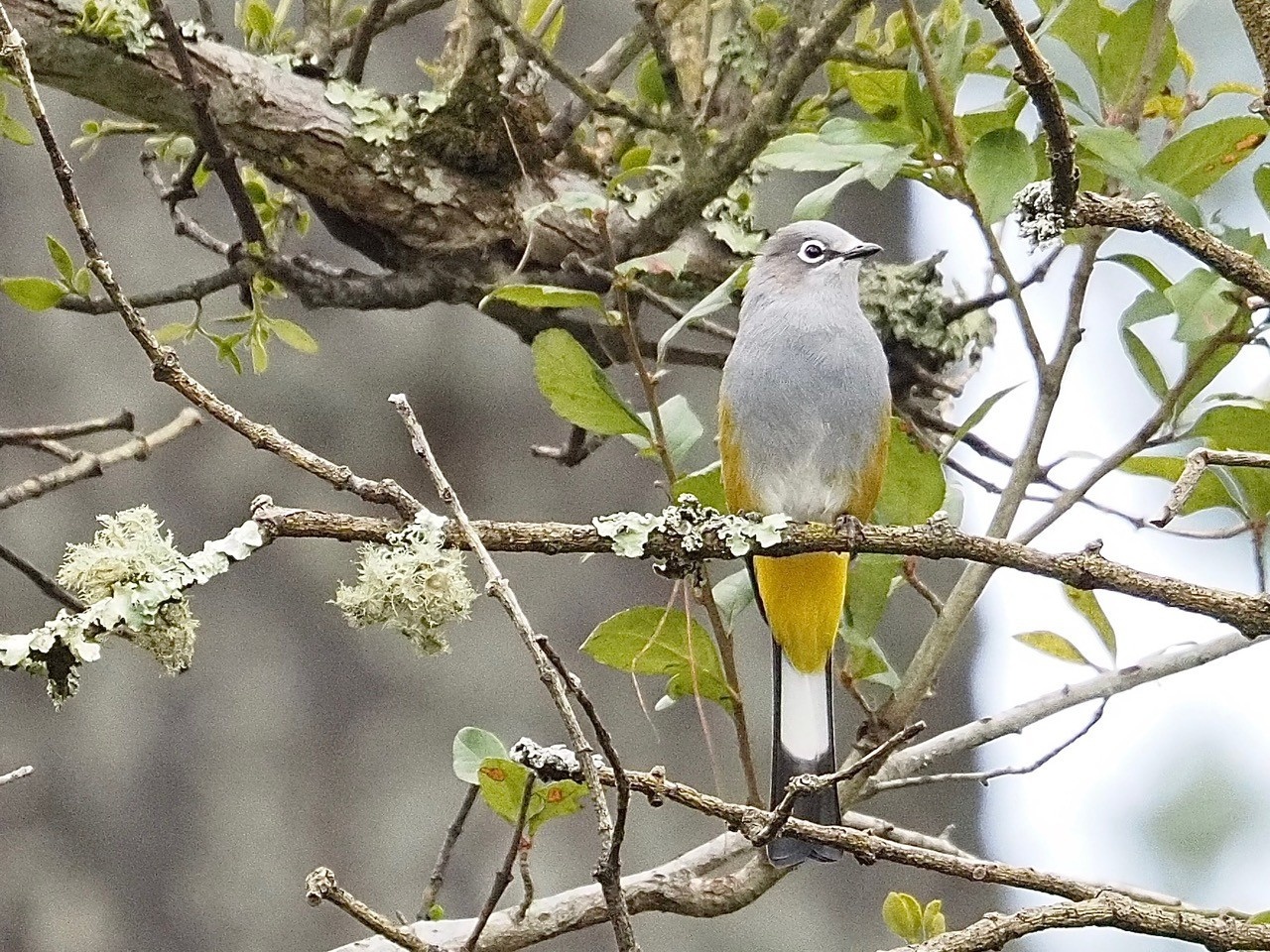
(Ptiliogonys cinerieus) [GRSF] by Jules Evens

Image description

Gray Silky-flycatcher (Ptiliogonys cinerieus) [GRSF]. Photo credit Cheshta Buckley

Gray Silky-flycatcher

This bird family, the silky flycatchers (Ptiliogonatidae), contains four species, all found exclusively in Central America and the southwestern U.S. They are sleek, elegant birds and closely related (probable “sister species”) to the familiar waxwings.

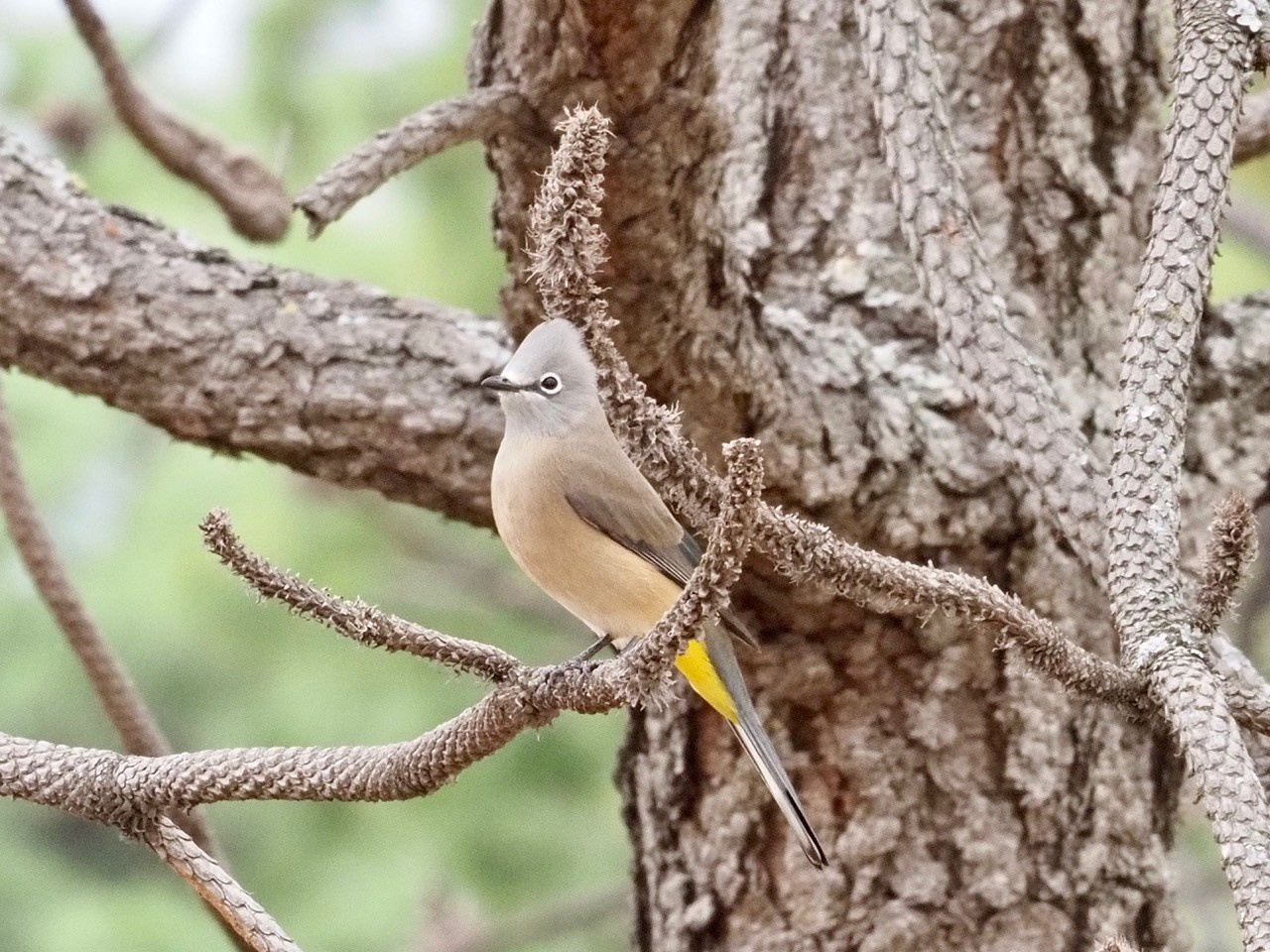
One family member, the Phainopepla (P. niens), is rare in the Chapala area. Fairly common is the Gray Silky-flycatcher, an eye-catching, even flamboyant, bird with a long, slender tail and a prominent crest. As the name “silky” suggests, its plumage has a velvety texture. Indeed, the plumage shows some of “the most understated elegance in texture, shade, and form of any birds” (source: Birds of the World). The upperparts are a silky gray extending down onto the upper breast, contrasting starkly with a bright yellow underbelly and a conspicuous black-and-white tail. The females are not quite as flashy as the males. Both sexes have a bright, white eyering.

Although named “flycatchers”, fruit is more common than insects in the diet. As with other frugivores, GRSFs are somewhat nomadic, roaming around in search of available tree fruit. That said, they are often noticed sallying out from trees, catching insects on the wing. Because they tend to occur in flocks of up to a dozen or more birds, concentrated near a food source, they are usually easy to observe, perched in the tree tops chattering and chortling or taking short sallying flights while flycatching.

As with other Ptiliogonatids, Gray Silkys are monogamous. Nests usually contain two eggs and both parents care for the chicks.

GRSFs are found mostly in montane forests where they are generally resident, but wander into adjacent, more open habitat where there are scattered trees.

Mistletoe berries (Psittacanthus schiedeanus) are an especially important food source and numbers of birds present may vary with abundance of ripe mistletoe fruit. 

Gray Silkys are fairly common throughout much of their range, though not seen on every outing lakeside due to their wandering habit. When encountered, their beauty and liveliness adds a welcome “icing” on one’s birding day!

Image description

Photo credit by Cheshta Buckley showing the characteristic crest

5th Colima Bird Festival

Image description

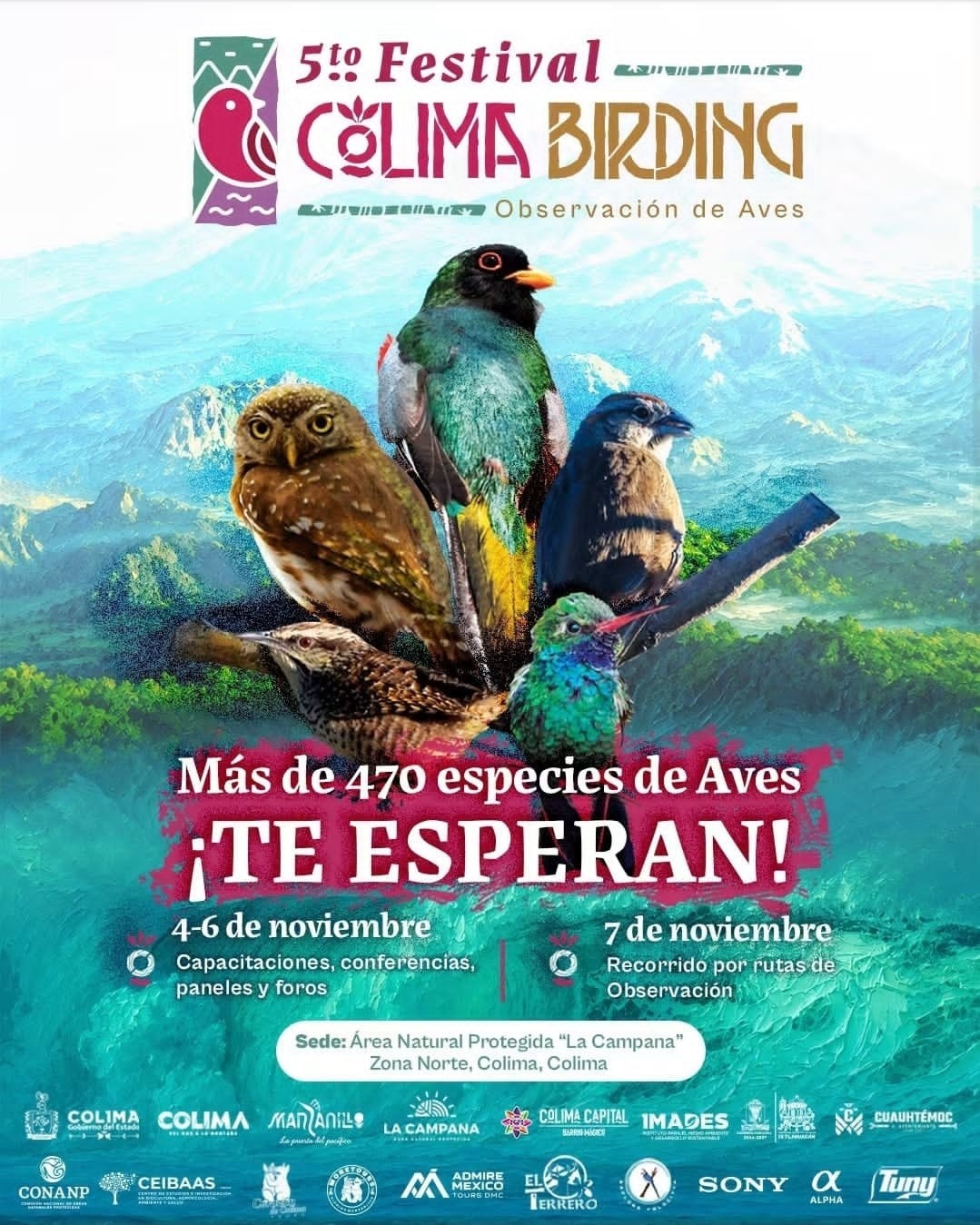
5th Colima Birding Festival
Invitation! More than 470 bird species AWAIT YOU!


November 4–6
Trainings, conferences, panels, and forums


November 7
Tour of observation routes


Venue: "La Campana" Protected Natural Area North Zone, Colima, Colima

https://tinyurl.com/2tev86hf

Upcoming Bird Trips

Our bird-walks are open to all those interested in birds; beginners & experienced birders. We always have knowledgeable birders on hand to identify the species. We have a limited number of extra binoculars available upon request in advance of trip. Trip leaders will have available Chapala Bird ID cards for $200 pesos.

————

During these outings social conversations are limited so we do not scare the birds we are observing. Birders can gather for coffee or a meal to socialize later.

————

We try to limit most car trips to 3-4 vehicles / 12-16 people. Larger convoys are hard to manage. We love our drivers and they don't do this for money. If you are being given a ride we suggest that you make a contribution to your driver for gas and tolls. All contributions are voluntary and much appreciated by drivers to offset their expenses.

1st SUNDAY OF EVERY MONTH: On November 1st there will be an informal birding walk along the Allen Lloyd Trail. Meet up at 8am with team leaders Kate and Carl in this very accessible location. Expect to see Blue Mockingbird, Happy Wren, and sometimes a Russet-crowned Motmot or Mexican Squirrel Cuckoo. If you need binoculars, contact [email protected]

How to get to the trail head: Drive up the Libramiento a half mile (1 km) from the traffic light at Walmart, then turn left (carefully) as you would for the hospital (Ribera Medical Center). Double back and drive up the left side of the hospital. Keep going uphill another half mile, and park on the only street to your left. Here is a pindrop.  (Note: after parking, we'll walk up the road past the construction. The trail is more a dirt road now - the birding is still good).


On Tuesday, Nov 10th, meet up at 7am with team leaders Kate and Carl at Starbucks parking lot (formerly Black Coffee, see pindrop) leaving promptly for an all day expedition of Barranca Comilla, a deep canyon on the Santiago River. It is just over an hour to drive to the beginning of the canyon. Hope to see raptors, wild Military Macaw, Squirrel Cuckoo, Magpie Jay, and many duck species at the presa. Bring your scope if you have one. Bring coffee/snacks and lunch. You may want to bring a small camp chair. If you need to borrow binoculars let us know.

You must reserve at least 7 days ahead with Kate and Carl at [email protected] indicating if you will drive a vehicle and can take others, or if you would like to be a passenger. Any vehicle is suitable. There will be a maximum 3 vehicles and 12 people. If you are a passenger we ask that you make a contribution to your driver to cover gas and tolls.


On Thursday November 19th, meet team leader Duncan Poole at 8.00 am at the 'Sculpture' (see pindrop - it is the only traffic light in La Floresta, opposite Restaurant Pranzo) and leave immediately for the Pumping Station area east of Chapala. Expect to see a good variety of shore birds and other species in the scrub and tall trees. At around 10.15 am we will go for breakfast to La Palapa de Don Juan in Chapala and we will do the bird list.

You must reserve at least 2 days in advance. Email Duncan at [email protected]  and please indicate if you can bring a vehicle and transport others, or if you would like to be a passenger. There will be a maximum 3 vehicles and 12 people. If you are a passenger we ask that you make a contribution to your driver to cover gas and tolls.

Bird Trip Summaries for October by Trip Leaders

On Sunday October 4th, a small group of people braved a light rain shower and had a great morning at Sendero Allen Lloyd. There were 28 species observed including a variety of Hummingbirds, Orange-billed Nightingale-Thrush, Mexican Squirrel Cuckoo, and Northern Beardless Tyrannulet. You can view the photos and the full list here https://ebird.org/checklist/S399234907


On Friday October 9th, a group of 8 birders visited Mezcala Mountain with Tom Bravo and John Keeling for a Hawkwatch. Highlights included Peregrine Falcon, Merlin, American Kestrel, Hook-billed Kite, Cooper's Hawk, Sharp-shinned Hawk, Short-tailed Hawk, Red-tailed Hawk, and a few migrating warblers. Around 450 migrating Turkey Vultures were seen. Hawkwatch was done from the parking lot. There was very little sun but some updraft and eventually a light rain. 33 species were observed. See the ebird list https://ebird.org/checklist/S400655577


On Thursday October 15th, 10 birders joined Cheshta Buckley for a trip to the International School Road. They enjoyed cool and overcast weather and saw some of the early raptor migration along with returning winter visitors. Highlights of the day were the Cooper's, Sharp-shinned Hawks and Kestrels passing through. For the full report and photos of the 32 species observed, see https://ebird.org/checklist/S402617248


On Wednesday, Oct 28th, a group of 9 birders met with team leader John Keeling to go to Sierra de Tapalpa. We encountered very light rain all day. Our first stop had beds of blue salvia plants attracting Ruby-throated, Black-chinned, Rufous and Berylline Hummingbirds. At a spot uniquely attracting Yellow-eyed Juncos, we stopped upon sighting three on the road. We were surrounded by a large migrating pod of warblers (Grace’s, Yellow-rumped, Townsend’s, Hermit and Berylline) together with Mexican Chickadee and Slate-throated Whitestart.  Total species count 55. https://ebird.org/checklist/S406714684

Monthly Sightings by Duncan Poole

What is the “Lake Chapala Area” for bird sightings?

We define it as the whole area of the lake plus all land within 15 km (7 miles) from the edge of the lake. We combine sightings for the month from Chapala, Jocotopec, Ixtlahuacán de los Membrillos, Briseñas, Venustiano Carranza, Poncitlán, Ocotlán, Jamay, Tizapán El Alto & La Manzanilla de la Paz.


192 Species were observed around Lake Chapala in September. (in Taxonomic order):

1 Black-bellied Whistling-Duck

2 Fulvous Whistling-Duck

3 Blue-winged Teal

4 Mexican Duck

5 Ring-necked Duck

6 Ruddy Duck

7 Northern Bobwhite

8 Rock Pigeon

9 Eurasian Collared-Dove

10 Inca Dove

11 Common Ground Dove

12 White-tipped Dove

13 White-winged Dove

14 Mourning Dove

15 Groove-billed Ani

16 Lesser Roadrunner

17 Greater Roadrunner

18 Mexican Squirrel-Cuckoo

19 Lesser Nighthawk

20 Vaux's Swift

21 Ruby-throated Hummingbird

22 Black-chinned Hummingbird

23 Calliope Hummingbird

24 Rufous Hummingbird

25 Broad-tailed Hummingbird

26 Broad-billed Hummingbird

27 Violet-crowned Hummingbird

28 Berylline Hummingbird

29 Sora

30 Common Gallinule

31 American Coot

32 Black-necked Stilt

33 Killdeer

34 Northern Jacana

35 Spotted Sandpiper

36 Least Sandpiper

37 Laughing Gull

38 Ring-billed Gull

39 Forster's Tern

40 Least Grebe

41 Pied-billed Grebe

42 Clark's Grebe

43 Wood Stork

44 Neotropic Cormorant

45 White-faced Ibis

46 Least Bittern

47 Black-crowned Night Heron

48 Tricolored Heron

49 Snowy Egret

50 Green Heron

51 Western Cattle-Egret

52 American Egret

53 Great Blue Heron

54 American White Pelican

55 Brown Pelican

56 Black Vulture

57 Turkey Vulture

58 Osprey

59 White-tailed Kite

60 Hook-billed Kite

61 Golden Eagle

62 Sharp-shinned Hawk

63 Cooper's Hawk

64 Northern Harrier

65 Common Black Hawk

66 Gray Hawk

67 Broad-winged Hawk

68 Red-shouldered Hawk

69 Zone-tailed Hawk

70 Short-tailed Hawk

71 Swainson's Hawk

72 Red-tailed Hawk

73 Great Horned Owl

74 Northern Pygmy-Owl

75 Ferruginous Pygmy-Owl

76 Burrowing Owl

77 Mexican Motmot

78 Belted Kingfisher

79 Acorn Woodpecker

80 Golden-fronted Woodpecker

81 Ladder-backed Woodpecker

82 Crested Caracara

83 American Kestrel

84 Merlin

85 Peregrine Falcon

86 Monk Parakeet

87 Lilac-crowned Amazon

88 Orange-fronted Parakeet

89 Rose-throated Becard

90 Northern Beardless-Tyrannulet

91 Greenish Elaenia

92 Olive-sided Flycatcher

93 Greater Pewee

94 Western Wood-Pewee

95 Least Flycatcher

96 Hammond's Flycatcher

97 Dusky Flycatcher

98 Western Flycatcher

99 Buff-breasted Flycatcher

100 Vermilion Flycatcher

101 Dusky-capped Flycatcher

102 Ash-throated Flycatcher

103 Nutting's Flycatcher

104 Great Kiskadee

105 Boat-billed Flycatcher

106 Social Flycatcher

107 Tropical Kingbird

108 Cassin's Kingbird

109 Thick-billed Kingbird

110 Western Kingbird

111 Bell's Vireo

112 Cassin's Vireo

113 Plumbeous Vireo

114 Western Warbling Vireo

115 Loggerhead Shrike

116 Common Raven

117 Bank Swallow

118 Violet-green Swallow

119 Northern Rough-winged Swallow

120 Barn Swallow

121 Cliff Swallow

122 Bushtit

123 Ruby-crowned Kinglet

124 Blue-gray Gnatcatcher

125 Canyon Wren

126 Northern House Wren

127 Bewick's Wren

128 Spotted Wren

129 Happy Wren

130 Sinaloa Wren

131 Blue Mockingbird

132 Curve-billed Thrasher

133 Northern Mockingbird

134 Orange-billed Nightingale-Thrush

135 White-throated Thrush

136 American Robin

137 Rufous-backed Robin

138 Gray Silky-flycatcher

139 Olive Warbler

140 House Sparrow

141 Elegant Euphonia

142 House Finch

143 Lesser Goldfinch

144 Stripe-headed Sparrow

145 Chipping Sparrow

146 Lark Sparrow

147 Lincoln's Sparrow

148 Rusty-crowned Ground-Sparrow

149 Canyon Towhee

150 Rusty Sparrow

151 Yellow-breasted Chat

152 Yellow-headed Blackbird

153 Black-vented Oriole

154 Orchard Oriole

155 Hooded Oriole

156 Streak-backed Oriole

157 Bullock's Oriole

158 Black-backed Oriole

159 Scott's Oriole

160 Red-winged Blackbird

161 Bronzed Cowbird

162 Brown-headed Cowbird

163 Brewer's Blackbird

164 Great-tailed Grackle

165 Northern Waterthrush

166 Black-and-white Warbler

167 Prothonotary Warbler

168 Orange Crowned Warbler

169 Nashville Warbler

170 Virginia's Warbler

171 Gray-crowned Yellowthroat

172 MacGillivray's Warbler

173 Common Yellowthroat

174 American Redstart

175 Northern Yellow Warbler

176 Yellow-rumped Warbler

177 Black-throated Gray Warbler

178 Townsend's Warbler

179 Hermit Warbler

180 Rufous-capped Warbler

181 Wilson's Warbler

182 Painted Whitestart

183 Hepatic Tanager

184 Summer Tanager

185 Western Tanager

186 Black-headed Grosbeak

187 Blue Grosbeak

188 Lazuli Bunting

189 Indigo Bunting

190 Varied Bunting

191 Painted Bunting

192 Cinnamon-rumped Seedeater

John and Rosemary Keeling

John and Rosemary Keeling

Lake Chapala Birders is an informal group of bird observers led by a team of volunteer Chapala Birders on behalf of John & Rosemary Keeling.


Overall Coordinator: Cheshta Buckley

Newsletter: Mugs McConnell, Alejandra Diez

Website: Robert McConnell

Feature Bird: Jules Evens

Monthly Sightings List: Duncan Poole

Bird Trip Leaders & Reports: John Keeling, Cheshta Buckley, Thomas Bravo, Kate & Carl Anderson, Jules Evens, Duncan Poole, John Roynon, Robert Taylor, Robert McConnell.

Illustrated color folders showing our common birds are available for $200 pesos from your birding group leaders on bird walks. Also available at Diane Pearl’s Gallery, 11am to 4pm, Santa Margarita #23, Riberas del Pilar.


Sign up for this newsletter or send us your exciting bird sightings by visiting our contact page


Check our website: ChapalaBirders.org  There you will find our newsletters, illustrations of our birds and advice on buying binoculars, books & birding apps.

Image description
Image description

Copyright (C) 2026, Lake Chapala Birders. All rights reserved.
Our mailing address is: Calle Santa Isabel #32, Riberas del Pilar (Ajijic), Chapala, JA, 45906 MX

To sign up for this newsletter, go to our website contact page

If you would like to unsubscribe, please click here.