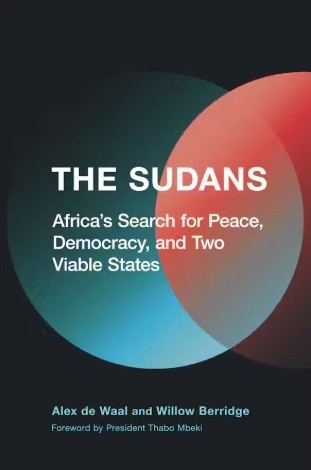
Alex de Waal and Willow Berridge’s The Sudans: Africa’s Search for Peace, Democracy, and Two Viable States is an exceptionally detailed account of one of the most ambitious experiments in African-led conflict resolution: the work of the African Union High-Level Implementation Panel (AUHIP), chaired by former South African president Thabo Mbeki, between 2009 and 2013. Drawing on unusually rich first-hand knowledge—de Waal himself was closely involved with the Panel—the authors reconstruct its attempts to address the Darfur conflict, Sudan’s troubled democratic transition, the independence of South Sudan, and the subsequent negotiations between the two states over borders, oil, citizenship and security. Rather than treating these crises as separate episodes, the book convincingly demonstrates their interdependence and places them within the longer historical trajectory of Sudanese state formation. Particularly valuable is its emphasis on African political agency. The AUHIP appears not simply as an intermediary implementing an externally designed peace agenda, but as an African diplomatic experiment that sought to reconcile competing domestic actors while simultaneously managing often divided international powers. In this respect, The Sudans is both a political history of a decisive period and an important study of the possibilities and limitations of African-led mediation.
The book’s greatest strength—its extraordinary proximity to the negotiations—is also the source of a potential weakness. Its meticulous reconstruction of meetings, personalities and diplomatic manoeuvres gives the reader a rare view inside mediation, but the density of detail can sometimes obscure the broader structural forces shaping the conflicts: militarised political economies, authoritarian state formation, elite competition and the deeply entrenched patronage systems that de Waal himself has analysed elsewhere through his concept of the “political marketplace.” Moreover, because the narrative is closely connected to the AUHIP experience, readers may occasionally wish for greater analytical distance from the mediators themselves and a more sustained consideration of whether alternative peacebuilding strategies could have produced different outcomes. Nevertheless, the tragic subsequent trajectories of both countries give the book considerable contemporary importance. Its central lesson is sobering: sophisticated mediation can create political opportunities, but it cannot substitute for political leadership willing to transform negotiated compromises into viable institutions. The Sudans therefore deserves to become an important reference not only for specialists on Sudan and South Sudan but also for scholars of African politics, international mediation and conflict resolution more generally
.