| | Hello ESTers!
Welcome back to InsideMENA, your bi-monthly snapshot of the key political, social, and cultural developments shaping the Middle East and North Africa, with an eye on Europe and the wider world.
As always, we’re bringing you concise analysis and fresh perspectives from across the region.
Ready to dive in? Let’s go InsideMENA!
P.S. Reading this on our website? Subscribe to get InsideMENA straight to your inbox every fortnight.
Edited by Clarice Agostini and Jesse Woche Note that the information, views and opinions set out in the newsletter are those of the authors and do not necessarily reflect the opinion or position of the editors, of the European Student ThinkTank, and of their affiliated entities or institutions.
|
|
Washington to Renew Blockade on Iran After Ceasefire Talks Fail By Michele
|
|
Ceasefire talks collapse. Ceasefire talks between the United States and Iran, mediated by Pakistan in Islamabad, collapsed on April 12th after several days of negotiations failed to resolve the core disputes. The discussions followed a two-week ceasefire agreement announced on April 8th, which temporarily paused hostilities in the 2026 Iran War. The truce, brokered by Pakistan, aimed to create the space for a broader settlement, but both sides’ positions over Iran’s nuclear programme and the future of maritime access through the Strait of Hormuz remained irreconcilable.
Divergent terms of negotiation. During the Islamabad talks, U.S. and Iranian delegations exchanged competing proposals, with Washington demanding stricter limits on Iran’s nuclear and missile capabilities, while Tehran insisted on sovereignty over the Strait of Hormuz and relief from sanctions. Despite 21-hour sessions and continued Pakistani mediation efforts, negotiations ended in mutual blame for their breakdown. The failure comes as the fragile ceasefire remains in effect but increasingly unstable amid reports of violations and continued regional tensions.
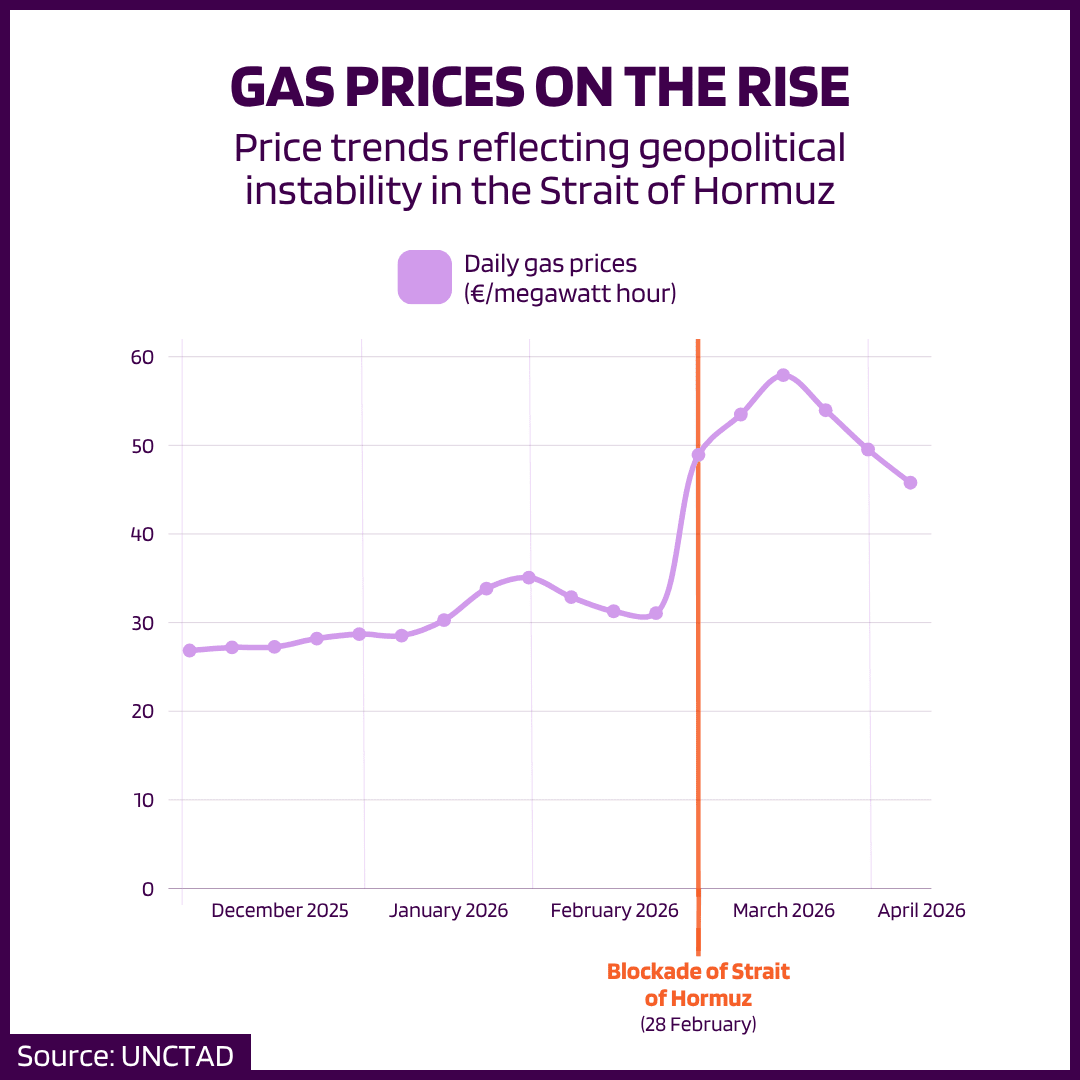
The economic effects. The collapse of talks and Washington’s threat of a renewed naval blockade against Iranian vessels are worrying signs for global markets, as the continuation of hostilities and disruptions to maritime traffic in Hormuz are stepping stones towards a global recession. Whether the Islamic Republic’s remaining establishment will give in first, or the US will scale down its involvement due to economic and diplomatic pressures, remains to be seen. Meanwhile, the threat of regional instability looms. |
|
Mass Arrests After Consulate Attack in Istanbul By Beyza |
|
Nationwide crackdown after the attack. Turkish authorities have detained nearly 200 suspects in a nationwide operation following a shootout outside Israel’s consulate in Istanbul. According to officials, 198 individuals were arrested across 34 provinces in connection with networks linked to the Islamic State (IS) group. The incident itself involved an armed attacker who was killed in an exchange of gunfire with police, while two accomplices were wounded and later detained. Israeli diplomatic staff were not present at the time, as the office had already been closed following the withdrawal of personnel amid deteriorating ties and security concerns after the Gaza war.
Militant networks still active. While no group has formally claimed responsibility, Turkish authorities have pointed to suspected IS links. Interior Minister Mustafa Ciftci stated that one of the assailants had ties to a group he characterized as “exploiting religion,” though he did not specify which organization. The attack underscores the continued presence of militant networks despite years of counterterrorism operations. Ankara has intensified raids in recent months, following earlier incidents involving IS-linked suspects, reflecting an ongoing effort to prevent regrouping and further attacks.
Regional tensions spill inward. The episode comes amid heightened regional tensions, as the broader fallout from Middle Eastern conflicts increasingly reverberates inside neighboring states. For Türkiye, the attack is a reminder that crises that seem “external” can translate into immediate domestic security risks, reinforcing the need for sustained vigilance. |
|
Italy Suspends Defense Pact with Israel Amid Middle East Escalations By Francesco |
|
Defense pact suspended. Italian Prime Minister Giorgia Meloni announced on April 13 that Italy would suspend the automatic renewal of its bilateral defense cooperation memorandum of understanding (MoU) with Israel, originally signed in 2016 and extended every five years. This framework facilitated exchanges of military materials, joint technological research, training, exercises, and industrial cooperation between the two nations' armed forces. The decision reflects fraying ties amid Israel's recent military actions in Lebanon, including an incident where Israeli forces fired warning shots at an Italian UN peacekeeping convoy, damaging a vehicle.
What it means for the war. For the ongoing Middle East conflicts, encompassing escalations in Lebanon, Gaza, and broader U.S.-Iran tensions, the practical military impact on the war remains minimal. Israel's Foreign Ministry dismissed the MoU as lacking substantive content, stating it "will not affect Israel’s security," showing that the agreement was more facilitative than operationally binding. Italy's move does not halt existing projects immediately but introduces uncertainty for future collaborations, signaling caution without altering Israel's current operations.
Is the EU shifting its view? In general, Meloni's calibrated step responds to domestic pressures like pro-Palestinian protests and a recent government defeat on judicial reform, along with international strains such as tensions with the U.S. over base access and trade route disruptions. It repositions Italy as more balanced in EU-Western dynamics, prioritizing geoeconomic stability and protecting Italian interests in the region over unconditional alignment. Analysts view it as a political signal rather than a rupture, allowing Rome flexibility amid fragile alliances. |
|
|
| |
| |
|