͏‌ ͏‌ ͏‌ ͏‌ ͏‌ ͏‌ ͏‌ ͏‌ ͏‌ ͏‌ ͏‌ ͏‌ ͏‌ ͏‌ ͏‌ ͏‌ ͏‌ ͏‌ ͏‌ ͏‌ ͏‌ ͏‌ ͏‌ ͏‌ ͏‌ ͏‌ ͏‌ ͏‌ ͏‌ ͏‌ ͏‌ ͏‌ ͏‌ ͏‌ ͏‌ ͏‌ ͏‌ ͏‌ ͏‌ ͏‌ ͏‌ ͏‌ ͏‌ ͏‌ ͏‌ ͏‌ ͏‌ ͏‌ ͏‌ ͏‌ ͏‌ ͏‌ ͏‌ ͏‌ ͏‌ ͏‌ ͏‌ ͏‌ ͏‌ ͏‌ ͏‌ ͏‌ ͏‌ ͏‌ ͏‌ ͏‌ ͏‌ ͏‌ ͏‌ ͏‌ ͏‌ ͏‌ ͏‌ ͏‌ ͏‌ ͏‌ 
Is this email not displaying correctly? View it in your browser.
Environmental Law Foundation Logo

ELF Newsletter

Winter 2024


As we approach the Winter Solstice we come to reflect on the year that has been and what might be to come. We have a new UK government facing many challenges, but its central plank of increased house building has led to concerning rhetoric on newts and bats and blockers. For those of us working on the front line of assisting communities to defend the nature they love, it sounds like this may become more challenging. There appears to be a move to take decision making powers away from communities and local government, but centralised decision making is not compatible with good local democracy, better local consultation and, ultimately, nature’s recovery. What we do to nature we do to ourselves. As we often turn to poetry, the words of Gerard Manley Hopkins send warning down the ages:


“O if we but knew what we do

When we delve and hew.

Hack and rack the growing green”


He would little recognise nature-denuded landscape that is our inheritance. Sadly, our abusive relationship with nature continues unabated. Working in the environmental law field, at the intersection between law and nature where the few actual nature protections that exist are fought over constantly, it can feel like an uphill struggle.


For hope ELF looks to the growing global nature rights movement, an area of work that ELF has dedicated a lot of time to this year, seeking ways to permeate nature’s rights into local governance. Part of a growing dynamic network working to progress rights of nature in the UK, we see the spring of guardian river communities flourishing for example. ELF values its position in this paradigm shift in legal jurisprudence that is taking place, where nature is recognised as having rights, such as the intrinsic right to exist. Comparable to those of human rights, or the rights of a company or indeed a ship!


Watch this space in 2025.


Emma Montlake

Co-Director, ELF
2024 Case Recap

Recap: Manchester Ship Canal

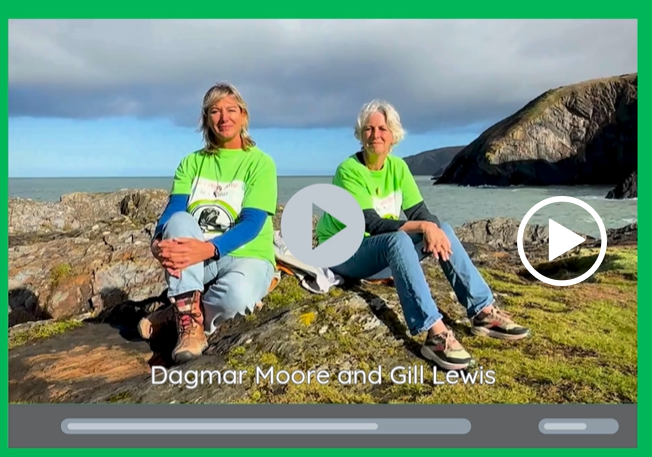
Recap: Pembrokeshire

ELF Victories: Consent to Judgments

ELF was part of a significant victory in July when the Supreme Court handed down judgment for The Manchester Ship Canal Company Ltd v United Utilities Water Ltd. ELF intervened in this case with assistance and support from a fantastic legal team at Hausfeld, the Good Law Project and barrister support from Stephen Hockman KC and Tom Cleaver of 6 Pump Court. To read more about this case you can follow the link here. This landmark win opens up claims of nuisance against sewage companies for illegal pollution.

Earlier in the year, ELF assisted a community living in Pembrokeshire, the Welsh County famous for its beautiful, wild coastlines and sea bird colonies. They have had ongoing concerns about the remote Ceibwr Bay and the increasing disturbance to the nesting seabirds from recreational activity. In particular, the community got in touch with us about a planning proposal for an adventure sports hub for coasteering and other marine activities putting further pressure on the bay. We wrote about the proposal earlier in the year, link here.

When an enquirer comes to ELF looking for assistance with a judicial review challenge, the hope is always that it can be settled outside of Court. This is because litigation is expensive, time consuming, protracted and stressful. In potential judicial review matters, the opportunity to settle comes at the Pre-Action Protocol stage, once a ‘PAP letter’ is sent off. This is a letter that sets out the potential claim, for the decision maker to consider. At this stage, a decision maker can concede or ‘consent to judgment’; this means they agree that the decision was illegal, and they consent to have it ‘quashed’.

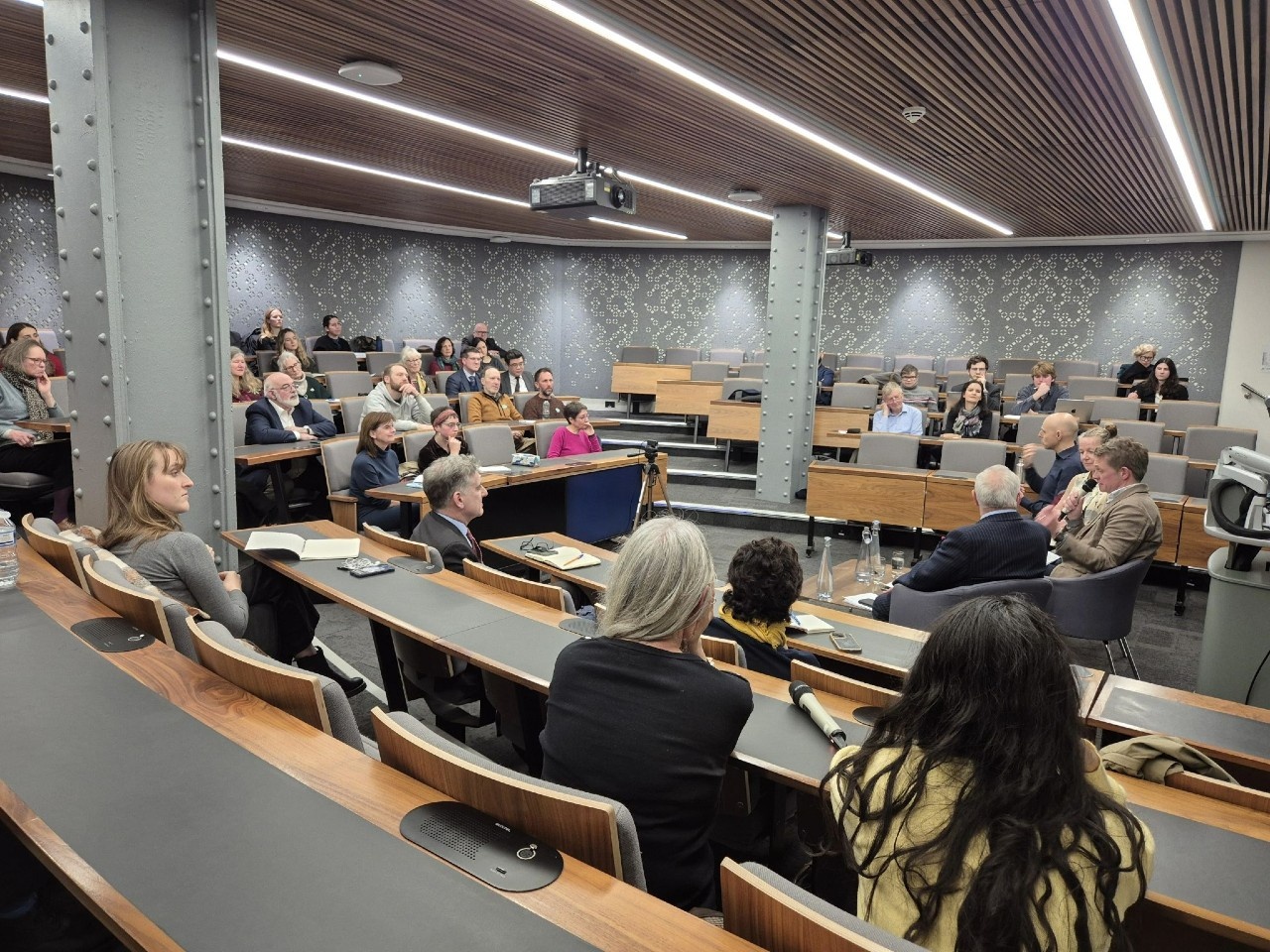
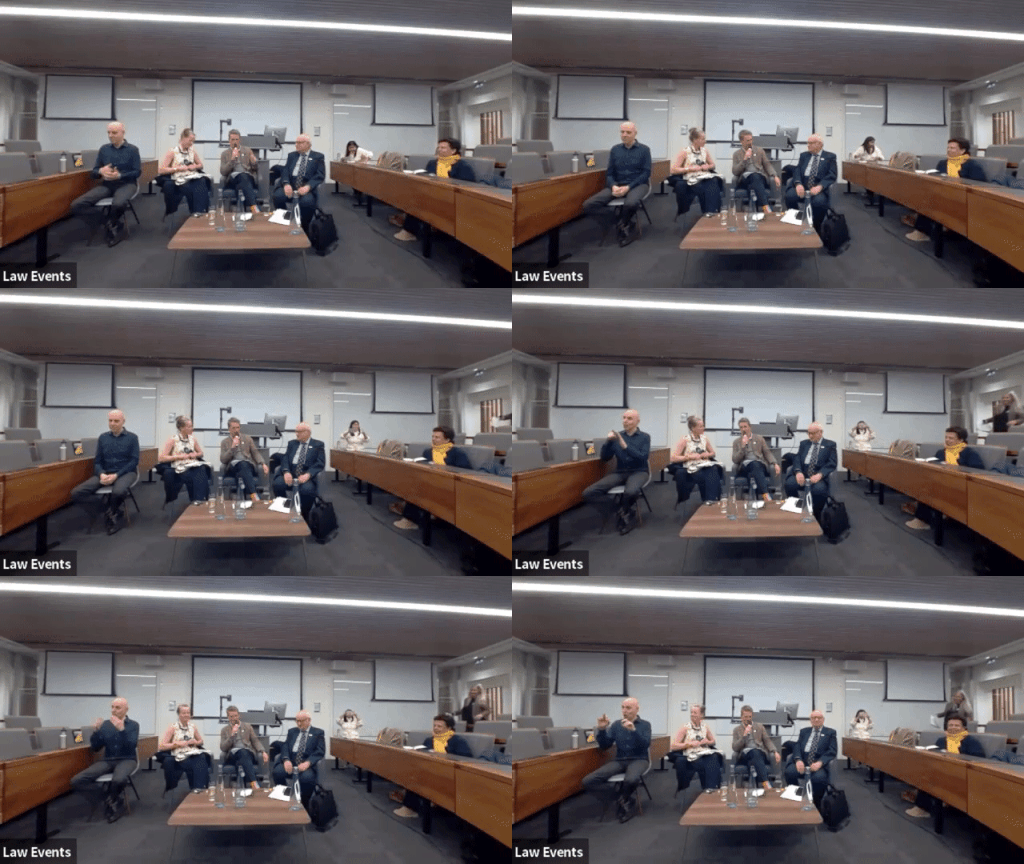
David Hall Conversation 2024: Some reflections

Image description
Turning the Tide: Restoring accountability for water pollution through legal action

This case and the discussions it sparked are a reminder of the power of collective action, the resilience of communities, and the importance of legal precedents in shaping a sustainable future. It is indeed a win for nature and for all of us who rely on clean water and a healthy environment.

gif-c2-e98868-david-hall-conversat-2024-12-17-104200

If you missed it, you can watch the video here.

Community stories

Image description
Image description
Image description
Image description

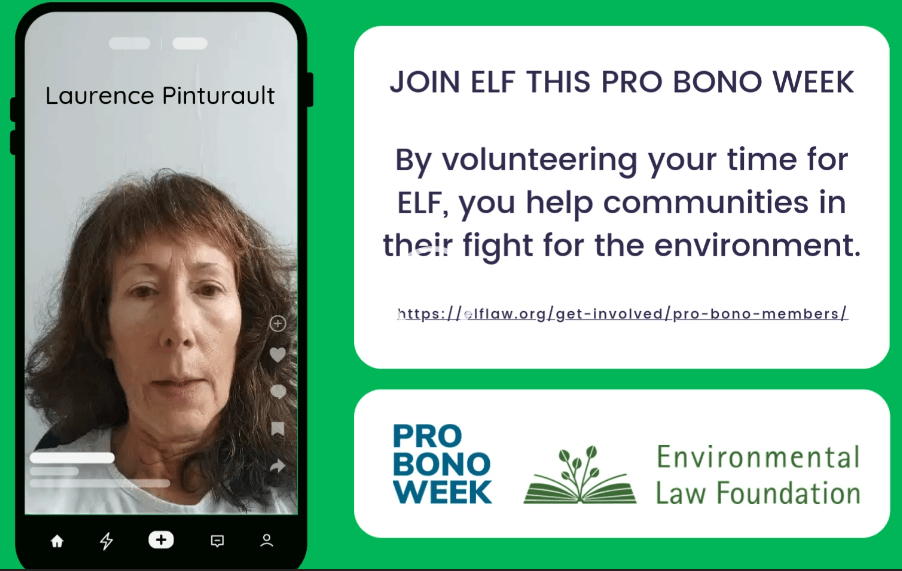
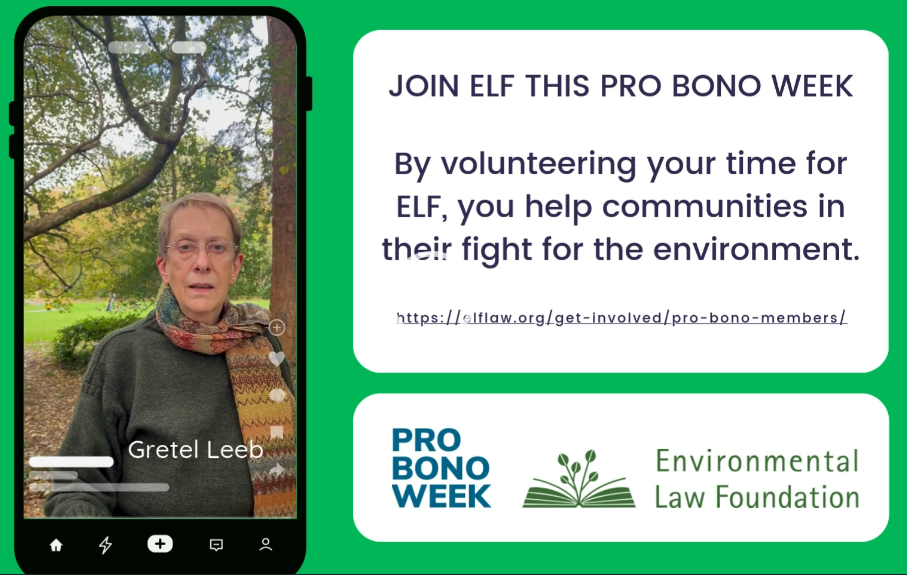
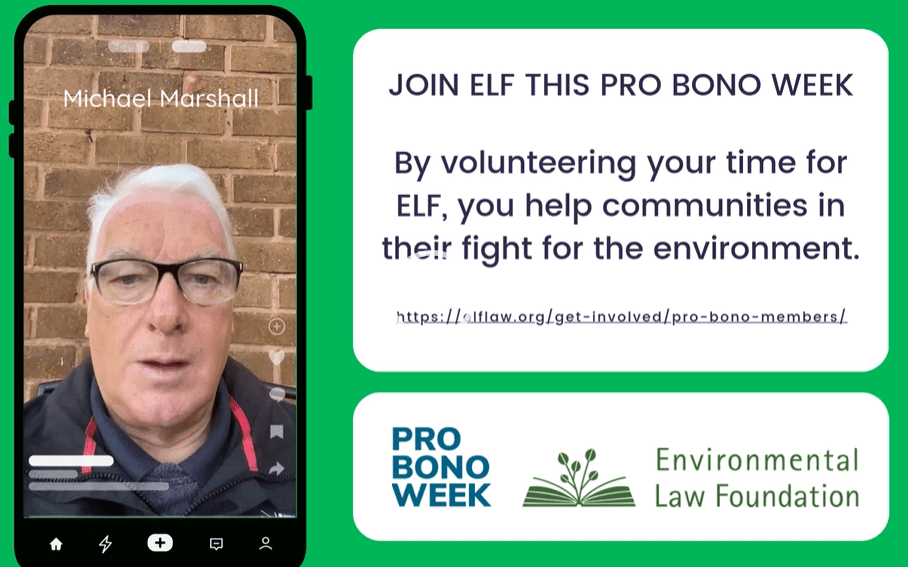
Last Pro-bono week, we featured stories from our communities who have been helped by ELF in their fight for the environment.

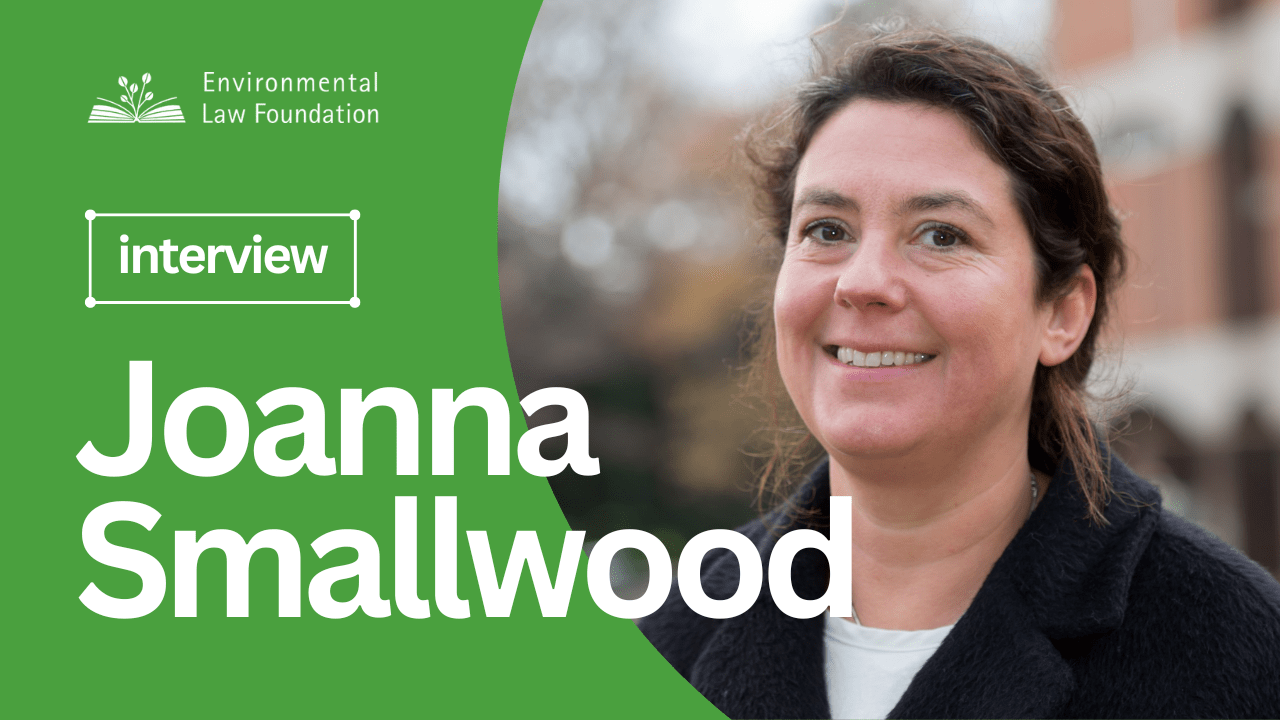
ELF Member Spotlight

Image description

Joanna has a long standing interest in nature conservation, animal rights and law. She worked in the legal department at Friends of the Earth and as a solicitor at Leigh, Day & Co. in London, with a particular interest in environmental law multi-party actions. 

Image description

Ed is a barrister at Landmark Chambers specialising in environmental, public and planning law. He has acted for individuals, community and campaigning groups, and NGOs on a range of environmental law matters. His recent work includes an ongoing challenge to a Development Consent Order application for a Nationally Significant Infrastructure Project located on a nature reserve, and representing local residents in an application to register land as a town green.

ELF university network and Young ELF

Image description

ELF’s nationwide university network continues to grow and we recently welcomed both Warwick University and Surrey University to the fold. Our Young ELF programme seeks to encourage and support the next generation of public interest environmental lawyers. Opportunities are currently offered via our vibrant university network in the form of legal and/or policy clinics. Seven of the universities in ELF’s network provide ELF legal clinics with students providing direct advice under supervision on ELF community enquiries. Our ELF policy clinics conduct empirical research into issues arising from our work and for this year’s research we are taking the learning from our ongoing Rights of Rivers work in Lewes. Participating university clinics are researching legal and policy opportunities to introduce Rights of Nature at a local authority level across all the UK regions. We have fifteen universities involved so far who will be reporting back in Spring 2025. We plan to provide an overview report and consider the potential for future outreach work based on the findings.If your university is not currently part of ELF’s network and you would be interested in joining please do get in touch.

Moving from Twitter/X to BlueSky

The Environmental Law Foundation has decided to transition from Twitter/X to Bluesky. This move reflects our commitment to fostering open, inclusive, and meaningful dialogue that aligns with our values. We look forward to engaging with our community on Bluesky as we continue our work for environmental justice and sustainable solutions. Join us there to stay connected and informed!🌍

Books you can read

Image description
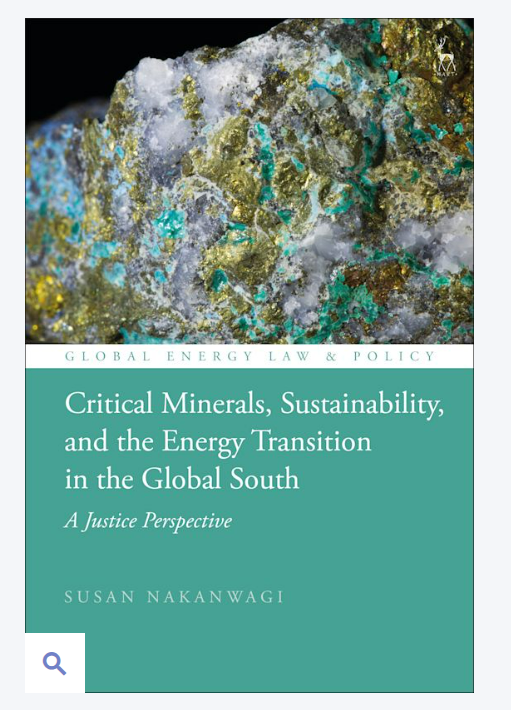
Critical Minerals, Sustainability, and the Energy Transition in the Global South

Author: Susan Nakanwagi


This book addresses the relationship between efficient management of critical minerals and sustainability in the Global South, including Sub-Saharan Africa.

By analysing the copper-cobalt value chain through case studies on DRC, Zambia, China, and the EU, the book provides new avenues for critical mineral development and acknowledges the necessity for sustainability amidst the exacerbated impacts of climate change.

Environmental Law Foundation

[email protected]

The ELF Telephone Helpline 0330 123 0169 is kindly supported by the Client Services Team at Irwin Mitchell Solicitors

Copyright © 2024 Environmental Law Foundation, All rights reserved


Environmental Law Foundation Logo
If you would like to unsubscribe, please click here.