͏‌ ͏‌ ͏‌ ͏‌ ͏‌ ͏‌ ͏‌ ͏‌ ͏‌ ͏‌ ͏‌ ͏‌ ͏‌ ͏‌ ͏‌ ͏‌ ͏‌ ͏‌ ͏‌ ͏‌ ͏‌ ͏‌ ͏‌ ͏‌ ͏‌ ͏‌ ͏‌ ͏‌ ͏‌ ͏‌ ͏‌ ͏‌ ͏‌ ͏‌ ͏‌ ͏‌ ͏‌ ͏‌ ͏‌ ͏‌ ͏‌ ͏‌ ͏‌ ͏‌ ͏‌ ͏‌ ͏‌ ͏‌ ͏‌ ͏‌ ͏‌ ͏‌ ͏‌ ͏‌ ͏‌ ͏‌ ͏‌ ͏‌ ͏‌ ͏‌ ͏‌ ͏‌ ͏‌ ͏‌ ͏‌ ͏‌ ͏‌ ͏‌ ͏‌ ͏‌ ͏‌ ͏‌ ͏‌ ͏‌ ͏‌ ͏‌ 
Is this email not displaying correctly? View it in your browser.
Logo
Image description

Chapala Birders News - September 2026

Community News & Sightings

132 Species Sighted Last Month by Duncan Poole

There were 132 species reported this past month for the lake area. The complete list is shown at the end of this newsletter.

Interesting species sighted:

  • Barn Owl , Jocotepec, Julio Alvarez

  • Brown Crested Flycatcher, Ixtlahuacán, Chapala Birders


  • Purple Gallinule & Wilsons Phalarope, Laguna Briseñas de Matamoros, Nicola Cendron

Note: The sighting of the Olive Sparrow in last month's report is unverified by photos or sound ID. Without this confirmation, it will not be included in our Master list.


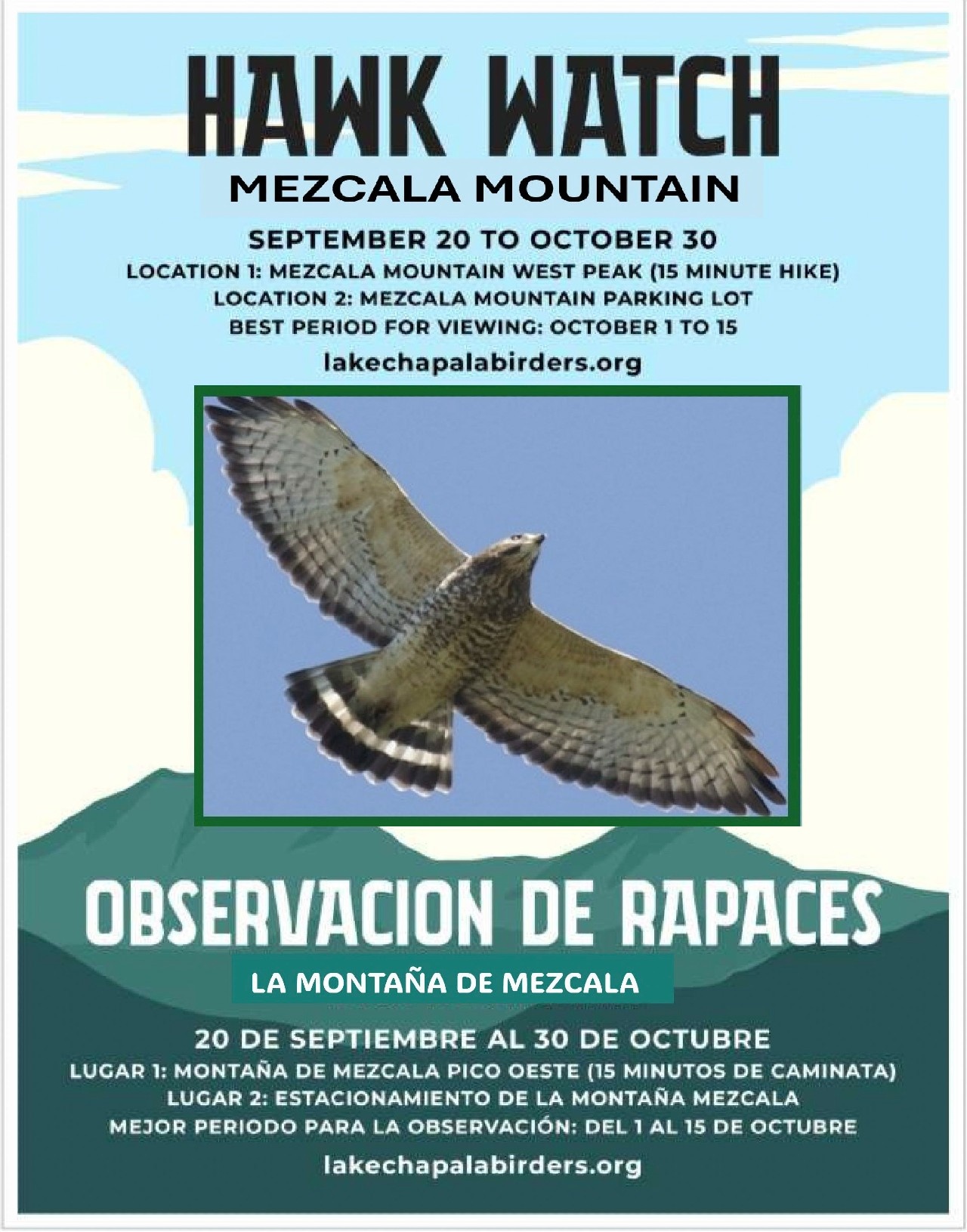
Hawk Watch begins this Month

The Mezcala Mountain Hawk Watch begins its visits to Mezcala Mountain at the end of this month. Check the Upcoming Trips below for details.


Donations are appreciated💸💰

All donations are used to cover expenses such as the costs of the website hosting and the newsletter. If you wish to donate, please give it to your birding leader to add it to the donation box, or email [email protected] for options.


Birding Ethics: Did you know that altering your bird photos with AI can change the details from images, turning your image into something that does not represent what the bird actually looked like? eBird wants to inform the community that AI altered photos reduce their scientific value. To learn more, visit https://ebird.org/news/threat-of-ai-to-archives. Please remember to follow the ethics of birding during outings.

Feature Bird: Common Yellowthroat

(Geothlypis trichas) [COYE] by Jules Evens

Image description

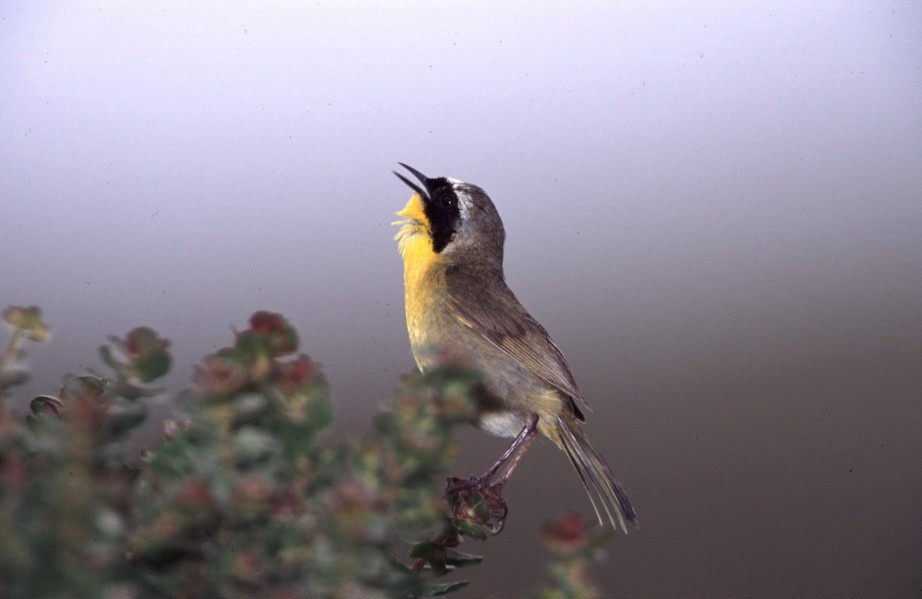
Common Yellowthroat: male (Geothlypis trichas) [COYE]. Photo by Ian Tait

Common Yellowthroat

This yellowthroat is a distinctive and common member of the warbler family (Parulidae). (Another local species, the Gray-crowned Yellowthroat, is much rarer with entirely different habitat associations.) This species shows complex geographic variation in size and plumage across its broad range in the Americas and therefore is divided into over a dozen subspecies, one of which is endemic to Lake Chapala (“chapalensis”).


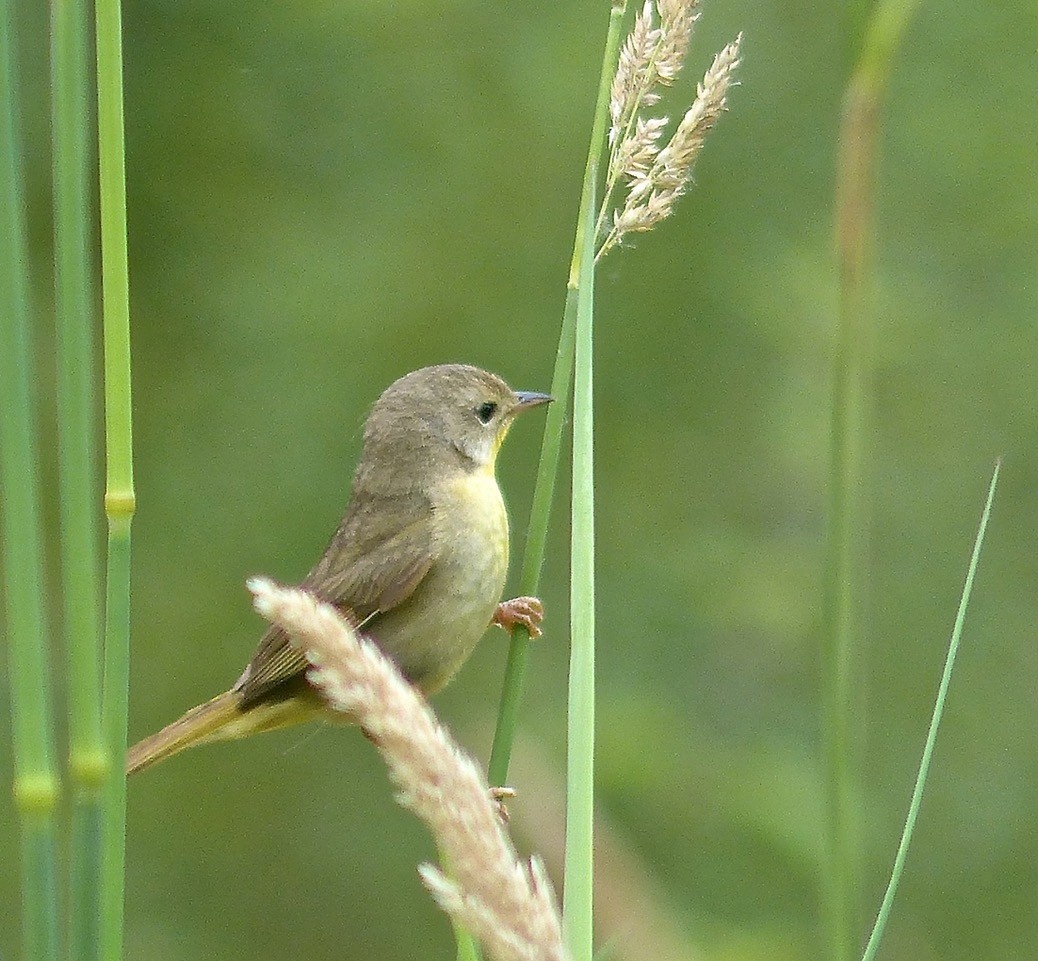
The plumage of the adult male is unique: A broad black mask extends from the forehead to behind the eye and across the cheek, to the side of the neck, in stark contrast to the bright yellow chin and upper breast. The mask is bordered above by narrow whitish band. Upperparts (including crown, wings, and tail) are unstreaked uniform olive. Females do not have the mask, but their plumage, size, and shape is otherwise similar to the male, but with less intensity to the yellow.


One of the most attractive and confiding warblers, a year-round resident here, associated with the tall marsh plants—cattails and sedges—along the lakeshore. This yellowthroat is a wetland-loving bird throughout its range, most often seen low in the vegetation. The genus, Geothlypis, is derived from the Ancient Greek, meaning ground bird, referring to the habit of staying low in the vegetation. The species name, trichas, means “thrush,” a mistaken reference by the original taxonomist, Carl Linnaeus (1707-1778).


Yellowthroats are monogamous within the nesting season, however the females are apparently promiscuous and will copulate with males other than their primary mate; however, the frequency of “extra-pair copulations” is unknown. The female constructs the nest, just above the ground and always well concealed and shaded by overhanging vegetation. The clutch may hold up to six eggs, but four is most common. The female incubates for about twelve days. Both parents feed the brood. Chicks are able to fly 20 days post-hatching, and completely independent of parents 30-34 days post-hatching.


Insects comprise most of the diet, such as beetles, spiders, flies, and damselflies. Snakes are common predators, especially of eggs. Mammals that occur in wetlands, such as skunks and racoons, take eggs and nestlings. Kestrels, Merlins, and harriers are known to take adults.


This is a curious bird. The personality of the male is sort of sassy and males will often perch in the open, though never far from the cover of vegetation, and look around when any stimulus, such as a birder’s “pishing,” catches their attention. The females are more retiring, but both sexes are vocal, uttering a distinctive, sharp spitting sound. The males’ song is quite melodic— three notes often described as “wichity, wichity, wichity,” although in Mexico it may sound more like “tortilla, tortilla, tortilla.” To hear the songs click the link

https://youtu.be/3s81oVKxGwE


This recording is by Manuel Grosselet, 2022-08-18 at 07:03 Latitude 19.5014 Longitude -98.9745, Laguna de Texcoco, Texcoco Municipality, Estado de México, Mexico

Image description

Common Yellowthroat: female (Geothlypis trichas) [COYE]. Photo by Jules Evens

Hawk Watch

Image description

In October 2022, Nicola Cendron went up the Sierra de Mezcala with his family and noticed a few raptors flying eastbound. He returned a week later with a few other birders from Guadalajara and noticed the same eastbound pattern. With camera and pictures they identified 12 different raptors species indicating there was a migratory route right above our mountains, right above our heads!! 

This became the beginning of the Lake Chapala Annual Hawk Watch, where thousands of raptors in various species fly overhead each year during the months of late September to early November. Check below for trips to view them on Mezcala Mountain.

Upcoming Bird Trips

Our bird-walks are open to all those interested in birds; beginners & experienced birders. We always have knowledgeable birders on hand to identify the species. We have a limited number of extra binoculars available upon request in advance of trip. Trip leaders will have available Chapala Bird ID cards for $200 pesos.

————

During these outings social conversations are limited so we do not scare the birds we are observing. Birders can gather for coffee or a meal to socialize later.

————

We try to limit most car trips to 3-4 vehicles / 12-16 people. Larger convoys are hard to manage. If you are being given a ride we suggest that you make a contribution to your driver for gas and tolls. All contributions are voluntary and much appreciated by drivers to offset their expenses.

_______

WARNING! Rainy season is chigger season! Wear long pants and sleeves. Tuck the pants into your socks and apply plenty of insect repellent around seams and exposed areas.

1st SUNDAY OF EVERY MONTH: On September 6th there will be an informal birding walk along the Allen Lloyd Trail. Meet up at 8am with local and visiting birders in this very accessible location. Expect to see Blue Mockingbird, Happy Wren, and sometimes a Russet-crowned Motmot or Mexican Squirrel Cuckoo. If you need binoculars, contact [email protected]

How to get to the trail head: Drive up the Libramiento a half mile (1 km) from the traffic light at Walmart, then turn left (carefully) as you would for the hospital (Ribera Medical Center). Double back and drive up the left side of the hospital. Keep going uphill another half mile, and park on the only street to your left. Here is a pindrop.  (Note: after parking, we'll walk up the road past the construction. The trail is more a dirt road now - the birding is still good).


On Thursday Sept 10th, meet team leader Robert Taylor at 8.00 am at the San Antonio Malecon parking lot to walk the Malecon area (See pindrop). At about 10am we will complete the bird list, after which those who wish to can head to a restaurant for breakfast. Remember, rainy season is chigger season - see the warning above to prepare.

Please confirm your attendance at least 2 days in advance with Robert Taylor at: [email protected] 


On Thursday Sept 17th , meet team leader John Keeling at 8:00am at the “Sculpture” (see pindrop. It’s at the only traffic light in La Floresta, opposite Restaurant Pranzo). We will depart immediately for the Rosa Amarilla Loop on the south side of the lake (60 minutes drive). Expect to see a variety of grassland birds and possibly a White-tailed Hawk. Bring refreshments for the morning and sandwiches for the 12.30 lunch stop. We will be back about 4.00 pm.

You must reserve at least 2 days ahead with John at [email protected] indicating if you can bring a vehicle and can take others, or if you would like to be a passenger. There will be a maximum 3 cars and 12 people. If you are a passenger we suggest you make a contribution to your driver to cover gas/tolls.


On Friday Sept 25th, HAWK WATCH! Meet team leader Thomas Bravo along with John Keeling at 8:00am at the “Sculpture” (see pindrop - It’s at the only traffic light in La Floresta, opposite restaurant Pranzo). We will depart immediately for Mezcala Mountain (MM), in search of migratory birds, especially raptors - hawks. It is a 30 minute drive to the base of the mountain and another 30 minutes up a rough and slippery mountain road to the top. We will walk up the knoll trail, about a mile round trip. It is also possible to count hawks from the parking area. We will have a snack break at 11.00 and start the return trip at 11.30am. Recommend: bring a snack, drink, insect repellent, sunscreen and a SMALL folding chair.

You must reserve at least 2 days ahead with John at [email protected] indicating if you can bring a high-clearance all-wheel drive vehicle and can take others, or if you would like to be a passenger. There will be a maximum 4 vehicles and 16 people. If you are a passenger we ask that you make a contribution to your driver to cover gas and tolls.

Bird Trip Summaries for August by Trip Leaders

On Sunday August 2nd, 11 keen birders showed up at the Allen Lloyd Canyon to see a pair of Russet-crowned Motmot sitting perfectly in front of us. It was a morning of Motmots. They followed us up the canyon perching where we could admire their amazing beauty or calling nearby. Then a pair of Mexican Squirrel Cuckoo came flying over head. Not a long sighting but a good one. Rusty-crowned Ground-Sparrow played peak-a-boo with us. One even walked up the road in front of us. It was a nice cool morning with a rain washing and reported hail last night. 30 species observed. https://ebird.org/checklist/S379701815


On Friday August 14th , 7 keen birders had an amazing day for a birding tour of La Cañadas. After a perfect meet up at Black Coffee we had a flawless journey to Buena Vista, Cedros, then La Cañadas. The road up to the trail head was in pretty good shape. We got all sorts of special birds including Russet-crowned Motmot, Elegant Euphonia, Berylline Hummingbird, Eared Quetzal and Brown-backed Solitaire were heard, just to name a few. Total time: 3 hours. Then up to the Big Trees (Montezuma Cyprus trees) past La Cañada (Los Sabinos) and found a Tropical Parula, Orange-billed Nightingale-Thrush and the Rusty-crowned Ground-Sparrow. Total Time: 2 hours. Total of 36 species observed. Great trip and pretty much an all day affair to be comfortable.

La Cañadas https://ebird.org/checklist/S385280448

Los Sabinos https://ebird.org/checklist/S384776054


On Thursday August 20th, a group of 10 birders headed out with Robert McConnell to Lake Atotonilco near Villa Corona. We were treated to large flocks of Black-bellied Whistling-Ducks, Fulvous Whistling-Ducks, and Blue-winged Teal. Plus we saw large numbers of White-faced Ibis, American Avocets, Long-billed Dowitchers and Least Sandpipers. We had a total of 43 species, so it was a good day indeed.  eBird list https://ebird.org/checklist/S386144980

Monthly Sightings by Duncan Poole

What is the “Lake Chapala Area” for bird sightings?

We define it as the whole area of the lake plus all land within 15 km (7 miles) from the edge of the lake. We combine sightings for the month from Chapala, Jocotopec, Ixtlahuacán de los Membrillos, Briseñas, Venustiano Carranza, Poncitlán, Ocotlán, Jamay, Tizapán El Alto & La Manzanilla de la Paz.


132 Species were observed around Lake Chapala in August. (in Taxonomic order):

1 Black-bellied Whistling-Duck

2 Fulvous Whistling-Duck

3 Mexican Duck

4 Ruddy Duck

5 Northern Bobwhite

6 Rock Pigeon

7 Eurasian Collared-Dove

8 Inca Dove

9 Common Ground Dove

10 White-tipped Dove

11 White-winged Dove

12 Mourning Dove

13 Groove-billed Ani

14 Lesser Roadrunner

15 Greater Roadrunner

16 Mexican Squirrel-Cuckoo

17 Buff-collared Nightjar

18 Rufous Hummingbird

19 Broad-billed Hummingbird

20 Violet-crowned Hummingbird

21 Berylline Hummingbird

22 Common Gallinule

23 American Coot

24 Purple Gallinule

25 Killdeer

26 Northern Jacana

27 Wilson's Phalarope

28 Spotted Sandpiper

29 Laughing Gull

30 Least Grebe

31 Pied-billed Grebe

32 Clark's Grebe

33 Wood Stork

34 Neotropic Cormorant

35 White-faced Ibis

36 Black-crowned Night Heron

37 Little Blue Heron

38 Tricolored Heron

39 Snowy Egret

40 Western Cattle-Egret

41 Great Egret

42 Great Blue Heron

43 American White Pelican

44 Black Vulture

45 Turkey Vulture

46 Osprey

47 White-tailed Kite

48 Sharp-shinned Hawk

49 Cooper's Hawk

50 White-tailed Hawk

51 Red-tailed Hawk

52 American Barn Owl

53 Great Horned Owl

54 Ferruginous Pygmy-Owl

55 Eared Quetzal

56 Russet-crowned Motmot

57 Belted Kingfisher

58 Yellow-bellied Sapsucker

59 Golden-fronted Woodpecker

60 Ladder-backed Woodpecker

61 Crested Caracara

62 Fischer's Lovebird

63 Monk Parakeet

64 Gray-collared Becard

65 Rose-throated Becard

66 Northern Beardless-Tyrannulet

67 Greenish Elaenia

68 Greater Pewee

69 Western Wood-Pewee

70 White-throated Flycatcher

71 Western Flycatcher

72 Vermilion Flycatcher

73 Dusky-capped Flycatcher

74 Nutting's Flycatcher

75 Brown-crested Flycatcher

76 Great Kiskadee

77 Social Flycatcher

78 Tropical Kingbird

79 Cassin's Kingbird

80 Thick-billed Kingbird

81 Western Kingbird

82 Golden Vireo

83 Loggerhead Shrike

84 Common Raven

85 Bank Swallow

86 Tree Swallow

87 Northern Rough-winged Swallow

88 Barn Swallow

89 Cliff Swallow

90 Bushtit

91 Canyon Wren

92 Bewick's Wren

93 Spotted Wren

94 Happy Wren

95 Sinaloa Wren

96 Blue Mockingbird

97 Curve-billed Thrasher

98 Northern Mockingbird

99 Brown-backed Solitaire

100 Orange-billed Nightingale-Thrush

101 Rufous-backed Robin

102 Gray Silky-flycatcher

103 House Sparrow

104 Elegant Euphonia

105 House Finch

106 Lesser Goldfinch

107 Stripe-headed Sparrow

108 Chipping Sparrow

109 Striped Sparrow

110 Botteri's Sparrow

111 Rusty-crowned Ground-Sparrow

112 Canyon Towhee

113 Rufous-crowned Sparrow

114 Black-vented Oriole

115 Orchard Oriole

116 Streak-backed Oriole

117 Black-backed Oriole

118 Bronzed Cowbird

119 Brown-headed Cowbird

120 Great-tailed Grackle

121 Gray-crowned Yellowthroat

122 MacGillivray's Warbler

123 Tropical Parula

124 Northern Yellow Warbler

125 Black-throated Gray Warbler

126 Rufous-capped Warbler

127 Western Tanager

128 Black-headed Grosbeak

129 Blue Grosbeak

130 Varied Bunting

131 Blue-black Grassquit

132 Cinnamon-rumped Seedeater


John and Rosemary Keeling

John and Rosemary Keeling

Lake Chapala Birders is an informal group of bird observers led by a team of volunteer Chapala Birders on behalf of John & Rosemary Keeling.


Overall Coordinator: Cheshta Buckley

Newsletter: Mugs McConnell, Alejandra Diez

Website: Robert McConnell

Feature Bird: Jules Evens

Monthly Sightings List: Duncan Poole

Bird Trip Leaders & Reports: Cheshta Buckley, Thomas Bravo, Kate & Carl Anderson, Jules Evens, Duncan Poole, John Roynon, Robert Taylor, Robert McConnell, Gerd DeBeer.

Illustrated color folders showing our common birds are available for $200 pesos from your birding group leaders on bird walks. Also available at Diane Pearl’s Gallery, 11am to 4pm, Santa Margarita #23, Riberas del Pilar.


Sign up for this newsletter or send us your exciting bird sightings by visiting our contact page


Check our website: ChapalaBirders.org  There you will find our newsletters, illustrations of our birds and advice on buying binoculars, books & birding apps.

Image description
Image description

Copyright (C) 2026, Lake Chapala Birders. All rights reserved.
Our mailing address is: Calle Santa Isabel #32, Riberas del Pilar (Ajijic), Chapala, JA, 45906 MX

To sign up for this newsletter, go to our website contact page

If you would like to unsubscribe, please click here.