Searching for bumble bees, our year at a glance, podcasts, events, and more!
͏ ͏ ͏ ͏ ͏ ͏ ͏ ͏ ͏ ͏ ͏ ͏ ͏ ͏ ͏ ͏ ͏ ͏ ͏ ͏ ͏ ͏ ͏ ͏ ͏ ͏ ͏ ͏ ͏ ͏ ͏ ͏ ͏ ͏ ͏ ͏ ͏ ͏ ͏ ͏ ͏ ͏ ͏ ͏ ͏ ͏ ͏ ͏ ͏ ͏ ͏ ͏ ͏ ͏ ͏ ͏ ͏ ͏ ͏ ͏ ͏ ͏ ͏ ͏ ͏ ͏ ͏ ͏ ͏ ͏ ͏ ͏ ͏ ͏ ͏ ͏
| | Bumble Bee Searching: A Backyard Game with a Scientific Impact |
|
Article by Jessenia Buzunis-Delagneau With the beginning of spring comes the season for my favourite game: bumble bee searching!
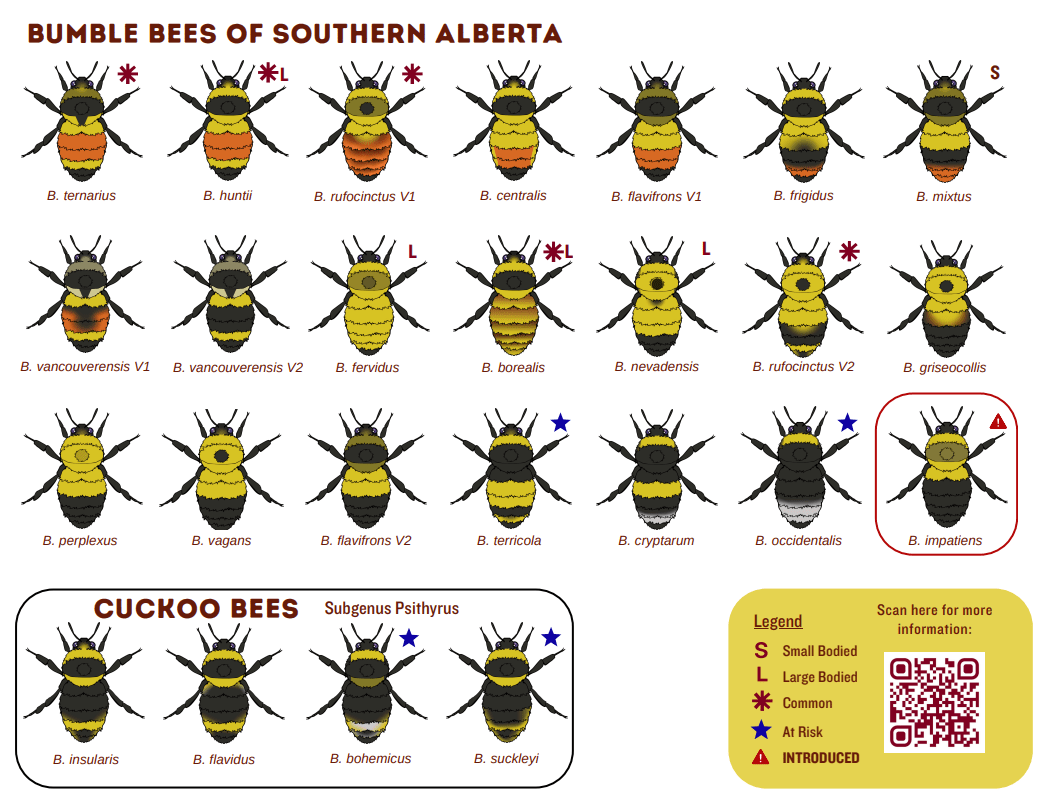
Fans of scavenger hunts and Pokémon know the fun that comes from searching for and “capturing” a wide variety of diverse targets. For me, going out into the garden and looking for bumble bees fills that exact role. Bumble bees are an excellent focal group for a game like this. They are large, adorable, and can often be identified to the species just by the colours of their hairs. |
|
|
| |
| |
|
| | To play the bumble bee searching game, you only need 3 things: 1) A place where there are flowers 2) Something to take photos with 3) Hopefully, some willing bumble bee participants
Photo (left) of Bombus nevadensis male by Jessenia B.D. Male Nevada Bumble Bees can be easily distinguished by their large eyes, and because a bee's stinger is a modified egg-laying organ, they can't sting! |
|
|
| |
| |
|
| | Thanks to their large size, bumble bees can often be heard buzzing about or easily spotted on flowers while walking slowly through a garden or meadow. As you walk, take a close look at the flowers around you. When you spot a bumble bee, try to take a photo. Bumble bees are very focused foragers, so they will often continue feeding while you observe from a respectful distance.
Try to get photos from multiple angles to help with identification. One of my favourite tricks is to take a short video and then capture screenshots of different angles of the bumble bee.
Photo (right) of Bombus fervidus by Jessenia B.D. |
|
|
| |
| |
|
| | The final step is to upload your observations onto iNaturalist. There, other users can help confirm or refine your identifications, helping you to build your skills over time. Your observations can also help contribute to scientific research and bumble bee conservation projects by working together with your community to contribute more observations than scientists could gather on their own. Additionally, as you upload your observations, your iNaturalist account can serve as your own digital collection, showcasing the variety of bumble bees and any other creatures that you have observed. |
|
|
| |
| |
|
| | So get outside, get searching, and see how many species you can find! You might be surprised at the diversity that can be found in your own backyard. |
|
|
| |
| |
|
| | Many native bees in Alberta are specialized pollinators. They may be oligolectic, meaning they rely on plants in a specific genus or family. For instance, many of Alberta’s 68 species of Andrena (mining bees) emerge in early spring with their internal clocks set to the blooming of native willows (Salix). Later in the season, long-horned bees (Melissodes) take flight, foraging almost exclusively on prairie sunflowers and native asters. Some bees are even hyper-specialists! The Macropis oil bee (Macropis nuda) relies completely on a yellow loosestrife plant (Lysimachia ciliata). Without these native blossoms opening right on schedule, our specialist bees couldn't survive!
Photo of Andrena milwaukeensis on willow by Sheryl Garrison. |
|
|
| |
| |
|
| | Help Us Shape Our Winter Workshop Series! |
|
|
| |
| |
|
| | Photo of Andrena mariae on narrow-leaf willow by Sheryl Garrison. |
|
Don't get sad putting your garden to bed in the spring, we're planning content to keep you excited all year long! While our native bees will be tucked away for the winter, the Alberta Native Bee Council will be running an exciting free virtual workshop series called Native Bees 101 - and we want to hear from you!
Whether you’re curious about bee identification, native plant landscaping, community science, or helping bees get through winter, we want to know what topics you're most excited to explore. All sessions will be recorded and posted online afterward, but if you’d like to join us live, we also need to know what dates and times fit your schedule best.
Fill out our quick Google Form here to share your ideas and preferred times. Thank you for helping us bring bee conservation home this winter! |
|
|
| |
| |
|
| | Our 2025-2026 Year at a Glance |
|
We're on the About Bees Podcast! |
|
Tune in across four insightful episodes with multiple experts from the ANBC! |
|
|
| |
| |
|
| | Season 2 Episode 2: MRU instructor Mathias Fenton examines the relationship between wasps, ants, honey bees and bumble bees. Mathias focuses on the bumble bee lifecycle and bumble bee house nest box positioning. Season 4, Episode 5: Executive Director Megan Evans tackles the urgent threats facing wild pollinators, unpacks "bee-washing," and discusses the impact of managed bees on wild populations. Season 5, Episode 11: Ilan explores bee evolution, fall stewardship tips, and the fascinating traits of Alberta's major bee families. Season 8, Episode 5: Stewardship Specialist Ilan Domnich shares practical conservation tips, from managing hollow stems and building bumblebee boxes to letting your yard stay a little "messy" for ground-nesting bees.
|
|
|
| |
| |
|
| | Bumble Bee Box Workshops Return Next Year! |
|
Hands-on conservation meets local citizen science - the Alberta Native Bee Council's popular Bumble Bee Nest Box Building Workshops are back! Host or join an engaging, practical session that directly supports wild pollinators and contributes to active ecological research. |
|
|
| |
| |
|
| | How it Works While bumble bees are vital to Alberta’s ecosystems, critical gaps remain in our understanding of their nesting behaviors and local abundance. Workshop attendees assemble wooden nest boxes to install in their own outdoor spaces. Beyond providing artificial shelter, these boxes serve as research outposts: participants submit annual occupancy reports via our website, supplying our science team with crucial data on nesting preferences and species distribution. |
|
|
| |
| |
|
| | Workshop Overview: -Duration: 2.5 to 3 hours total -Educational Briefing: A 45-minute deep dive into native bumble bee biology, ecological impacts, and the value of community-led monitoring -Practical Build: Step-by-step guidance to assemble up to 30 nest boxes -Equipment: All raw materials and primary tools are supplied; attendees are encouraged to bring a cordless power drill (limited backup units available) |
|
|
| |
| |
|
| | Pricing & Booking Logistics Flat Rate: $2,250 per workshop + mileage
Bring a Workshop to Your Organization To schedule a session or inquire about our broader outreach offerings, contact our team at [email protected].
Looking to Join an Upcoming Workshop or Event? Follow our Facebook and Instagram or check out our websites event page to find workshops and other events coming up in your area! |
|
|
| |
| |
|
| | Come join ANBC at the following events this upcoming season! |
|
|
| |
| |
|
| | ANBC's Partnership Program |
|
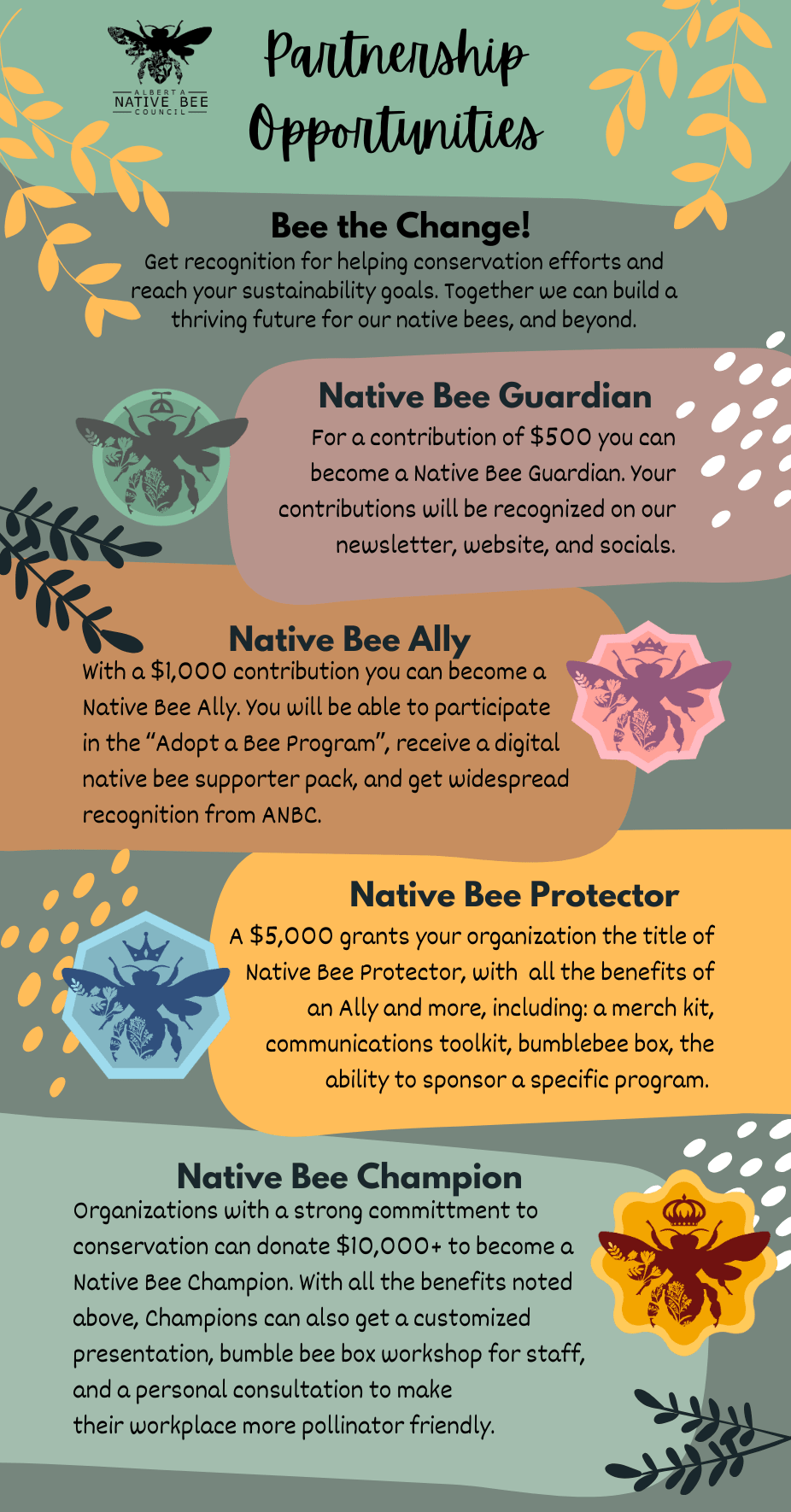
Interested in making a more meaningful contribution to native bee conservation? By becoming an Alberta Native Bee Council partner, your company will not only support essential bee conservation efforts but will also receive meaningful recognition and perks that highlight your commitment to environmental stewardship. Check them out here! |
|
|
| |
| |
|

|