| | Teacher Scholarships Available – GeoSciEdX 2026 |
|
Adelaide will host GeoSciEdX, a three-day international conference for geoscience educators, from 14–16 August 2026. The conference will bring together educators, researchers and industry representatives through excursions, workshops and roundtable discussions focused on addressing declining student engagement and enrolments in geoscience.
Teacher scholarships are available to support attendance, providing an opportunity for educators to connect with international experts and explore contemporary approaches to geoscience education. Scholarship applications close 15 June 2026. More information is available here. |
|
They did what? Student Video Competition 2026 |
|
The They did what? Student Video Competition is back, inviting students to uncover and celebrate the stories of Australia’s unsung STEM stars. Students are encouraged to create a short video highlighting an inspiring Australian making a difference in STEM, either locally or overseas. The competition promotes creativity, curiosity and storytelling, while helping students explore real-world STEM careers and contributions. Free classroom resources are available to support participation, making it an engaging activity for classrooms across Australia. Entries close: 16 October 2026. Find out more here. |
|
Premier's Reading Challenge - STEM Reading and Design Competition |
|
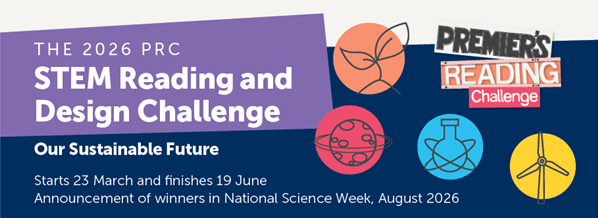
The 2026 STEM Reading and Design Competition is now open to R–12 students and will run throughout Term 2. Delivered by the Premier’s Reading Challenge in partnership with key organisations, the competition invites students to explore STEM, Nature in South Australia, Space, and Renewable Energy through reading and creative design. Since its launch in 2016, the competition has grown significantly, with over 3,000 entries received last year alone. To enter, students read a themed book and create a response inspired by their learning. Entries close Friday 19 June 2026. Find out more here. |
|
2026 International Chemistry Quiz |
|
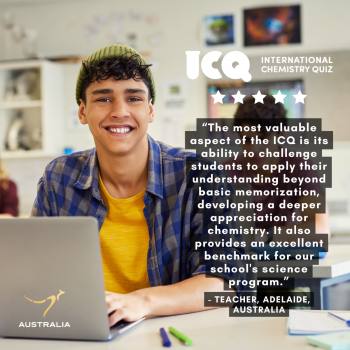
The Royal Australian Chemical Institute’s International Chemistry Quiz (ICQ) is now open for registrations. Open to primary and secondary students worldwide, the ICQ is a fun and engaging way to challenge students’ chemistry knowledge and problem-solving skills through a supervised 60-minute online quiz. Questions are tailored to year levels and aligned with curriculum expectations, making the competition accessible for a wide range of learners. Participating students receive a certificate, with high-achieving students eligible for awards and prizes. The quiz will be held from 27 July to 7 August 2026, with registrations closing 24 July 2026. Find out more here. |
|
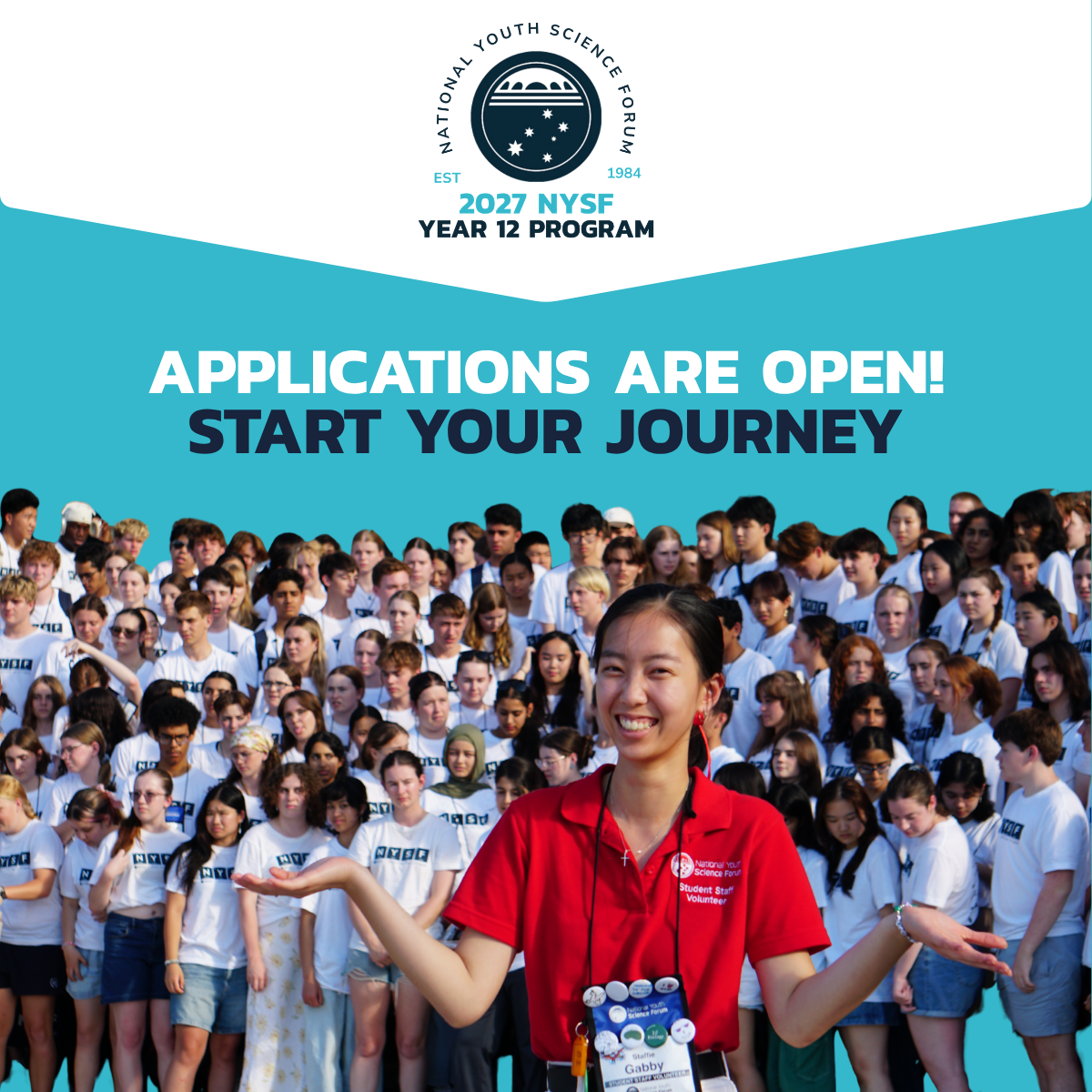
Applications Open – NYSF Year 12 Program |
|
Applications are now open for the National Youth Science Forum (NYSF) Year 12 Program. Teachers are encouraged to share this opportunity with current Year 11 students who are interested in STEM and exploring future study and career pathways. Participants attend residential sessions in January, where they visit leading STEM facilities, meet researchers and industry professionals, and connect with like-minded peers from across Australia. Financial support options are available to help students participate. For more information, including program dates and application details, visit the NYSF website: nysf.edu.au/year-12-program |
|
National Science Week Booklet |
|
The 2026 National Science Week Schools Resource Book is now available, supporting this year’s theme, “Seeds of Science: Nurturing knowledge for all”. Aligned with the United Nations International Year of Women Farmers and Rangelands and Pastoralists, the resource explores how agricultural practices have evolved to support food security, while highlighting the importance of growing scientific understanding in every classroom. Packed with hands-on activities, experiments, and curriculum-aligned lesson ideas, it’s a valuable tool to inspire curiosity and engagement in STEM. Download your copy here. |
|
Great Southern Reef Foundation – Marine Science Educational Resources |
|
The Great Southern Reef Foundation has released a suite of free, curriculum-aligned marine science resources for Foundation to Year 12, developed around the documentary White Rock. Available through ClickView, the film explores the rapid expansion of longspined sea urchins and the decline of Australia’s kelp forests, while highlighting nature-positive responses from scientists, Traditional Owners, fishers and industry groups. The accompanying resources include lesson plans, interactive student courses, data analysis activities and cross-curriculum links, helping teachers bring contemporary marine science into the classroom in an engaging and practical way. Find out more here. |
|
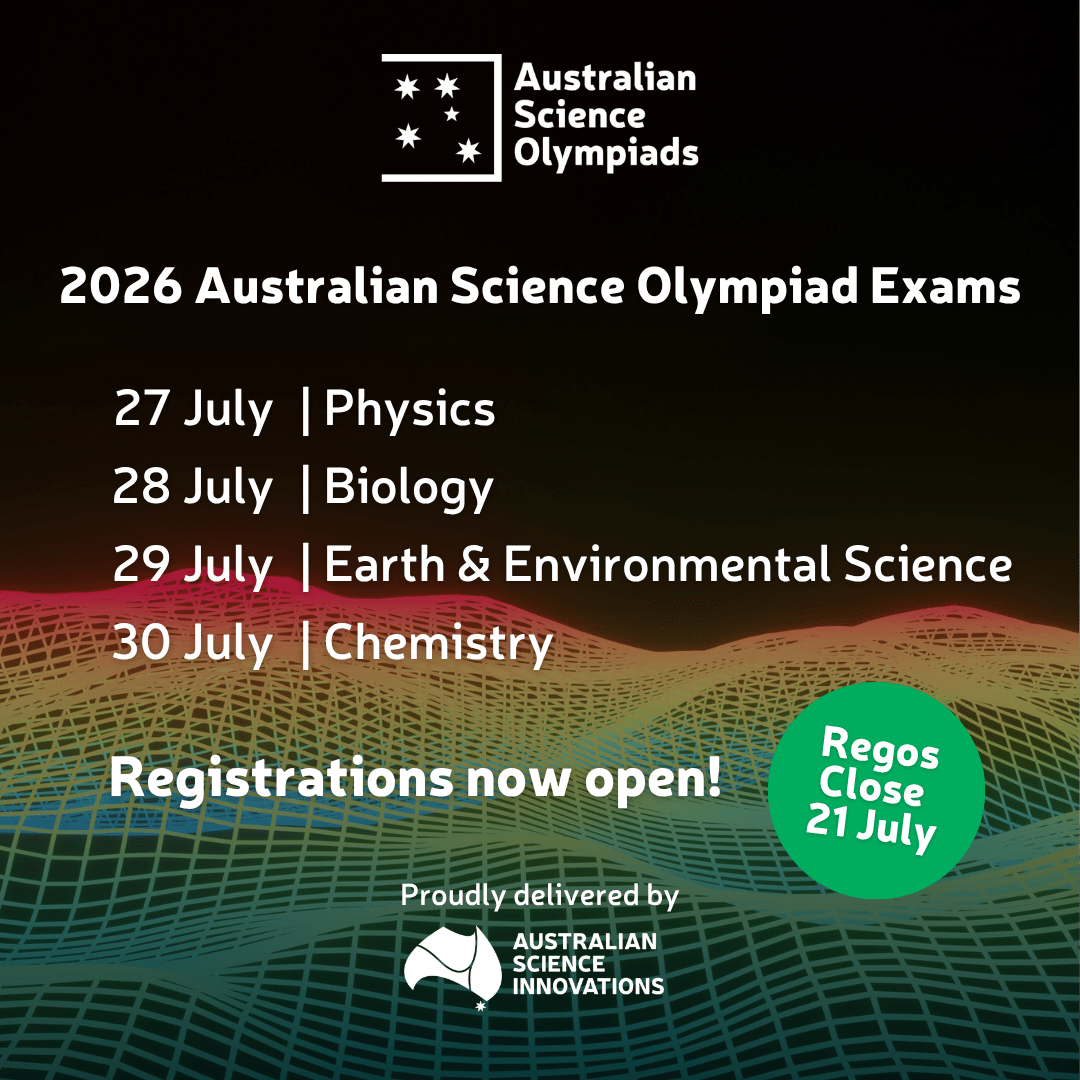
2026 Australian Science
Olympiad Exams |
|
Run the exams right from your school. Students can participate in one or more of the four disciplines.
In 2026, our Physics Exam will be delivered in a pen-and-paper format, while the Biology, Earth & Environmental Science, and Chemistry Exams will be conducted on the same trusted online platform used for the Big Science Competition - an integrated system we have utilised successfully for more than ten years.
Register your students today to give them an opportunity to be selected for the ASO Program, and potentially go on to represent Australia. Details here: https://asi.edu.au/program/australian-science-olympiads/ |
|
First Nations’ Histories and Cultures in Mathematics & STEM |
|
30 June | 8:45am–3:30pm
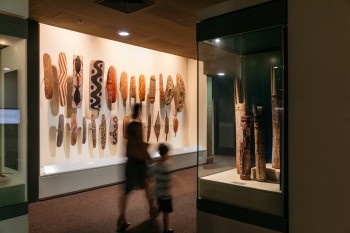
Join the South Australian Museum and CSER Maths in Schools for this full-day workshop exploring Aboriginal and Torres Strait Islander histories and cultures in Mathematics and STEM. Designed for R–10 teachers, the day includes a guided gallery tour, hands-on Deadly Science Fish Traps activity, and connections to digital tools including VR and AR. Participants will receive lesson plans and resources to support curriculum planning. Find out more here.
|
|
Research Survey – Junior Secondary Science Assessment Practices |
|
Science teachers working with Years 7–10 are invited to participate in a Queensland University of Technology research project exploring teacher perceptions of assessment practices in junior secondary science across Australian schools.
The anonymous online survey takes approximately 15 minutes to complete and aims to build a clearer understanding of current teaching, learning and assessment practices in science classrooms. Researchers are seeking broad participation from science teachers across a range of school contexts to help inform future research and practice in science education. Participation is voluntary, with responses reported only in aggregated form. Find out more here. |
|
|
| |
| |
|