| | Hello ESTers!
Welcome back to InsideMENA, your bi-monthly snapshot of the key political, social, and cultural developments shaping the Middle East and North Africa, with an eye on Europe and the wider world.
As always, we’re bringing you concise analysis and fresh perspectives from across the region, along with InsideCulture, our dedicated space for music, film, writing, and digital voices that spotlight the stories and creativity shaping everyday life across the MENA region.
Ready to dive in? Let’s go InsideMENA!
P.S. Reading this on our website? Subscribe to get InsideMENA straight to your inbox every fortnight.
Edited by Clarice Agostini and Jesse Woche Note that the information, views and opinions set out in the newsletter are those of the authors and do not necessarily reflect the opinion or position of the editors, of the European Student ThinkTank, and of their affiliated entities or institutions.
|
|
AES Expands Military Ambitions as Sahel Violence Spreads South By Jordi
|
|
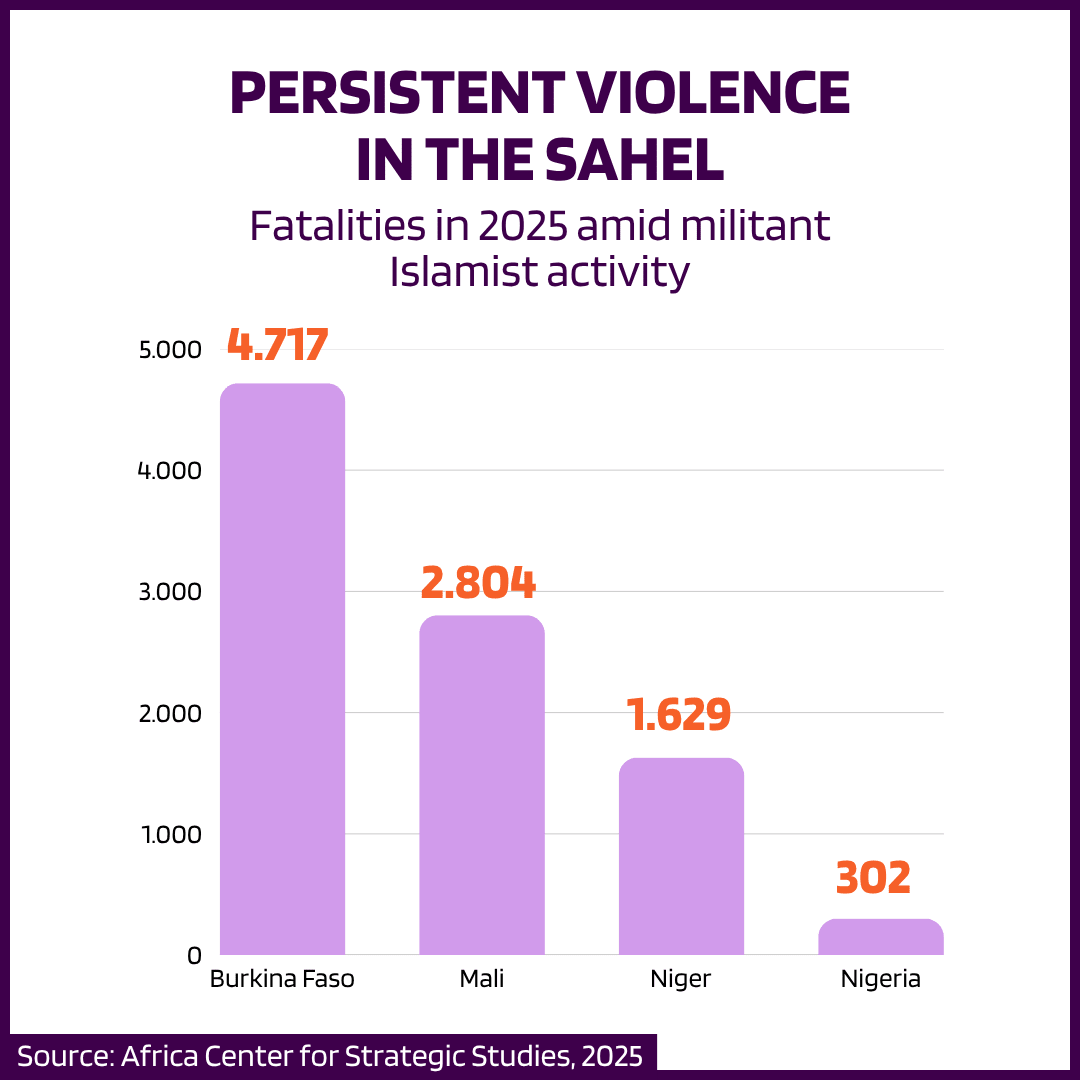
Security shifts. The Alliance of Sahel States (AES), uniting Mali, Burkina Faso and Niger, is emerging as a central security actor in West Africa. Initially announced as a 5,000-strong joint force, it now comprises 15,000 troops, supported by coordinated air campaigns, intelligence sharing and cross-border deployments. The expansion reflects growing pressure from jihadist groups linked to Al-Qaeda and the Islamic State.
Jihadist expansion threatens coastal economic corridors. Recent attacks in Mali and the wider Sahel region have reinforced fears that militant groups are no longer confined to remote desert zones. Jihadist networks now stretch from western Mali to Chad and are increasingly threatening strategic coastal corridors in Benin, Togo, Ghana and Côte d’Ivoire, where major ports, mining infrastructure and trade routes are concentrated. This raises the prospect that the AES could evolve from a Sahel-focused alliance into a broader regional security architecture.
A security bloc or a new regional order? Beyond counterterrorism, the AES increasingly represents a geopolitical project centred on sovereignty, military autonomy and diversified partnerships outside traditional Western frameworks. As ECOWAS struggles to maintain cohesion, the AES is positioning itself as an alternative pole of regional influence. Its long-term credibility, however, will depend not only on military capacity but also on whether it can prevent instability from spreading toward the Gulf of Guinea’s economic hubs and strategic assets. |
|
Riyadh and Abu Dhabi Respond to Iranian Attacks: The End of Non-retaliation By Michele |
|
The GCC is targeted. Since the beginning of the ongoing Iran War on February 28, repeated barrages of drones and missiles have targeted the Gulf Cooperation Council (GCC), with more than half of the 7000 reported attacks targeting Saudi Arabia and the UAE. Despite the monarchies’ initial non-involvement with American and Israeli military operations, they were targeted because of the presence of US military bases, according to Iranian officials, although the attacks caused extensive damage to civilian and energy infrastructures.
The path of non-intervention. Nonetheless, the GCC countries’ decision was not to intervene directly in the conflict, for multiple reasons. Firstly, because of the reputational costs of association with Israel and the US in an unpopular war, but also to safeguard the de-escalation with Tehran in recent years, while hoping that mediation, from within the Gulf or without, could prevent escalation.
Unprecedented attacks. It has been leaked that, at least since early April, the UAE has conducted airstrikes on Iranian targets, including refineries. Saudi Arabia is reported to have done the same. Never before had a GCC country conducted a direct attack against Iran, but the escalation of the conflict changed Riyadh and Abu Dhabi’s strategic thinking: as continuing not to retaliate would risk compromising deterrence in the future, both decided to reaffirm it instead. |
|
|
| |
| |
|