͏‌ ͏‌ ͏‌ ͏‌ ͏‌ ͏‌ ͏‌ ͏‌ ͏‌ ͏‌ ͏‌ ͏‌ ͏‌ ͏‌ ͏‌ ͏‌ ͏‌ ͏‌ ͏‌ ͏‌ ͏‌ ͏‌ ͏‌ ͏‌ ͏‌ ͏‌ ͏‌ ͏‌ ͏‌ ͏‌ ͏‌ ͏‌ ͏‌ ͏‌ ͏‌ ͏‌ ͏‌ ͏‌ ͏‌ ͏‌ ͏‌ ͏‌ ͏‌ ͏‌ ͏‌ ͏‌ ͏‌ ͏‌ ͏‌ ͏‌ ͏‌ ͏‌ ͏‌ ͏‌ ͏‌ ͏‌ ͏‌ ͏‌ ͏‌ ͏‌ ͏‌ ͏‌ ͏‌ ͏‌ ͏‌ ͏‌ ͏‌ ͏‌ ͏‌ ͏‌ ͏‌ ͏‌ ͏‌ ͏‌ ͏‌ ͏‌ 
Is this email not displaying correctly? View it in your browser.
logo
Image description
Image description

As we move into summer, Aquanty continues to engage with the hydropower, groundwater and water resources communities through conferences, training opportunities and ongoing advances in hydrologic forecasting and integrated modelling. This month, our team participated in several major events across Canada, including the 2026 Power of Water Canada Conference and Trade Show (POWC 2026),

CACIS 2026, the Joint CGU and IAH-CNC Annual Meeting, and the Western Groundwater Forum.

Throughout these events, Aquanty staff highlighted how HydroSphereAI, HydroClimateSight and HydroGeoSphere are helping advance inflow forecasting, watershed decision-making and fully integrated groundwater–surface water modelling under changing climate conditions. We were also pleased to deliver our One-Day HydroGeoSphere Training Session at Dalhousie University, providing participants with a hands-on introduction to integrated hydrologic modelling workflows.

In addition, we’re excited to share that Aquanty was recently featured in a new Ontario Water Consortium article exploring how advanced forecasting technologies are helping strengthen hydrological resilience across Ontario. Read more about the feature below.

As always, thank you for your continued interest and support - we look forward to continuing these conversations and connecting with many more members of the water resources community!


- Steve Berg, General Manager, Aquanty Inc.

Image description
Image description

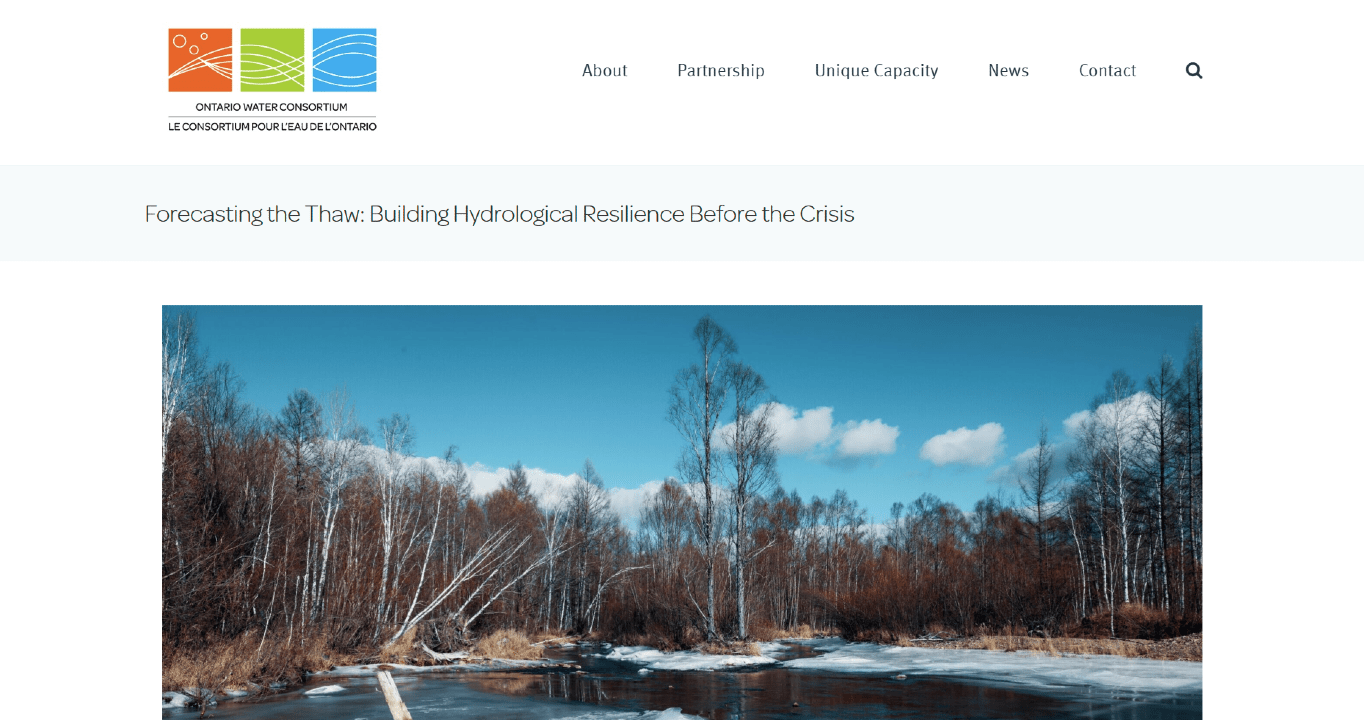
Forecasting the Thaw: Building Hydrological Resilience Before the Crisis

We’re pleased to share that Aquanty has been featured in a new Ontario Water Consortium (OWC) article exploring how advanced hydrological forecasting and monitoring technologies are helping Ontario strengthen resilience to floods, spring thaw events, and climate-driven watershed risks.

The feature highlights how HydroSphereAI combines machine learning with physically based hydrologic modelling to support real-time streamflow forecasting and more proactive water management decision-making.

LEARN MORE
Image description
Image description

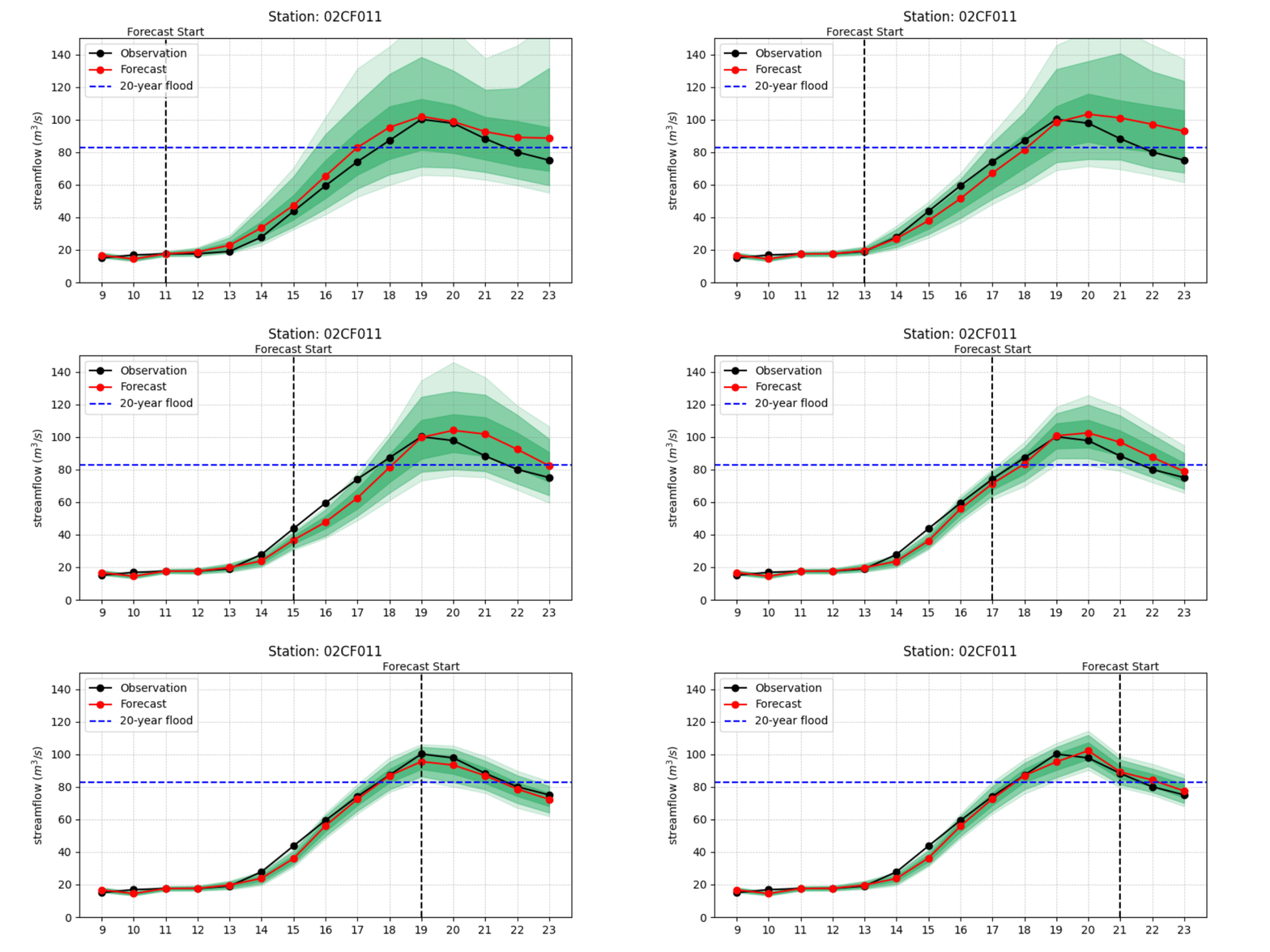
HydroSphereAI Case Study: Spring Freshet Forecasting for Hydropower Risk Awareness – Vermilion River Ontario (Station: 02CF011 - VERMILION RIVER NEAR VAL CARON) – April 2026

In this HydroSphereAI case study, a spring 2026 freshet event in Greater Sudbury drove sustained high flows in the Vermilion River, peaking at 104 m³/s on April 19 following rapid snowmelt and rainfall. Using HydroSphereAI’s machine learning-based forecasting, Aquanty identified the developing inflow event up to eight days in advance and accurately captured both the timing and persistence of peak flows. Forecasts remained stable through the flood warning period, converging toward observed conditions and supporting confident short-term decision-making. The case highlights HydroSphereAI’s ability to provide early inflow signals and reliable peak forecasts— offering valuable insight for hydropower planning, reservoir management, and flood risk mitigation during complex spring freshet events.

Read More

Image description
Image description

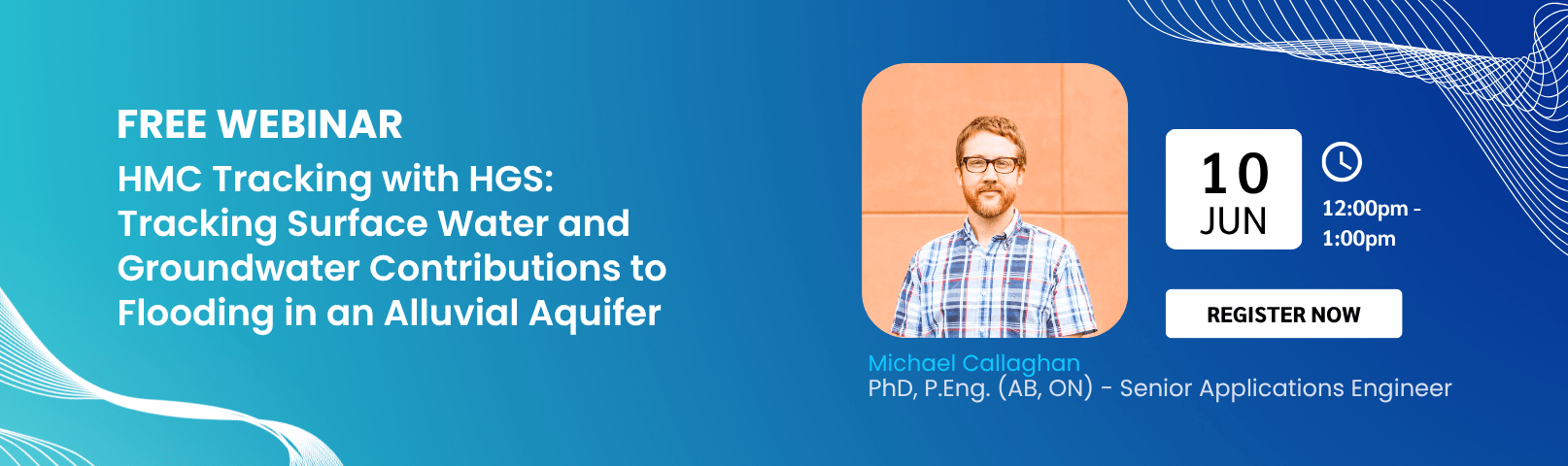
Webinar: HMC Tracking with HGS: Tracking Surface Water and Groundwater Contributions to Flooding in an Alluvial Aquifer

Join us for our upcoming webinar, HMC Tracking with HGS: Tracking Surface Water and Groundwater Contributions to Flooding in an Alluvial Aquifer, and explore how integrated hydrologic modelling can improve understanding of groundwater flooding risks during major flood events.

Image description
Image description

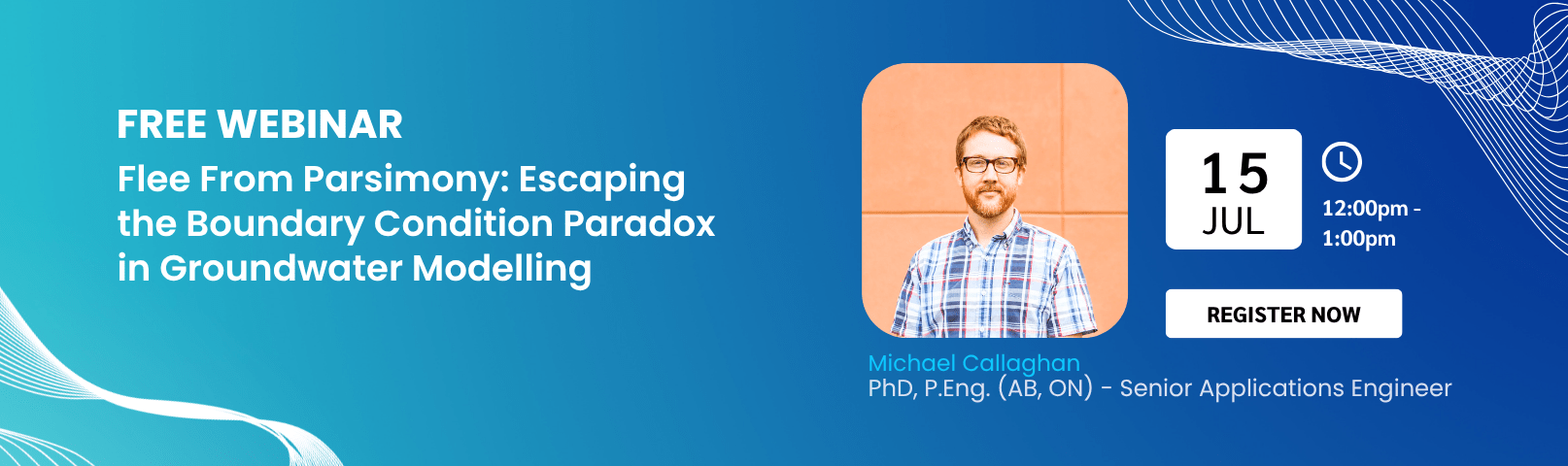
Webinar: Flee From Parsimony: Escaping the Boundary Condition Paradox in Groundwater Modelling

Join us for our upcoming webinar, Flee From Parsimony: Escaping the Boundary Condition Paradox in Groundwater Modelling, and explore how integrated hydrologic modelling approaches can address the growing complexity of groundwater management challenges.

Image description
Image description

Webinar Recording: Advances In HGS Over the Last Decade

Explore the evolution of HydroGeoSphere from an ambitious research initiative to a leading platform for fully integrated groundwater–surface water modelling. In this webinar, Dr. Hyoun-Tae Hwang reviews key milestones, advances in high-performance computing, and the innovations that continue to shape the future of hydrologic simulation.

Image description
Image description

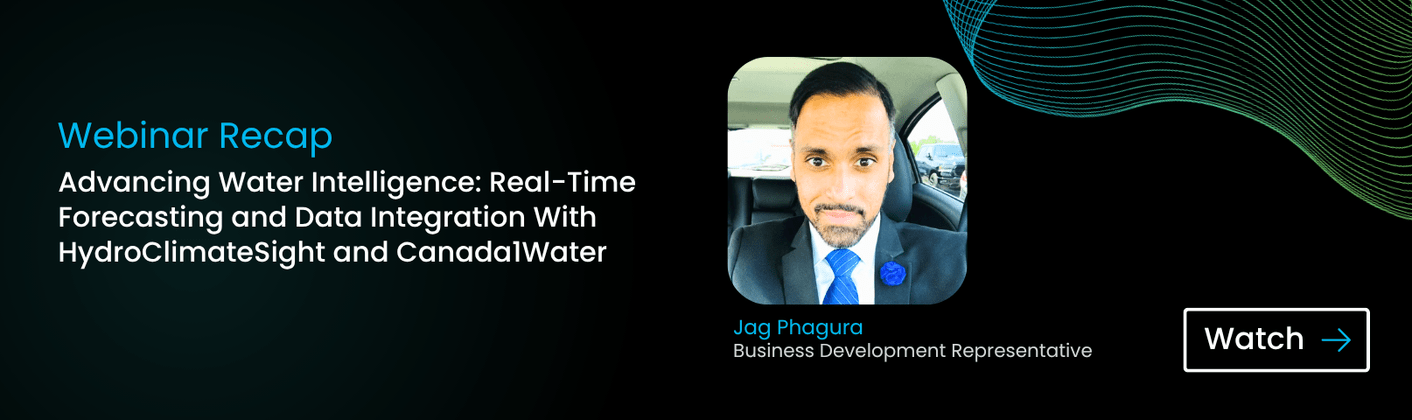
CWRA SK Branch Webinar: Advancing Water Intelligence: Real-Time Forecasting and Data Integration with HydroClimateSight and Canada1Water

Explore how HydroClimateSight and Canada1Water are advancing modern water management in the recent CWRA Saskatchewan Branch webinar with Jag Phagura. This session highlights how real-time forecasting and integrated national-scale datasets support better decision-making during floods, droughts and seasonal transitions.

Image description
Image description
Image description

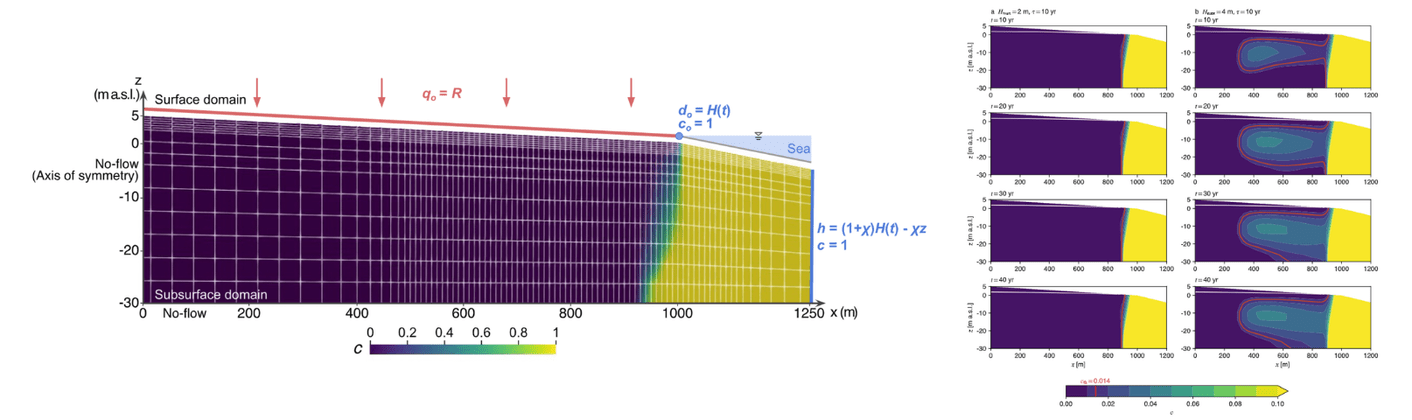
Climate Change Alters Post-Surge Recovery of Coastal Aquifers

This publication investigates how climate change influences the recovery of coastal aquifers following storm surge events. This study leverages HydroGeoSphere (HGS) to simulate coupled groundwater flow and variable-density salt transport, addressing long-standing challenges in understanding how coastal aquifers respond to storm-driven seawater intrusion and how recovery dynamics may change under future climatic conditions.

Read More

Image description

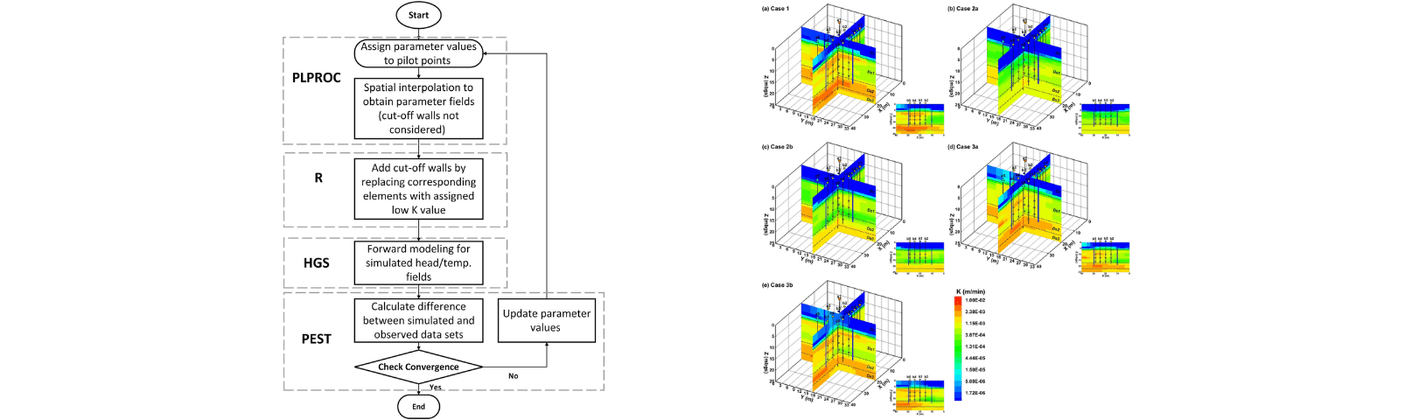
Three‐Dimensional Geostatistical Inverse Analyses of Transient Head and Temperature Data From a Long‐Term Heat Tracer Test
This staff research highlight investigates how three-dimensional geostatistical inverse modelling can improve characterization of subsurface heterogeneity in groundwater systems. This study leverages HydroGeoSphere (HGS) to simulate fully coupled groundwater flow and transport processes within a stochastic inversion framework, addressing long-standing challenges in estimating spatially distributed hydraulic conductivity fields from limited observational data.

Read More

Image description

CWRA 2026 National Conference

June 15th - 19th, 2026

Location: Winnipeg, Manitoba
We’re excited to share that Aquanty will be taking part in the 79th Annual National CWRA Conference — a leading national event dedicated to advancing water science, policy, and management across Canada. This year’s conference will bring together water professionals from government, academia, Indigenous organizations, conservation authorities, and the private sector to explore innovative approaches to integrated water resource management and address emerging challenges facing Canada’s water systems.

LEARN MORE
Image description

Intro to HydroGeoSphere

Next session: June 3, 2026
Every month Aquanty's technical sales lead Brayden McNeill delivers a FREE 3-hour HGS crash course. This quick session will introduce topics such as the basic HGS workflow, the essential components of a *.grok file and visualizing model results.

REGISTER FOR TRAINING SESSION

HGS Software Release

Find our monthly HGS software update on our HGS Downloads page. A quick reminder that if you are updating to the Jan/Feb/Mar 2026 release there are some important installations steps to follow (one time only), find the details in the Release Notes.

The May 2026 software update is now available. The May 2026 software update is now available. This release improves evapotranspiration stability, boosts runtime performance, and adds new tools for boundary condition control and Tecplot visualization.


Key updates include:

• New boundary condition commands to cap head values from time-file tables for greater control over head and pressure head BCs

• New choose segments polyline no diagonals command for cleaner segment selection using mesh edges only

• New chosen segments to tecplot command for easier visualization and debugging of segment sets

• Performance improvements across hgs2vtu, grok I/O, and regional model mesh reading

• Improved snowmelt boundary condition validation and simulation time reporting

• Fix for ET subsurface wetness factor to prevent division-by-zero errors and improve stability


As always, we are committed to the continued improvement to the user experience. Do you have suggestions for new commands or improvements to the user experience? Send your ideas to [email protected]!

Read the release notes to see recent improvements to HydroGeoSphere.
Copyright © 2025 Aquanty Inc., All rights reserved.
Aquanty Inc., 600 Weber St.N., Unit B, Waterloo, ON N2V1K4, Canada, (519)-279-1080 [email protected]

Want to change how you receive these emails?
You can update your preferences or unsubscribe from this list.

If you would like to unsubscribe, please click here.