Welcome to our February newsletter: as always, we're excited to share with you the latest updates and developments from the world of integrated hydro..
͏ ͏ ͏ ͏ ͏ ͏ ͏ ͏ ͏ ͏ ͏ ͏ ͏ ͏ ͏ ͏ ͏ ͏ ͏ ͏ ͏ ͏ ͏ ͏ ͏ ͏ ͏ ͏ ͏ ͏ ͏ ͏ ͏ ͏ ͏ ͏ ͏ ͏ ͏ ͏ ͏ ͏ ͏ ͏ ͏ ͏ ͏ ͏ ͏ ͏ ͏ ͏ ͏ ͏ ͏ ͏ ͏ ͏ ͏ ͏ ͏ ͏ ͏ ͏ ͏ ͏ ͏ ͏ ͏ ͏ ͏ ͏ ͏ ͏ ͏ ͏
| As we move further into 2026, we’re pleased to share several updates that highlight Aquanty’s continued work advancing hydrologic science, forecasting innovation, and knowledge sharing across the water sector. This month’s newsletter features a guest article we contributed to the Water Power Canada platform, as well as a feature in the Water Canada |
|
|
| |
|
|
| magazine showcasing HydroSphereAI and its growing role in AI-driven hydrologic forecasting. You’ll also find updates on upcoming HydroGeoSphere training opportunities, including our ongoing monthly introductory sessions and a one-day intensive training course at Dalhousie University later this spring. Alongside these events, we’re sharing a webinar recap reviewing HydroGeoSphere development over the past year, new research highlights demonstrating the expanding impact of integrated hydrologic modelling, and details on the latest HGS software release.
Together, these initiatives reflect our ongoing commitment to supporting researchers, practitioners and decision-makers with tools and insights that help address today’s increasingly complex water challenges. As always, thank you for your continued interest, collaboration and support.
|
|
|
| |
|
|
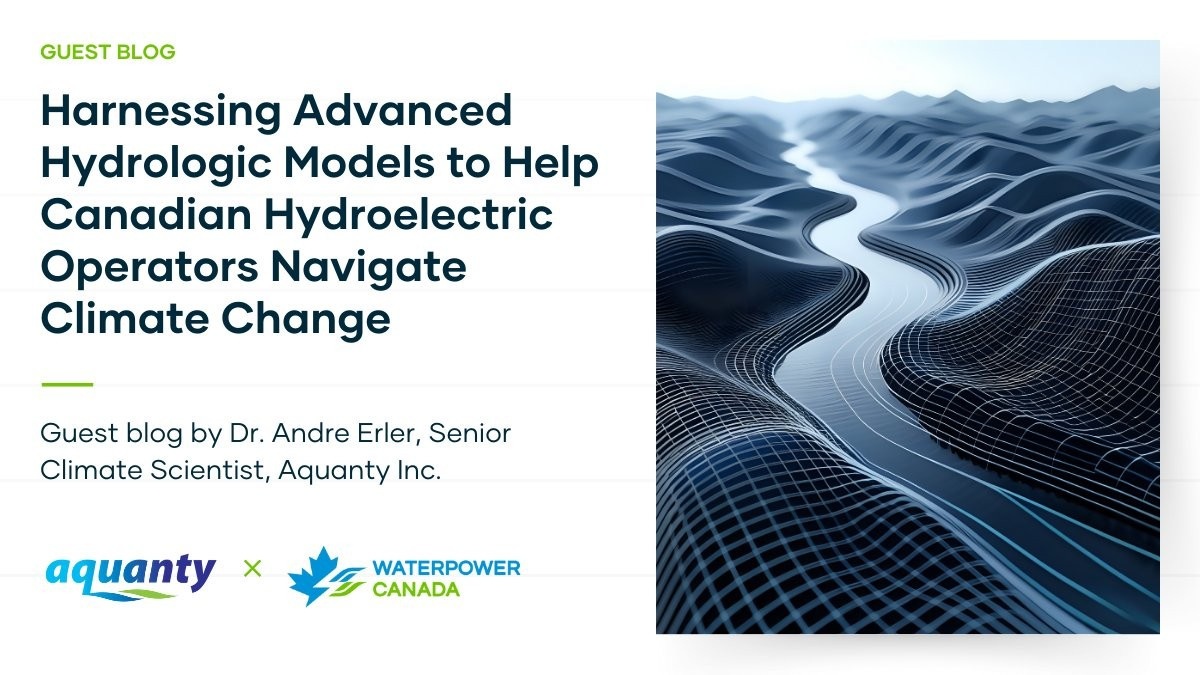
| Aquanty Featured in WaterPower Canada Guest Blog: Navigating Climate Change in Hydropower
We’re pleased to share that Aquanty recently contributed a guest blog to WaterPower Canada, authored by Dr. Andre Erler, Senior Climate Scientist at Aquanty. The article explores how advanced hydrologic modelling and forecasting tools are helping Canadian hydroelectric operators manage growing climate uncertainty. The feature highlights how HydroGeoSphere supports long-term resilience planning, while HydroSphereAI delivers real-time streamflow forecasting for daily operations. Read the full guest article on the WaterPower Canada website to learn more. Learn more. |
|
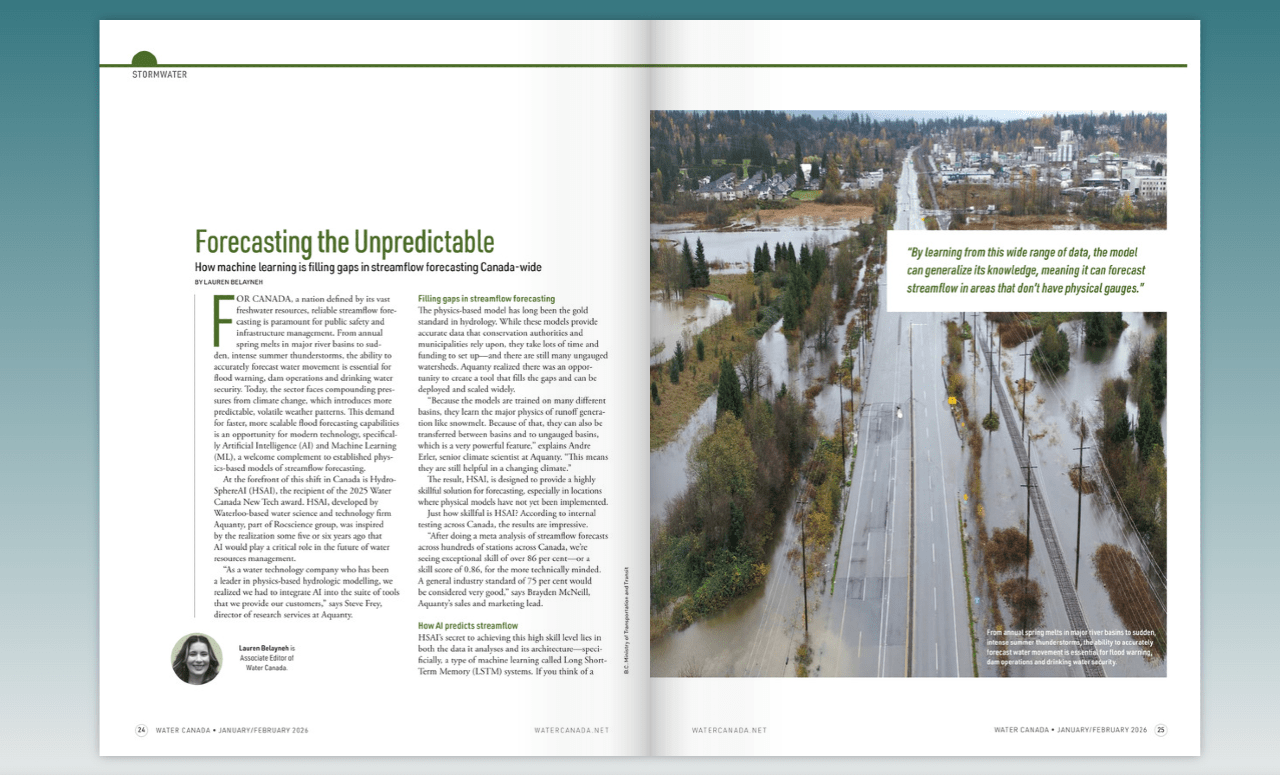
HydroSphereAI Featured in Water Canada’s January/February 2026 Magazine
We’re excited to share that HydroSphereAI (HSAI) is featured in the January/February 2026 issue of Water Canada, highlighting how machine learning is helping close critical gaps in streamflow forecasting across Canada.
The featured article, “Forecasting the Unpredictable,” explores how HydroSphereAI combines decades of hydrologic data with advanced Long Short-Term Memory (LSTM) machine-learning architecture to deliver scalable, real-time streamflow predictions— particularly in regions where physical gauging infrastructure is limited or unavailable. The feature emphasizes HSAI generalized algorithm which can be applied across thousands of catchments, enabling accurate forecasting in diverse environments, from Prairie basins and urban watersheds to northern and remote river systems. Learn more. |
|
|
| |
|
|
| Webinar: Advances In HGS Over the Last Decade Join us for an insightful webinar examining the evolution of HydroGeoSphere (HGS) — from its origins as an ambitious integrated hydrologic modelling experiment to a widely trusted, industry-leading platform advancing groundwater and surface water simulation.
|
|
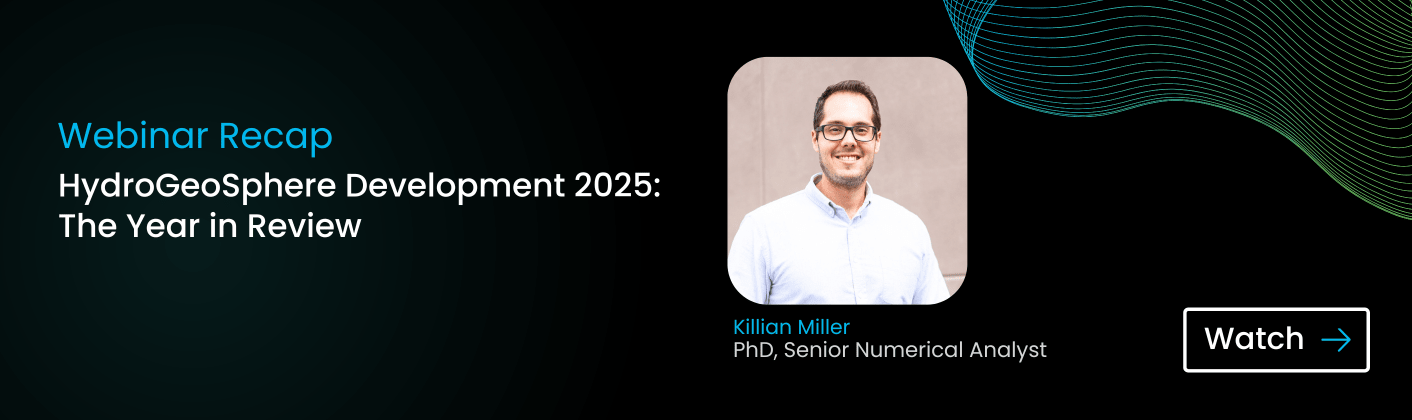
Webinar Recap: HydroGeoSphere Development 2025: The Year In Review Discover a year of innovation in HydroGeoSphere in our webinar with Dr. Killian Miller, highlighting new features, performance improvements, and the transition to the more powerful hgs2vtu.exe. In this webinar we highlight the many new commands/features introduced in 2025, key changes to binary file formats resulting in memory and runtime improvements, and highlight key structural changes to the HydroGeoSphere ecosystem. If you weren't able to join us for it, click below to watch the recording. |
|
|
| |
|
|
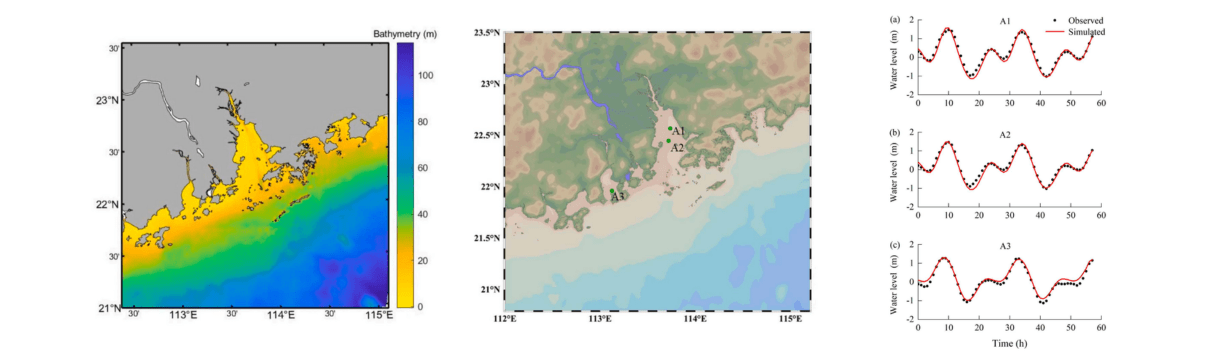
| Modeling the water use associated with energy consumption changes on saltwater intrusion in the Pearl River estuary, China This research investigates how increased energy consumption and associated changes in water use impact saltwater intrusion in the Pearl River Estuary— one of China's most economically vital and environmentally vulnerable regions. Rapid urbanization and industrial development in estuarine zones can significantly alter freshwater availability and hydrodynamic conditions, increasing the risk of saltwater intrusion into water supply systems. This study provides a novel perspective by linking energy consumption to hydrologic changes and their downstream effects on salinity levels in estuarine environments. Read More. |
|
|
| |
|
|
| Intro to HydroGeoSphere Next session: March 4, 2026
Every month Aquanty's technical sales lead Brayden McNeill delivers a FREE 3-hour HGS crash course. This quick session will introduce topics such as the basic HGS workflow, the essential components of a *.grok file and visualizing model results. |
|
One-Day HydroGeoSphere Training Session Date: May 24, 2026 Location: Dalhousie University, Halifax, NS, B3J 0H4 Room: D105, Sexton Campus
Join Brayden McNeill, Aquanty’s Technical Sales Leader, for a one-day intensive course which explores the complete integrated hydrologic modelling process using HydroGeoSphere (HGS). |
|
|
| |
|
|
| Find our monthly HGS software update on our HGS Downloads page. A quick reminder that if you are updating to the Jan/Feb 2026 release there are some important installations steps to follow (one time only), find the details in the Release Notes.
The February 2026 software update is now available. This release delivers performance improvements, important bug fixes, and major enhancements to hgs2vtu— making post-processing faster and model setup more flexible.
Key updates include: Two new commands - 'table maximum size' & 'time varying friction for chosen faces' Faster and more memory-efficient time raster table boundary condition handling Refined initial head depth to water table for more precise node-level control hgs2vtu upgrades, including TOML-based config files, improved ASCII output performance, and expanded metadata controls Fixes for grid generation origin arguments and large unsaturated function tables Windows installer fix for PATH updates on long environment variables
As always, we are committed to the continued improvement to the user experience. Do you have suggestions for new commands or improvements to the user experience? Send your ideas to [email protected]!
Read the release notes to see recent improvements to HydroGeoSphere. |
|
|
| |
|
|
| Copyright © 2025 Aquanty Inc., All rights reserved.
Aquanty Inc., 600 Weber St.N., Unit B, Waterloo, ON N2V1K4, Canada, (519)-279-1080 [email protected] |
|
|
| |
|
|