͏‌ ͏‌ ͏‌ ͏‌ ͏‌ ͏‌ ͏‌ ͏‌ ͏‌ ͏‌ ͏‌ ͏‌ ͏‌ ͏‌ ͏‌ ͏‌ ͏‌ ͏‌ ͏‌ ͏‌ ͏‌ ͏‌ ͏‌ ͏‌ ͏‌ ͏‌ ͏‌ ͏‌ ͏‌ ͏‌ ͏‌ ͏‌ ͏‌ ͏‌ ͏‌ ͏‌ ͏‌ ͏‌ ͏‌ ͏‌ ͏‌ ͏‌ ͏‌ ͏‌ ͏‌ ͏‌ ͏‌ ͏‌ ͏‌ ͏‌ ͏‌ ͏‌ ͏‌ ͏‌ ͏‌ ͏‌ ͏‌ ͏‌ ͏‌ ͏‌ ͏‌ ͏‌ ͏‌ ͏‌ ͏‌ ͏‌ ͏‌ ͏‌ ͏‌ ͏‌ ͏‌ ͏‌ ͏‌ ͏‌ ͏‌ ͏‌ 
Is this email not displaying correctly? View it in your browser.
Image description

February 2026

Inspiration to Ponder

“Decisions Determine Destinations”

Col. James B. Irwin, USAF (Ret.)

Apollo 15 Moonwalker

Astronaut Irwin was one of twelve men to walk on the moon. He inscribed a book for his friend and fellow astronaut, Alan Bean (Apollo 12 and Skylab 3) with the above quote. It provides a powerful thought for reflection. Our decisions too will determine our final destination.  Bean noted that “Jim Irwin, Colonel, United States Air Force, had a brilliant but challenging career. His is a story of difficult challenges, met, and with hard work and perserverence, overcome.” His compelling and inspiring story of Irwin’s determination and decisions that led to Irwin’s standing on the moon can be found by using the link here.

Image description

Astronaut Bean’s painting of Jim Irwin standing on the lunar surface was one of a series of paintings that he did to document the human stories of the space program. Many of Bean’s paintings with their story can be found in his online gallery.

Around the Chaplain Corps

CAP Chaplains Attend

USAF Moral Injury Symposium

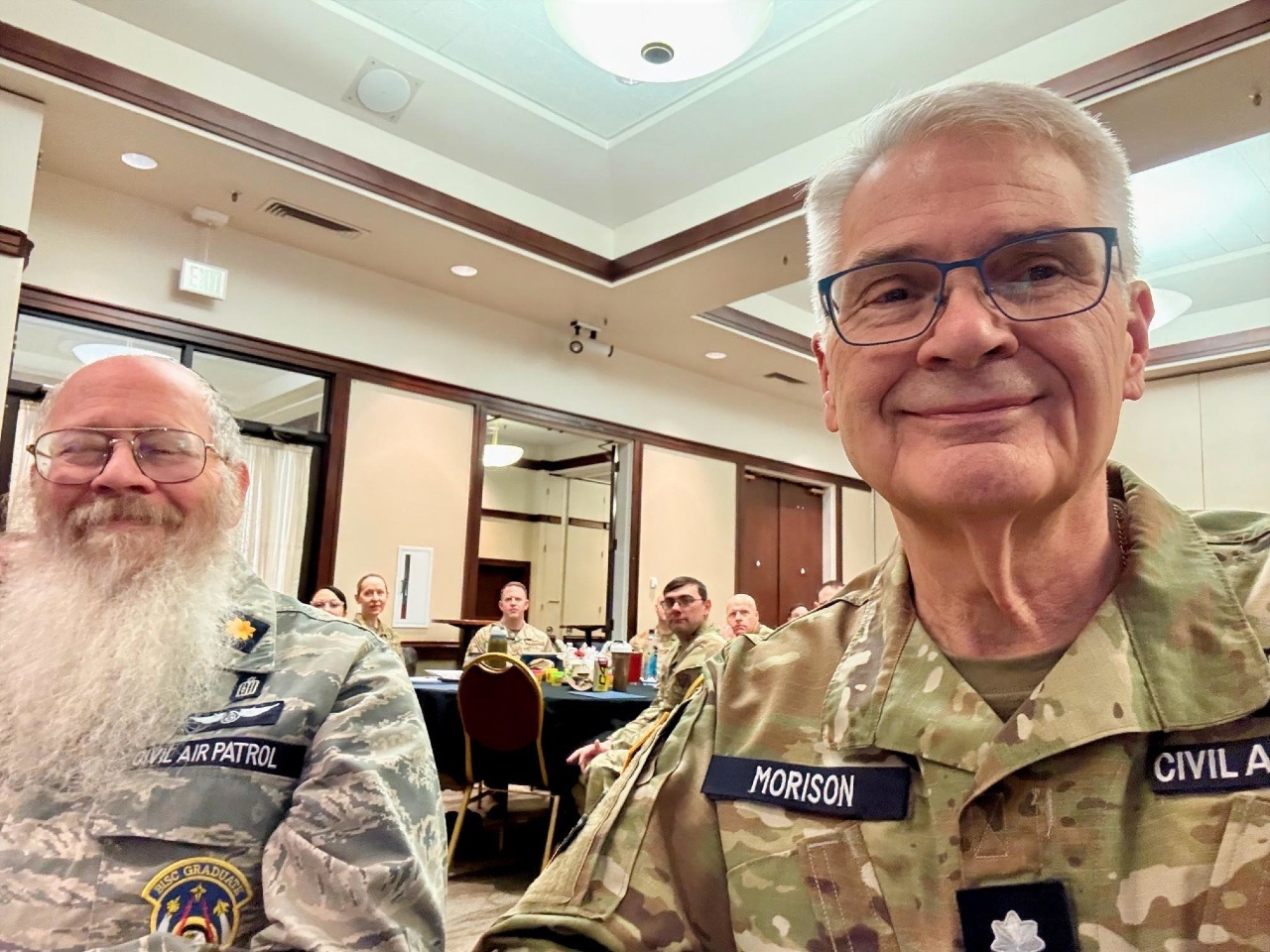
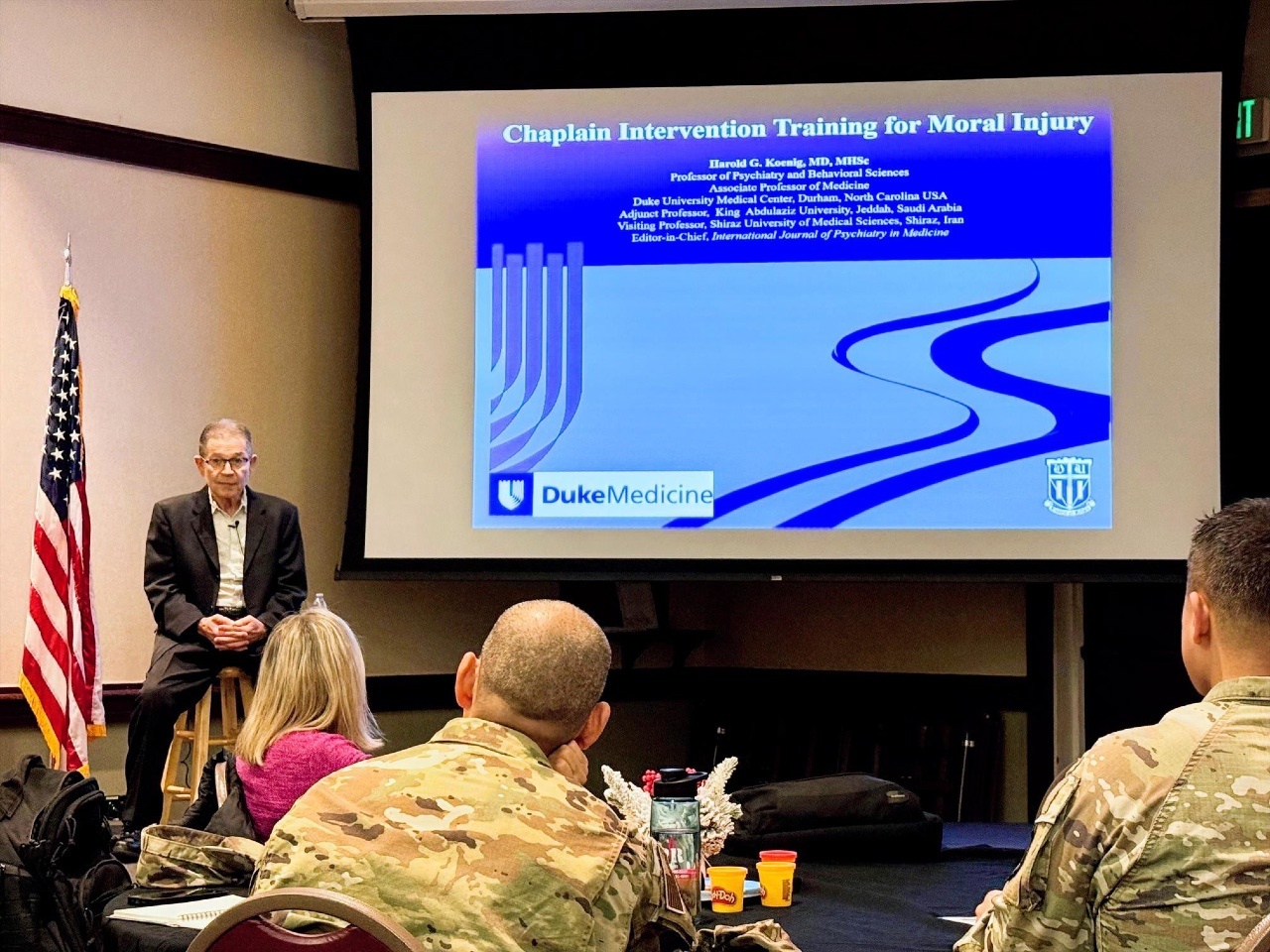
Travis AFB hosted an advanced Moral Injury Symposium from January 7 – 9, 2026. The symposium was attended by USAF Chaplains and Religious Affairs Airmen from bases across the United States. Chaplain (Lt. Col.) Michael Morison and Chaplain (Maj.) Dovid Grossman attended the symposium. The symposium trainer was Dr. G. Koenig, MD, a preeminent researcher and instructor in moral injury. His current work focuses on building and sustaining spiritual readiness among active-duty service members. The program included in depth research background information, current intervention and pastoral care tools. It was a tier two type of training to enhance the new Air Force Moral Injury program materials. Certificates were granted by Duke University.  Continue reading here.

Image description
Image description

(Left: Chaplain Grossman and Chaplain Morison

Right: Dr. Harold Koenig, Duke University.)

Back to Basics

The Difference Between the Chaplain Functional Chain and the Chain of Command in Civil Air Patrol

Chaplain (Col.) Kenneth W. Parris

Chief of Personnel, CAP Chaplain Corps

Within Civil Air Patrol, clear organizational relationships are essential to both mission effectiveness and member care. Two distinct structures support this effort: the chain of command and the functional chain. While they interact closely, they serve different purposes and must not be confused.


The chain of command is the formal line of authority within CAP. It runs from unit commanders through subordinate leaders and members and is responsible for command decisions, mission execution, discipline, training, staff assignments, and administration. All CAP members—including chaplains and CDIs—are accountable to their assigned commanders through this chain. Commanders set priorities, assign duties, and evaluate performance in accordance with CAP regulations. All CAP Chaplain Corps positions are assigned at the sole discretion of the commander, who may seek the advice of the chaplain at the next higher headquarters, but is not required to act on that advice.


The functional chain, by contrast, is a professional support and advisory structure specific to each function (job). Within the CAP Chaplain Corps, it connects chaplains to wing, region, and national chaplain leadership for guidance on chaplaincy standards, appointments (which is different from the command function of assignments), professional development, religious support planning, and corps-wide policies. This functional chain exists to ensure consistency, mentorship, and technical expertise, not to exercise command authority.


A critical distinction is that chaplains do not command other chaplains through the functional chain, nor does the functional chain override any commander’s authority. CAP chaplains serve at the direction of their respective commanders and support the commander’s mission, while drawing on the chaplain functional chain for specialized guidance and resources related to their unique role.


In summary, the chain of command directs what the unit must accomplish, while the chaplain functional chain supports how chaplains fulfill their professional and pastoral responsibilities. Understanding this distinction preserves proper command authority while enabling CAP chaplains to effectively care for members and advise commanders with integrity and professionalism.

Need to Know

Saving Lives by Shaping Futures

By Senior Airman Rupert Victoria, USAFR

Editor’s Note: Often our Chaplains and CDIs are seldom aware of the impact that they have had on shaping the future of our cadets and senior members. Here is a brief article by a former Cadet and Flight Officer reflecting on how his life and future was shaped by CAP. In Christian scriptures is a parable of sowing and reaping of seeds in the field (Mt. 13: 1-23). Some will sow, some will reap the harvest. In our cadet program, even in our senior program, the Chaplain Corps sows seeds that shape the lives of our members. Senior Airman Victoria shared his story with a CAP chaplain and wished to share it with the Chaplain Corps. His story is one among many of how Chaplains, CDIs, and Senior members have assisted and inspired cadets to discover their meaning and purpose, saving a life by helping to shape it. This story is presented in the writer’s own voice.


I would like to share my journey through Civil Air Patrol and highlight some of the people who assisted me. Civil Air Patrol gave me confidence and inspired my decision to join the Air Force, which was pivotal in shaping my life. I was introduced to the Civil Air Patrol during an airshow at Travis Air Force Base in 2019 where I saw Civil Air Patrol for the very first time. I had heard about it from friends who had joined CAP, but I did not really investigate it. However, when I did my research, I discovered how interesting CAP is. Continue reading here.

By Lt. Col. Anthony Hamill, CDI

Having a chaplain in our composite squadron truly transformed our experience. Initially, we didn’t realize how much we needed a chaplain. But everything changed when our squadron commander, Lt. Col. David Reber, shared how the chaplain’s involvement made challenging tasks suddenly achievable. He emphasized that every squadron should have a chaplain, and I wholeheartedly agree. Lt. Col. Reber said frequently, “If I knew what a chaplain could do, I would have had one years ago.”


One pivotal moment came when some cadets violated their honor code. As the Deputy Commander for Cadets, I was deeply disappointed, and Lt. Col. Reber felt the same. If it had been up to us, the cadets might have been dismissed from the program with a 2B. However, our chaplain offered a compassionate alternative: allowing the cadets to resign their positions in place of a disciplinary action that would follow them long-term. Years later, those cadets reached out to me for job recommendations in law enforcement, and thanks to our chaplain’s wise guidance, they learned valuable lessons and became positive contributors to our community.


Since our chaplain joined our squadron, he has supported both cadets and senior members in countless ways. His presence is invaluable—whether advising the Squadron Commander or counseling a cadet, he brings empathy, wisdom, and stability. If you’re considering adding a chaplain to your squadron, I strongly encourage you to do so. Their proven positive impact can be truly life changing.

Best Practices

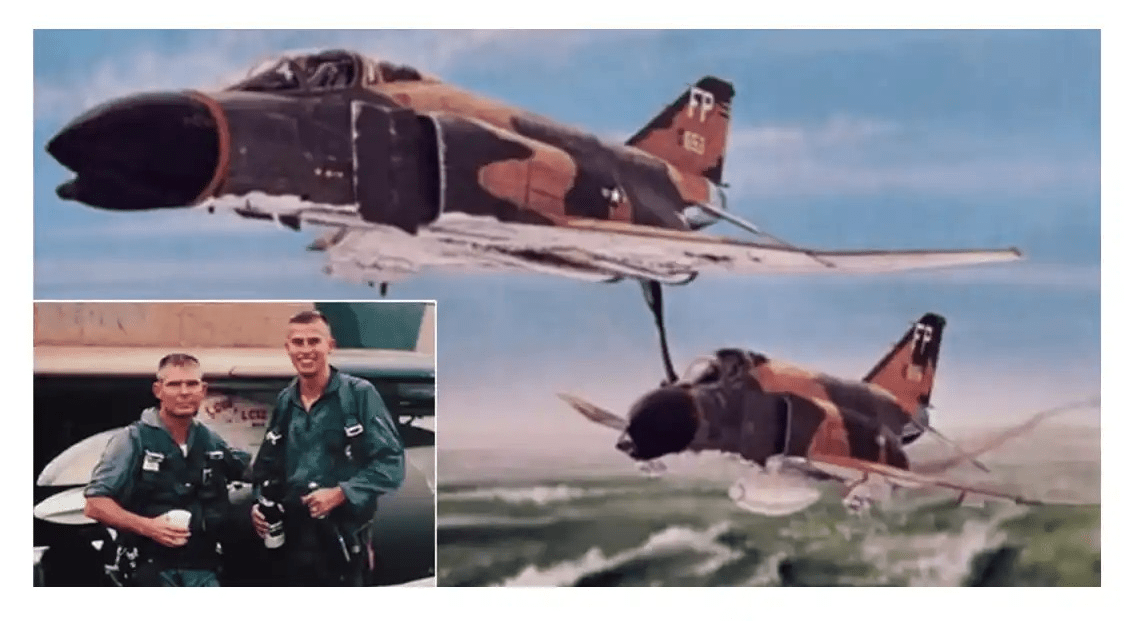
Pardo's Push:  A Wingman's Story

By Chaplain (Lt. Col.) Michael Morison

Image description

The cadet wingman course and the concept of wingmanship have intrigued me. As a chaplain, I have taught the wingman course numerous times. As a result, I researched Pardo’s story in more depth and was drawn in by how rich the story becomes when viewed from a broader perspective. When the pilot he saved in Viet Nam suffered from Lou Gehrig’s disease later in life, Pardo, once again, stepped in to help. In addition, the Air Force has been emphasizing that wingmanship is about caring, and that wingmanship is about creating a caring culture in the Air Force.


Two years ago, I authored a PowerPoint on wingmanship that was very well received by cadets and seniors at a few encampments in the Pacific Region. After attending the presentation, the Region Commander at that time requested that this presentation be incorporated whenever possible. The development of the presentation followed the Air Force theme of developing a culture of caring airmen who form a team and would have each other’s six. Being a wingman is not about what you are expected to do, it is about who you are. It is the realization that I am a wingman everywhere and every day to everyone. The content focused on the interrelationship between CAP’s core values and developing an attitude of wingmanship.


The PowerPoint has imbedded videos and speaker notes for ease of use. There is also a handout for cadets to include in their training binder to refresh the lesson. This is offered as a chaplain and CDI resource to refresh the concept of wingmanship for cadets and seniors. It can be used at encampments, on fifth week squadron meetings, for special activity events, or whatever seems an appropriate place and time. The wingman proactively brings their heart to their action.  For CAP, “shaping lives” is about being a wingman, internally and externally, everywhere and every day.


Presentation and handout available to download here.

Spiritual Support Squadron:

Become A Spiritual Wingman!

Request Support:

CAP members, family members, or military-connected individuals are encouraged to submit a request to the Spiritual Support Squadron. Your request will be handled with care as spiritual squadron leaders review and edit each one to maintain your privacy and protect your personal information. A prayer request can be submitted at any time by using the link below.

Click here to submit a prayer request.


Chaplains and CDIs are requested to make your squadrons aware of this spiritual resource

Become a Spiritual Wingman:

Join the Civil Air Patrol Spiritual Support Squadron—a growing team dedicated to providing “spiritual air cover” across CAP and our military family. Become a spiritual wingman today.

Click here to register to become a spiritual wingman!

The Virtual Incident Command Post

The Virtual Incident Command Post (vICP) needs your support.  Chaplains and CDIs are invited to offer an opening prayer.  Click here for information and to sign up !


Be sure that you are sign in with your hc.cap.gov address or request one at [email protected].

Education & Training Opportunities

Image description

Click here for the CAP Chaplain Corps College


Click here for Chaplain Corps Region Staff Colleges (CCRSC)


Click here for the Chaplain Corps Emergency Services School (ChESS)

USAF Chaplain Corps Multi-Faith Calendar

(February 17th - April 14th)

17 Feb - Lunar New Year - Taoism

17 Feb - Ramadan begins - Islam

18 Feb - Losar - Buddhism

18 Feb - Ash Wednesday/Lent beings - Christianity

19 Feb - Sri Ramakrishna Jayan - Hinduism

22 Feb - Forgiveness Sunday - Orthodox

23 Feb - Lent begins - Orthodox

25 Feb - 1 Mar Ayyám-i-Há - Bahá’í

01 - 20 Mar - Nineteen Day Fast - Bahá’í

02 Mar - Fast of Esther - Judaism

02 - 03 Mar - Purim - Judaism

03 Mar - Sangha Day - Buddhism

04 Mar - Holi - Hinduism

04 Mar - Day of Miracles - Buddhism

04 - 06 Mar - Hola Mohalla - Sikh

09 - 17 Mar - Laylat al-Qadr - Islam

16 - 20 Mar - Ghambar Hamaspathmaedem - Zoroastrianism

17 Mar - St. Patrick's Day - Roman Catholic

19 Mar - Solemnity of St. Joseph - Roman Catholic

19 Mar - Last day of Ramadan - Islam

20 Mar - Ostara - Wicca

20 - 22 Mar - Eid al-Fitr - Islam

21 Mar - Naw Ruz - Baha'i

26 Mar - Birth of Prophet Zarathustra (Khordad Sal) - Zoroastrianism

26 Mar - Ramanavami - Hinduism

29 Mar - Palm Sunday - Christianity

31 Mar - Hydesville Day - Spiritualism

31 Mar - Mahavir Jayanti - Jainism

01 - 09 Apr - Passover - Judaism

02 Apr - Theravada New Year - Buddhism

02 Apr - Holy Thursday/Maundy Thursday - Christianity

03 Apr - Good Friday - Christianity

04 Apr - Holy Saturday - Roman Catholic

05 Apr - Easter Sunday - Christianity

05 Apr - Palm Sunday - Christianity

10 Apr - Holy Friday - Christianity

12 Apr - Easter Sunday - Christianity

14 Apr - Vaisakhi - Sikhism

14 Apr - Yom HaShoah - Judaism
Where does one go for information?

The Chaplain Corps has four divisions where one can go for assistance. You may contact the appropriate division for assistance.


Education, for all questions related to Chaplain Corps courses. [email protected]

Personnel, for all questions related to personnel concerns. [email protected]

Technical, for all questions related to software and IT concerns. [email protected]

Plans & Programs, for all questions related to operational concerns. [email protected]

...or check out our website sections below:

Main PageResourcesEducation and TrainingValues for Living 2.0

From the Editor

The Transmitter is a publication that "aspires to inspire" its readership. This mission requires your support! You are the one who can share knowledge and experiences that promote creativity, flexibility, and ingenuity in what we do. Sharing this with our fellow chaplains and CDIs inspires greater service to CAP and our local community.

We encourage you to inspire the Chaplain Corps by sharing your participation in special ceremonies, special training programs (as participant or instructor), and in all types of CAP activities. Help us serve better by sharing knowledge, insights, and best practices that allow us to better serve to our fellow CAP Airmen and our communities.


Send us your contributions to [email protected]

The Transmitter is published monthly by the Civil Air Patrol Chaplain Corps

Please send inquires to [email protected]

If you would like to unsubscribe, please click here.