͏‌ ͏‌ ͏‌ ͏‌ ͏‌ ͏‌ ͏‌ ͏‌ ͏‌ ͏‌ ͏‌ ͏‌ ͏‌ ͏‌ ͏‌ ͏‌ ͏‌ ͏‌ ͏‌ ͏‌ ͏‌ ͏‌ ͏‌ ͏‌ ͏‌ ͏‌ ͏‌ ͏‌ ͏‌ ͏‌ ͏‌ ͏‌ ͏‌ ͏‌ ͏‌ ͏‌ ͏‌ ͏‌ ͏‌ ͏‌ ͏‌ ͏‌ ͏‌ ͏‌ ͏‌ ͏‌ ͏‌ ͏‌ ͏‌ ͏‌ ͏‌ ͏‌ ͏‌ ͏‌ ͏‌ ͏‌ ͏‌ ͏‌ ͏‌ ͏‌ ͏‌ ͏‌ ͏‌ ͏‌ ͏‌ ͏‌ ͏‌ ͏‌ ͏‌ ͏‌ ͏‌ ͏‌ ͏‌ ͏‌ ͏‌ ͏‌ 
Is this email not displaying correctly? View it in your browser.
Image description

N e w s l e t t e r

January 2026

Image description

Dear Friends and Colleagues,


Welcome to this New Year’s edition of the CUSP newsletter, gathering together recent highlights from what is fast approaching 10 years of CUSP research and advocacy.  


It’s a good moment for reflection, for all sorts of reasons. The new year is always an opportune time to contemplate what we’ve achieved and what we still hope to achieve. And as the days (in the Northern hemisphere) grow imperceptibly longer, it’s also a fitting moment to reflect on what Hannah Arendt termed natality: the coming into existence of new life and new ideas. 


Arendt made a couple of observations about that process. One is the sheer constancy of natality in the world and its presence as a powerful, countervailing force to mortality. 


The other point she made is how little control we have over that force—despite our assumptions that we are somehow responsible for it. Your children are not your children, said the poet Kahlil Gibran. They come through you but they are not of you. That’s also true of our intellectual offspring, argued Arendt. 


Let me give you a couple of examples. 


The concept of degrowth was first introduced into the French language (as décroissance) by André Gorz in the 1960s. It was more or less dormant until its reincarnation (by Serge Latouche and others) in the early 2000s. It found a brief and glorious moment in the sun during the EU Beyond Growth conference a couple of years ago. But since then it’s led a curious life. 


On the one hand, it’s been subject to a fiercely irrational, not to say anti-scientific, backlash (as I mentioned in our last newsletter). On the other, as CUSP fellow Dario Krpan and his co-authors have recently pointed out, ordinary people still respond positively to the concept once they’ve understood clearly what it means. It’s still contested. But no one has complete control over its meaning or its fate. That’s natality in action.  


Ironically, of course, the same thing is true for economic growth itself, which once had a very precise meaning as a measurable increase in the Gross Domestic Product. But as CUSP researcher Richard Douglas has highlighted in his recent book, growth has since accrued an almost religious significance in modern society. Politicians, economists, journalists: all pledge allegiance to its fickle promise of progress in an otherwise treacherous universe. Natality again, I suppose.


Richard’s blog on climate denial tackles another unfortunate aspect of the same phenomenon. When the scientific consensus on climate breakdown is weaponised for political reasons, change demands engagement from beyond the scientific and policy community.  


The unpredictable aspect of natality is nowhere more profound than when 'new' ideas meet a new generation. CUSP researchers Anastasia Loukianov and Kate Burningham have been working with Brand Legacy consultancy to figure out what Gen Z makes of sustainability. Richard Bampfylde’s work bringing CUSP research to a new younger audience in Jordan and the Middle East has culminated in his report on transformative eduction for the Ban-Ki Moon Centre for Global Citizens


I’ve had my own fair share of experience with natality, of course. Launching The Care Economy over the last few months has led to some fascinating encounters with a wide range of audiences—from my event with Kate Raworth at the Conduit to my recent, commissioned article for the BMJ's (the British Medical Journal) special issue on climate breakdown. 


And finally, it’s worth mentioning a drama series that I wrote for the BBC more than a quarter of a century ago exploring the tension between environment and development. It’s just been re-released unexpectedly as an audiobook by Penguin. Your ideas are not your ideas. They have a life of their own. That was Arendt’s point, I suppose.   


In this newsletter, you’ll find a host of other examples. New papers, new funding, new engagements. No doubt this coming year will be full of many more.  


As ever, we welcome your comments and suggestions and wish you all a wonderful year ahead. 


Best wishes,

Tim 


Prof Tim Jackson
Co-Director, CUSP


▶️  N E W S

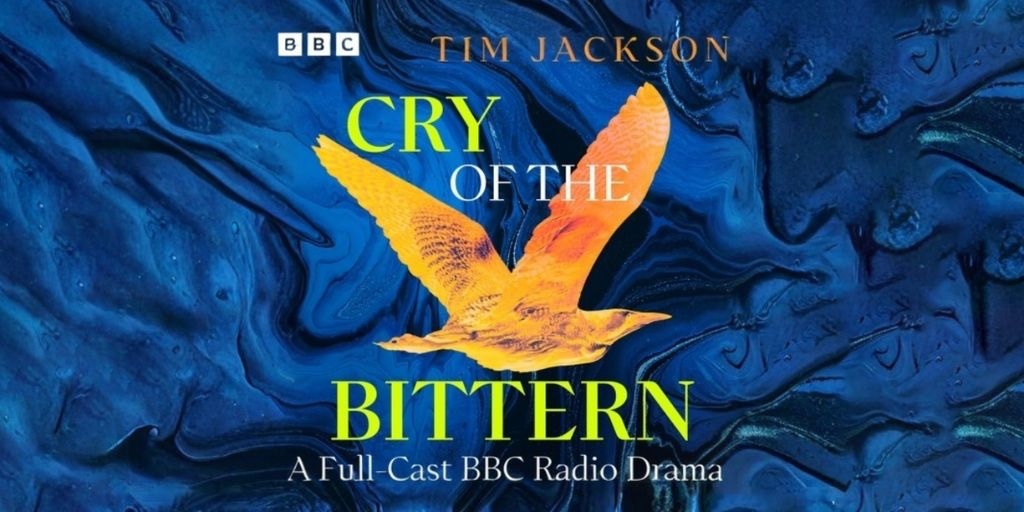
Cry of the Bittern | BBC Radio drama series by Tim Jackson airing again

Tim Jackson’s environmental thriller The Cry of the Bittern, originally broadcast as a 30-part serial on BBC Radio 4, has just been re-released by Penguin and is now available on all major audiobook platforms. Set in the atmospheric landscape of the Norfolk fens, the full-cast drama follows a young Environment Agency officer drawn into a web of pollution, corporate ambition and personal conflict.

Monetary Policy for a Just Macrofinancial Regime

Researchers from CUSP at the University of Surrey have secured funding from the Partners for a New Economy (P4NE) foundation for a new two-year research collaboration, Monetary Policy for a Just Macrofinancial Regime in an Era of Structural Change.

Prosperity as health: Why we need an economy of care for a liveable future | BMJ article by Tim Jackson

Climate breakdown should be understood as a profound abdication of care, argues CUSP co-Director Tim Jackson in his opinion piece commissioned for the British Medical Journal’s (BMJ’s) new year special issue on climate breakdown. Addressing that failure will take more than clever technology or incremental policy reform. It must start by reimagining the purpose of the economy and the direction of societal progress.

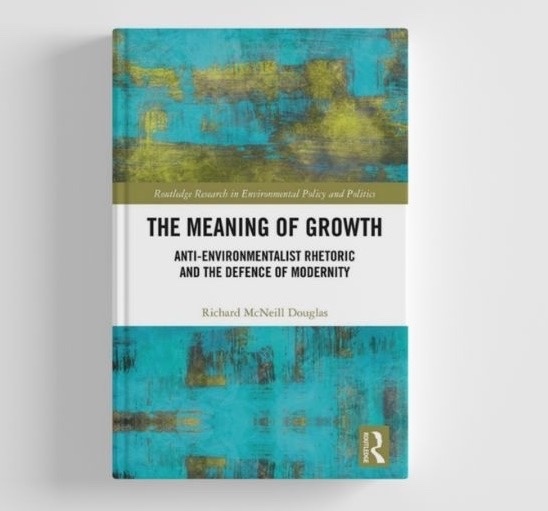
The Meaning of Growth—Anti-Environmentalist Rhetoric and the Defence of Modernity

In this book, Richard Douglas uncovers the cultural roots of resistance to environmental action. Through a close reading of anti-environmentalist rhetoric, he shows how faith in progress and endless growth shapes modern politics and blocks meaningful responses to ecological crises.

Assessing public support for degrowth: survey-based experimental and predictive studies

New study by Dario Krpan, Fred Basso, Jason Hickel and Giorgos Kallis finds that—contrary to common political and media claims—the majority of respondents support degrowth when presented with the full proposal, regardless of the label.

Health system resilience and the health impacts of environmental degradation: A global analysis

New paper by Shimaa Elkomy and Tim Jackson explores how environmental degradation shapes global health outcomes. While robust public health systems offer some protection, they cannot offset long-term harms, underscoring the need for strong environmental and emission-reduction policies.

Re-imagining a new economy that works for all people and the planet

Wellbeing feels out of reach for most people. This paper, led by Ben Kellard and written by a range of economists and practitioners in the field of New Economics, explores why this is the case and proposes an alternative modus operandi, setting out key interdependent functions that each actor in the economy might play.

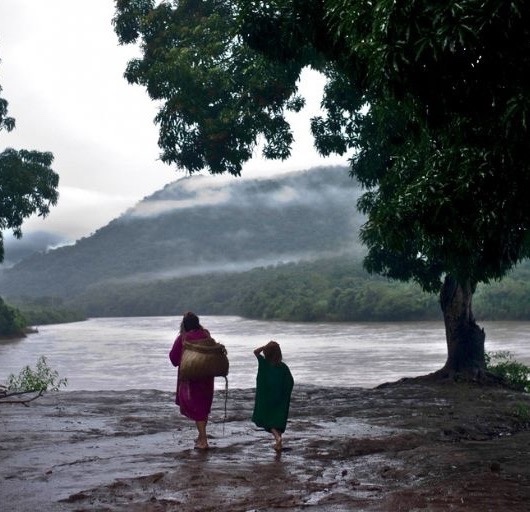
Learning to walk lightly through the world: Lessons from Amazonian Indigenous praxis

New paper by Patrick Elf et al calling for rapid unlearning of harmful modern practices by learning from Indigenous teachings—toward a decolonised, caring, and sustainable future.

Transformative Education and Climate Action: The Case for Green Jobs

CUSP fellow Richard Bampfylde served as lead researcher and author of the new BKMC policy report, which aims to inspire young people to pursue positive social, environmental, and economic initiatives while encouraging policymakers to adopt more sustainable perspectives and behaviours.

The high price of cheap food—who’s counting the cost of our national diet?

To accompany the launch of the latest report by the UK’s Food, Farming and Countryside Commission, Tim Jackson explores the hidden costs of our national diet, asking who truly bears the price of a booming fast-food industry and what it means for our health, communities, and environment.

Can we really have green growth?

In this blog, Simon Mair examines recent claims from the Energy and Climate Intelligence Unit that growth and emissions are no longer linked, making the case that while decoupling is real, it is happening far too slowly to avert catastrophic climate change.

The Quest for Prosperity

This is an amended version of Tim Jackson’s Foreword for Richard McNeill Douglas’ new book The Meaning of Growth—Anti-Environmentalist Rhetoric and the Defence of Modernity. Tim situates Richard’s book in a longstanding quest for meaning as a central dimension of prosperity.  

Climate denial and the defence of modernity

As much as we need policy wonks, scientists, and campaigners, Richard Douglas argues in this blog, now is the time for philosophers, religious thinkers and writers to apply themselves to social change.

Exploring the corporate body

Why are organisations so weird? And what could we do to make them better? Mark Walton and Kate Swade have been exploring just this through their CUSP-supported podcast project, Corporate Bodies.

Gen Z and sustainability

How do young people think about sustainability and how does this shape their consumption decisions? These questions underpin new exploratory research by Brand Legacy in collaboration with CUSP researchers Anastasia Loukianov and Kate Burningham.

Town and Parish Councils and Devolution: Small Scale, Big Potential

This blog by Amy Burnett et al responds to the English Devolution and Community Empowerment Bill and explores how neighbourhood governance could reshape democracy for town and parish councils.

Action to Transform the UK Food Systems: innovations for an alternative

The UK food system faces rising health and environmental costs. Evidence from the TUKFS Programme outlines systemic changes for a sustainable future. In this blog, CUSP deputy director Fergus Lyon summarises key findings.

Image description

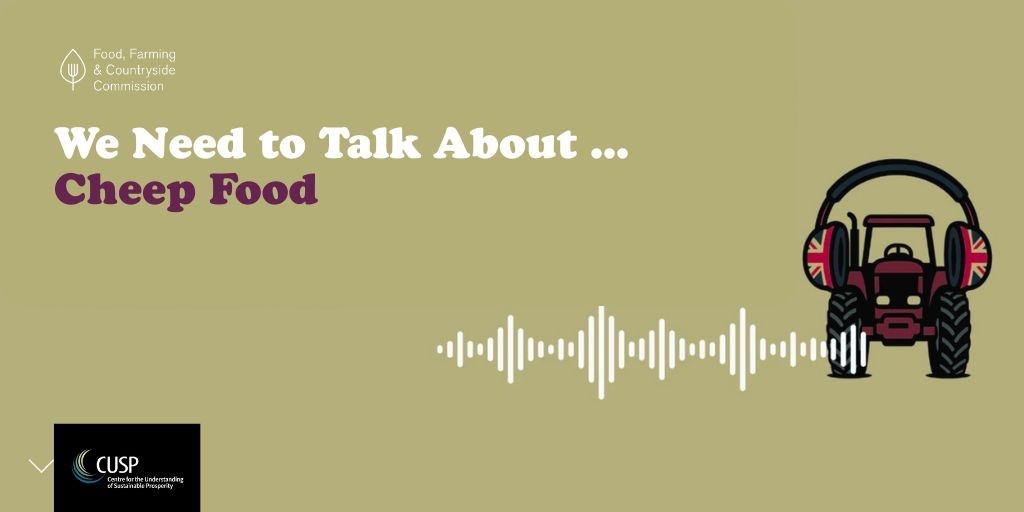
We Need To Talk About… Cheap Food

Podcast with Tim Jackson and Emily Norton, hosted by Will Evans.

Image description

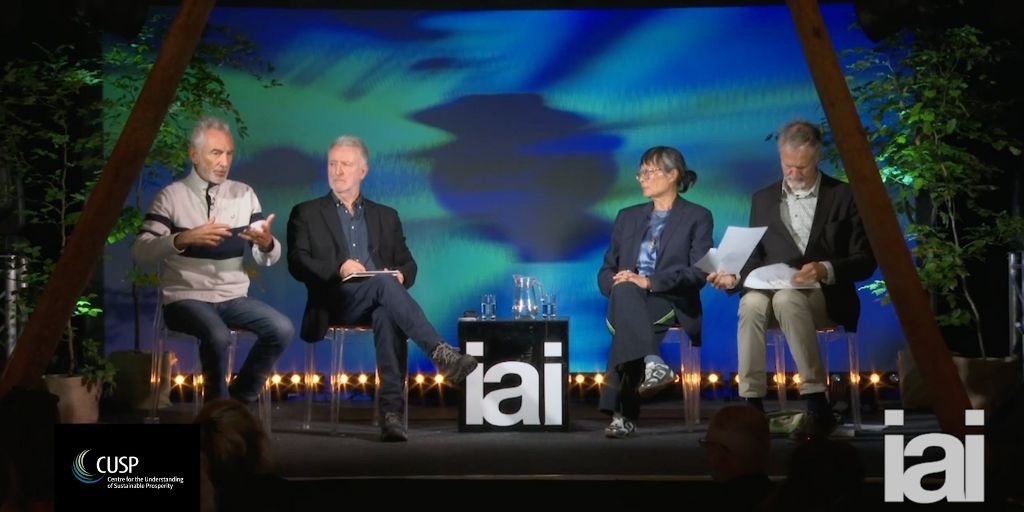
A World That Cares

How the Light Gets In Festival with Tim Jackson, Catherine Liu and David Goodhart.

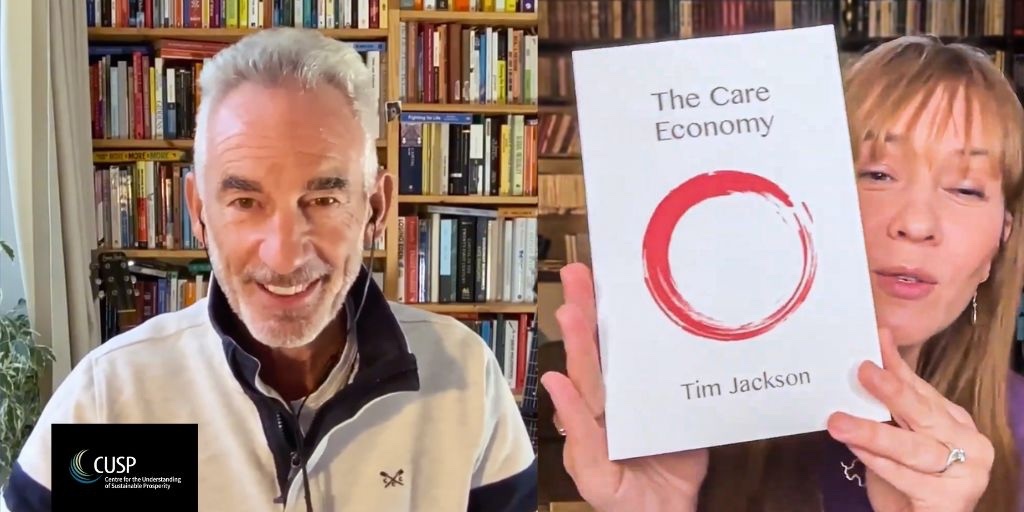
Why care is the foundation of a thriving society | Mindvalley Book Club

Kristina Mänd-Lakhiani speaks with Tim to discuss why modern economics overlooks care work, how the pandemic exposed the real foundations of society, and what a sustainable, care-centered economy could look like.

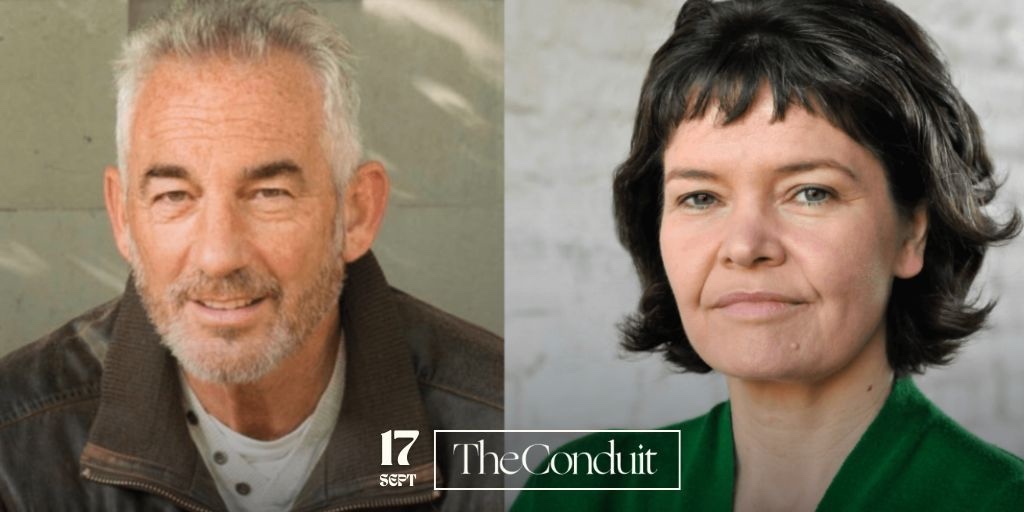
Video | Tim Jackson in conversation with Kate Raworth

At the Conduit renowned economists Tim Jackson and Kate Raworth explore how we arrived in this dysfunctional place and what we can do to change it. From the state of our healthcare and planetary systems, to our troubled relationships with patriarchy and profit, we will discover why a new economics guided by care for people and the planet is not only possible, but so urgently needed.

Image description

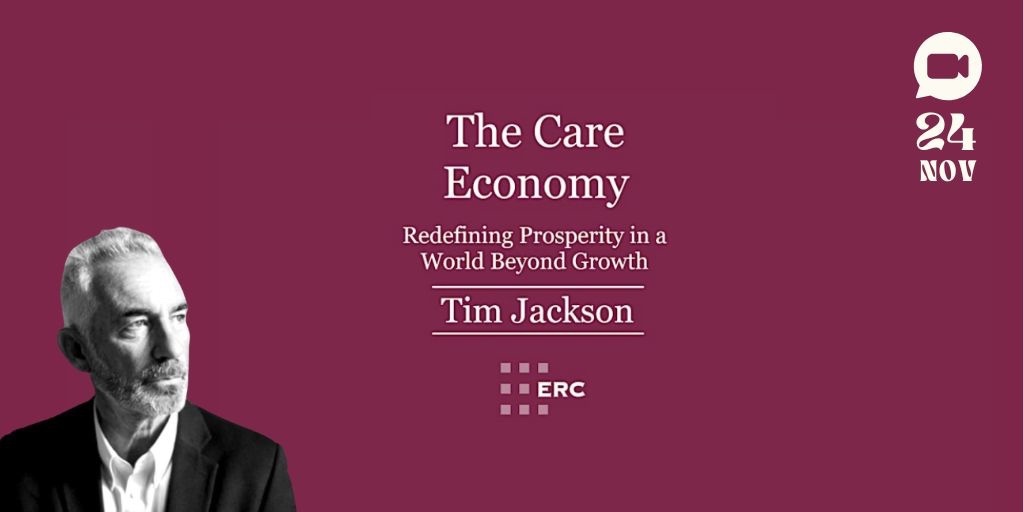
Redefining Prosperity in a World Beyond Growth

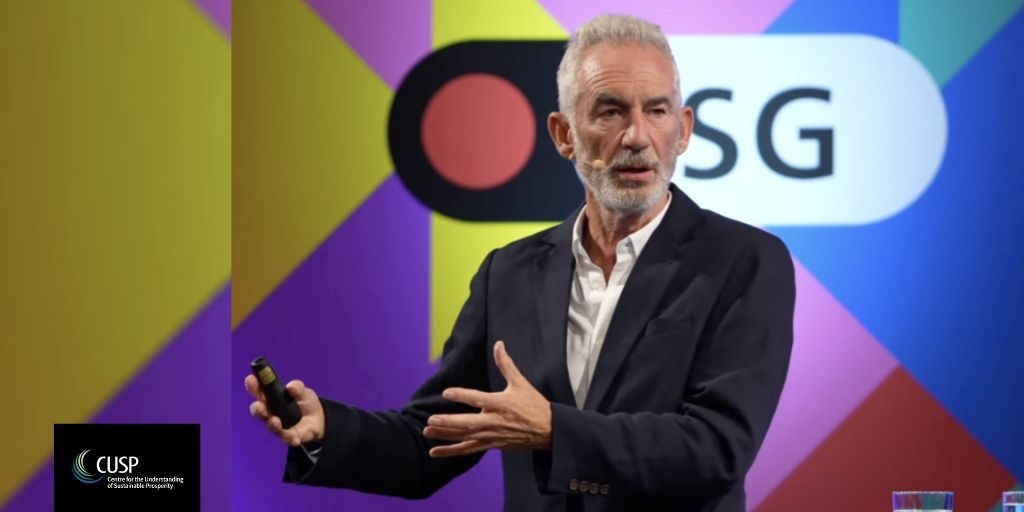
Tim Jackson speaking at the Economic Research Council about The Care Economy, Nov 2025.

Image description

Can there be prosperity without growth?

Keynote by Tim Jackson at Utrecht University, Sept 2025.

You are receiving this email because you signed up for our newsletter. 

If you would like to unsubscribe, please click here.