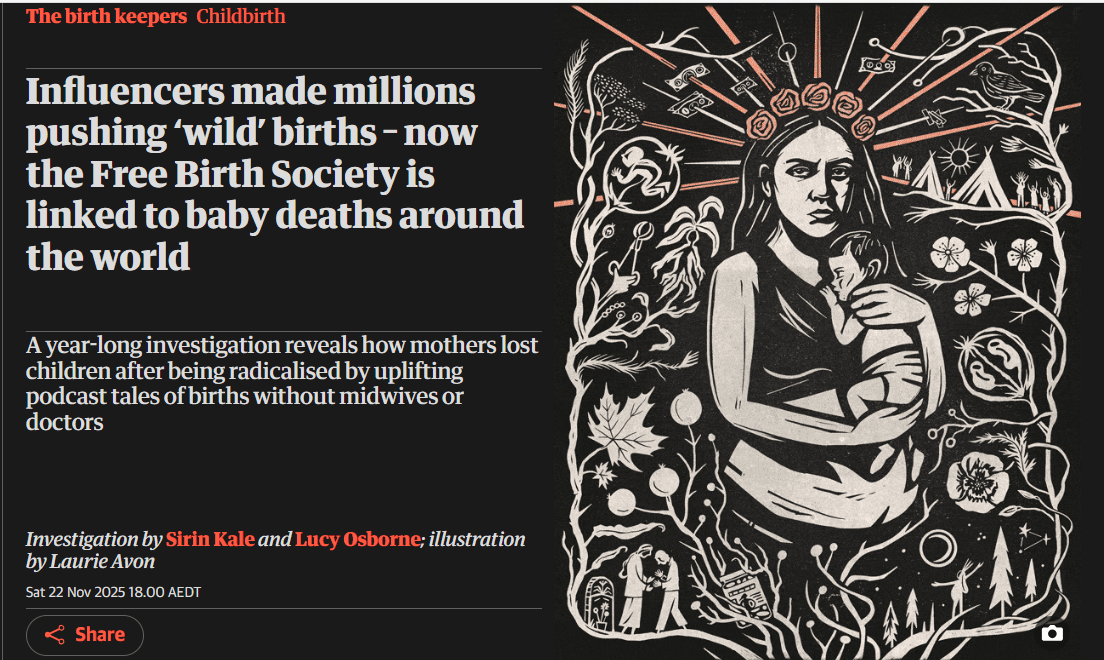
Unfortunately this article plays perfectly into the hands of the forces around the world that are restricting women's rights in birth, such those that want to see the South Australian legislation to "eliminate freebirth deaths" enacted across the country.
The experiences of mothers negatively impacted by advice given by the women from Free Birth Society certainly makes for harrowing reading, but it points to exactly why we advocate for women's ability to make their choices confidently, on the basis of best evidence and without external judgement. That way, they can weigh up the risks and benefits of the options before them, along with their what makes sense for their family and life situation - even if it means going against advice. All the research into maternal decision making shows that this is how birth trauma is avoided.
Coercion, duress and whitewashing of the real risks are recipes for birth trauma. We're all too familiar with this happening in the maternity care system with at least one in three women reporting birth trauma. (See the Birth Experience Study for more info.) Our decades of advocacy has shown that much if this trauma is caused by women not understanding their rights, as well as a culturally embedded lack of faith among women that they have any meaningful insight into their bodies and therefore need to rely on the opinion of someone in a white coat.
But as shown in this Guardian article, handing over our truly confident and very personal decision making to people at the other end of the birth care spectrum can also lead to trauma.
It's important that we're are alerted to possible dangers anywhere and the deaths described in this article are incredibly tragic, especially as they are described as having been preventable.
But with 98% of women birthing their babies in a maternity care system with policies and procedures based on only 9% of high quality (grade A) evidence (Prusover et al (2014)), rising intervention rates (with virtually no improvement on stillbirth rates in the past 25 years), rising NICU admissions and fewer birth services with every passing year, surely that is the real story.
The vast majority of women walking with utmost trust in the maternity care system deserve to know the reality of its genuine limitations.
Yet as advocates for evidence based maternity care, we struggle to get these issues tackled seriously by the media. Over and again, click-baity articles highlighting deaths outside the maternity system gain all the traction and perpetuate the misconception that death and misadventure doesn't happen in hospital. They also end up painting all other out-of-hospital birth choices as equally cavalier.
So, it's very disappointing to find that a media outlet with such reach would choose to allocate one year of resources on infiltrating chat groups and deeply investigating just one organisation when the legions of women suffer every day from not getting the full picture.