| Hello ESTers, how have you been? Welcome back to InsideMENA, your go-to bimonthly dive into the latest developments across the Middle East and North Africa, touching upon the EU’s interests and beyond. From politics to culture, we’ve got you covered! We are once again ready to jump right InsideMENA! PS: If you are reading this on the website, don’t forget to subscribe to get InsideMENA straight to your inbox every fortnight! Edited by Clarice Agostini and Jesse Woche Note that the information, views and opinions set out in the newsletter are those of the authors and do not necessarily reflect the opinion or position of the editors, of the European Student ThinkTank, and of their affiliated entities or institutions.
|
|
COP30: Funding Gaps and Insecurity Slow the Sahel's Great Green Wall
By Jordi
|
|
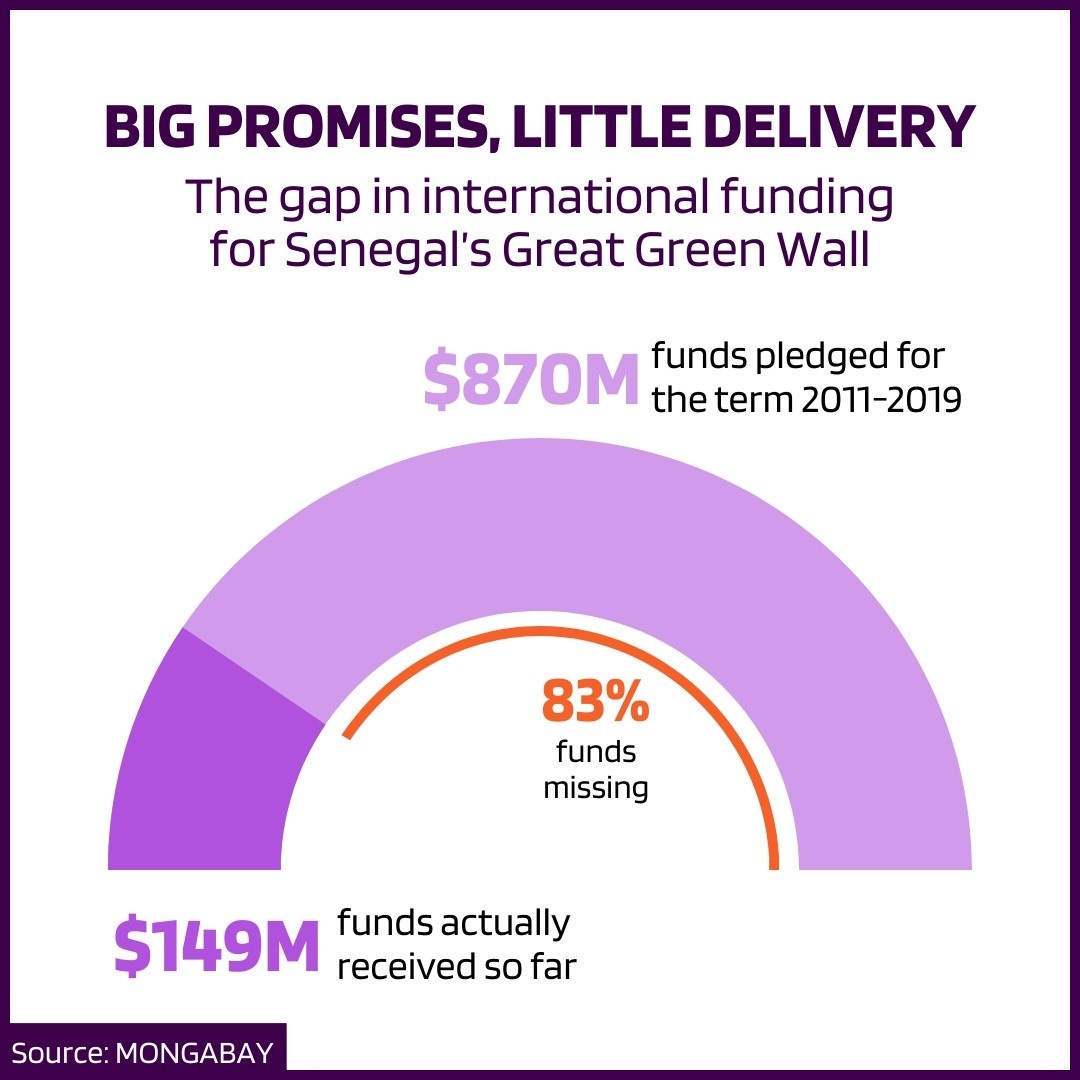
Uneven Progress Across the Sahel. As COP30 unfolds in Belém, Brazil, new reporting shows the Great Green Wall (GGW) advancing unevenly across the region. The New Humanitarian reveals meaningful progress in Senegal and Niger but significant setbacks in conflict zones in Mali, Burkina Faso, and Chad. Armed group activity and limited field access continue to impede work. Security and Governance Challenges Persist. According to El País, insecurity and institutional fragility remain major obstacles, particularly in central Mali and northern Burkina Faso. Weak state presence and violence have halted restoration activities in several communities. Funding Gaps Highlighted at COP30. A side event led by the African Development Bank warned that only part of international pledges have reached countries on the ground. Long-term, predictable financing, as opposed to short-term project cycles, remains essential to sustain progress. A Global South Governance Perspective. Coverage by CNN Brasil frames the GGW debate within broader questions of Global South leadership and African climate diplomacy. COP30 has exposed the importance of African agency in defining priorities and funding pathways. The GGW’s Inflection Point. For the EU, the GGW is central to climate, development, and stability agendas. The latest assessments stress a core message: restoration cannot advance without security, reliable funding, and community-led implementation. The Great Green Wall remains a long-term vision at a decisive crossroads. |
|
An Explosive Month for Iran’s Diplomacy
By Mohammad
|
|
IAEA Pressure and French Mediation Efforts. Tensions rose further as the International Atomic Energy Agency (IAEA) adopted a resolution urging Iran to grant inspectors the access required by UN resolutions to inspect the country’s nuclear facilities. In response, France is attempting to revive cooperation. Paris confirmed that Iranian Foreign Minister Araghchi will visit Paris on November 26, with hopes that renewed engagement may nudge Tehran back toward full compliance with IAEA monitoring. Renewed Signals on Nuclear Talks. Tehran says it may return to nuclear talks with the United States, but only under terms it views as respectful and aligned with conditions before the bunker-buster attacks on its underground nuclear sites. Officials insist that uranium enrichment and the missile programme are non-negotiable; discussions can only touch on enrichment levels. Meanwhile, al-Akhbar reports that President Donald Trump has asked Saudi Crown Prince Mohammed bin Salman to manage a backchannel with Tehran, as Riyadh seeks to reduce regional tensions. Europe “Burned Its Ticket.” While signalling limited openness toward Washington, Iran has shut the door firmly on Europe. The Foreign Ministry declared that EU countries have no place in future nuclear talks, arguing that they “burned their ticket” by backing the snapback mechanism, which automatically reinstate the pre-2015 UN sanctions on Iran. The message leaves little doubt that Tehran currently sees no diplomatic pathway through European capitals. |
|
Zelensky Visits Ankara: Has the Russia-Ukraine Peace Process Benched the EU? By Isabella
|
|
The talks. Turkish President Recep Tayyip Erdoğan welcomed Volodymyr Zelensky to Ankara on November 19th to discuss the end of the war. In the press conference following both the bilateral and interdelegation meetings, Erdoğan announced that Ukraine is prepared to enter talks with Russia to begin a peace process. Erdoğan reaffirmed Turkish commitment to the territorial integrity, sovereignty, and independence of Ukraine, calling the country a friend and a strategic partner. The talks also involved future partnerships in the defense industry with prospects of the development of future projects. The Turkish President also mentioned the need to reintroduce and further develop the Istanbul Process both at the press conference and 5 days later during his phone call with Putin. Where is the EU? The strong emphasis expressed by Erdoğan concerning the importance of U.S. involvement in the peace process attracted the attention of the media. However, mentions of the EU were noticeably absent from the press conference. Even before the 28-point plan was proposed by the U.S., the EU had already been pushing back, citing the shortage of EU and Kyiv officials at the table. The lack of EU involvement has raised fears of the Union being sidelined, despite the bloc being Ukraine’s biggest backer |
|
Justice Served in Syria?By Hannah |
|
A long-awaited trial has begun in Syria. During the decades of the Assad family dictatorship, toppled in December 2024, a trial of security force personnel would seem impossible. But change may finally be underway. An uneasy transition. Back in March, a number of individuals who were affiliated with the Assad regime carried out an armed uprising, targeting the new Syrian state. The new government issued a general mobilisation order to quell the uprising. Yet, order did not follow; in fact, over 1400 individuals were killed, most of whom were Alawite civilians. An unprecedented trial. Those accused of committing crimes, including regime-affiliated individuals and government forces, will now face trial for the violence they committed during the uprising. Importantly, activists and families of the victims are calling for a transparent investigation into the events and public accountability. Is this what they will receive? For now, we know that the trial was broadcast live on the news, but the verdicts will not be delivered for weeks. One year on. Nearly one year on from the fall of Assad, the question remains whether this trial sets a precedent for true accountability and justice in Syria going forward, and whether accountability for crimes committed under the dictatorship will follow. |
|
Trump-MBS Meeting: Key Outcomes and a Predictable Neglect of Human RightsBy Clara-Joy |
|
Trump-MBS meeting. On November 18, 2025, Saudi Crown Prince Mohammed bin Salman (MBS) met President Donald Trump at the White House to discuss U.S.-Saudi relations. The agenda focused on security cooperation, arms sales, increased trade and investment opportunities, and discussions on potential Saudi participation in the Abraham Accords. Defence, economic, and diplomatic outcomes. Trump upgraded Saudi Arabia to a “major non-NATO ally,” signed a Strategic Defence Agreement that strengthened the long-term defence partnership between both nations, and approved a large arms package including F-35s and Abrams tanks. MBS pledged almost $1 trillion in U.S. investments across infrastructure, technology, and industrial sectors – commitments Trump emphasised would generate considerable investment and job opportunities. Joining the Abraham Accords. Progress was made regarding the U.S. push for Saudi Arabia to join the Abraham Accords. MBS expressed interest but reiterated that discussions around the establishment of a Palestinian state were needed before an agreement could be reached. Human rights absent from the agenda. The absence of any discussion on human rights concerns – including Saudi Arabia’s significant surge in executions in 2025 – was unsurprising given both governments' recurring tendency to downplay such issues to ensure the development of profitable partnerships. Evading accountability. When asked about MBS’s role in the 2018 murder of Jamal Khashoggi – confirmed by U.S. intelligence to have been carried out at the behest of the crown prince himself – Trump dismissed the question as “fake news,” while MBS referred to the murder as “painful,” and denied responsibility. Their responses, once again, show that strategic, economic, and defence interests outweigh accountability, justice, and human rights. |
|
|
| |
|
|